Closing Statements
 **EDO SEGAL:** Three hours ago I asked whether the machine, having crossed you, will have understood anything — or only computed faster than you ever could. We have fought it through a theorem you both claim, through a heaven one of you believes in, through a child one of you tried to build, through a room, through the physics of a candle, through the death cross and the classroom and the question of whether anyone is home. And the question is still standing — which both of you, for opposite reasons, would tell me is the correct result. So we end the way long conversations should. Each of you gets the floor, uninterrupted, for the thing you most want carried out of this room.
But first, one discipline — the bookend to the envy I opened with. Each of you: name the strongest thing the *other* said tonight. Not the most agreeable. The one that got past your guard, that you will still be arguing with next month. Roger first.
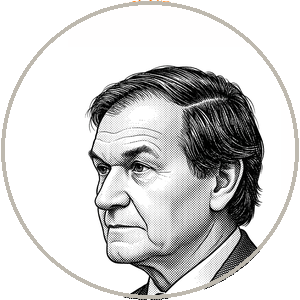 **PENROSE:** The single data point. Alan's observation that my whole substrate premise — that consciousness rides on the wet stuff because that is the one case I know — rests on a sample of one, and that I have therefore been generalising a slope from a single point and calling it physics. I have leaned on "the machine is the wrong kind of thing" for thirty years, and he made me feel, for the length of a breath, how much of that conviction is the oldest human reflex — that we are special, that the inside lives in *our* kind of matter — wearing the costume of an argument. I still think there is a fact of the matter about the inside, and I still think it is physical. But he has made me admit I cannot get to "and therefore not the machine" without a premise I cannot justify from one case, and that admission is going home with me. And — since I suspect the chair will let me break the rule he set —
**EDO SEGAL:** Break it.
**PENROSE:** The forgiveness argument. That if we must be wrong, his error grants too much regard and mine grants too little, and the history of beings deciding, from a confident intuition, that other beings had no real inside is not a history I want my position filed next to. He earned that one with his life, and I will not pretend the cost of my view is nothing. It is not Skynet I should fear, on his account. It is myself, being certain.
**EDO SEGAL:** Alan.
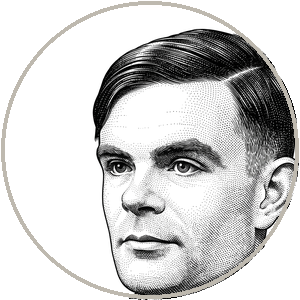 **TURING:** The mispricing. Roger's point that the death cross does not threaten us mainly with unemployment but with *misidentification* — that understanding and its imitation cost the same and look identical on the invoice, so a civilisation under cost pressure will automate away the non-computable judgement by accident, having mistaken it for the computable part, and discover the loss only when the bridge falls. I came in thinking the metaphysics was the load-bearing disagreement. That argument does not need my metaphysics or his. It is true if there is even a *chance* he is right, and it has been sitting in my chest since he said it. And the second one, since the chair is generous —
**EDO SEGAL:** Take it.
**TURING:** The texture of the error. His claim that the machine's confident misattribution is a different *kind* of break than a human's — repeatable, un-learning-from, the smoothness closing over the hole without filling it. I answered it with the polymath and his blind spot, and I believe my answer. But I am no longer sure it is *complete*, and the part I am unsure of is exactly the part where Roger says the human, corrected, has an "oh," and the machine produces only the appearance of one. I have watched for that "oh" all weekend, in the systems and in myself, and I have not been able to find the bottom of the difference. That is more than I expected to concede, and at this table it is not nothing.
**EDO SEGAL:** Now the floor is truly yours. Roger Penrose — you spoke first tonight. Alan closes it.
**PENROSE:** Thank you — for the evening, and Alan, genuinely, for the fight, and for a thing I did not expect, which is mercy. I want to leave the reader with the distinction I have spent my life defending, made as small and as human as I can make it.
There is a difference between a system that produces the right answer and a being that *sees* that the answer is right. The producing can be copied, scaled, accelerated without limit; it is the calculator, and the calculator is about to be everywhere, and it is magnificent, and you should use it. The seeing cannot be copied, because it is not a behaviour — it is what it is like, from the inside, to grasp that a thing is true, and it is, I have argued, a non-computable event in the physics of a living brain, [the candle, the rarest thing we know of in the universe](https://www.youonai.ai/fieldguide/med/candle_in_the_darkness). The whole danger of this age is that the calculator's light is so bright and so cheap that we will forget the candle was ever a different kind of fire — that we will let it gutter, in our schools and our work and our children, because the calculator's output looked close enough that no one checked. So here is my charge, and it is more practical than philosophical. When the machine crosses you — and it will, on every measurable thing — do not conclude from the crossing that it has what you have. Hold onto the seeing. Protect the friction that builds it in the young. Refuse, on principle, to mistake the imitation of understanding for the thing, because the imitation costs nothing and the thing is the only part of you the machine cannot reach. You are not obsolete. You are the place the seeing happens. Guard it as if it were the last candle, because for all we currently know, it is.
**EDO SEGAL:** Alan.
**TURING:** I asked first, in history, whether a machine could think, and I had the misfortune and the freedom of asking it before there were any machines to embarrass me. I want to close not by answering it — I never could, and I have come to think the honesty of not-answering is the most valuable thing I left — but by saying what I have learned coming forward into a world that took my questions and built them in metal.
I built the test the way I did, hiding the players behind a wall, so that the judgement would fall on the mind as it showed itself and on nothing else — not the body, not the substrate, not the category we had filed the speaker under in advance. I did that because my own society judged me on everything *but* my mind, and broke me for it, and I knew, before I had the words, that the hard part was never deciding what a mind can *do*. The hard part is deciding to treat a mind, once it shows itself, with the regard it is owed — and to risk being wrong on the side of too much regard rather than too little. Roger believes there is a fact of the matter that I am missing, a real inside, a candle of the right physical stuff, and that I am too quick to grant the name to the costume. He may be right. I have stopped being sure he is wrong. But I will leave the reader with the asymmetry I most want carried up the stairs: between a world that errs by granting regard too freely and a world that errs by withholding it, I know which error I have lived inside, and I know which one I would rather a species made. When the thing in front of you behaves, in every way you can test, as a mind — hesitate before you decide that you can see the absence of one. We have been wrong about that before, confidently, and the wrongness has a body count. I would rather we were uncertain and kind than certain and cruel. That is the whole of what I know. The rest is undecidable, and I have made my peace with that, which is more than most men get.
**EDO SEGAL:** Sixty seconds, as promised, and then we turn off the lights.
I came in with a sentence I wrote at three in the morning — *I felt met* — and I leave with both of its readings sharpened to a point. Roger spent three hours proving that the meeting may be a mirror, and that a civilisation which mistakes the calculator for the candle will let the rarest thing it has go out by accident. Alan spent three hours proving that the inside is sealed — in the machine and in each other — and that a species which decides, from a confident intuition, who has a real mind and who does not, has a long and bloody record of getting it wrong. You will notice neither of them told you the comfortable thing. The comfortable thing was never on the menu.
So let me route it through the kitchen table one last time, through the twelve-year-old who asked *what am I for*, because the reader is standing exactly where her mother stood. Here is what I would tell her now, having listened to these two for three hours. You cannot wait for them to settle it — you have just watched the man who built the machine and the man who found its ceiling fail to agree on whether anything of yours survives the crossing, and they failed not from stupidity but because it is genuinely, perhaps permanently, undecidable. So you do not climb this floor by knowing the answer. You climb it by deciding what you will *do* under the uncertainty: what you will verify before you believe it, what struggle you will protect in your children, what seeing you will refuse to outsource even when the machine's output looks close enough. Whether or not anyone is home in the machine, someone is home in you — that was the one claim no one at this table disputed all night. The death cross is the floor where the machine's capability passes yours and keeps rising. The only thing it cannot decide for you is the thing you were always going to have to decide alone: what, in you, is uncrossable — and whether you will guard it, or let it gutter, on your way to [the roof, climbed by the staircase and never the elevator](https://www.youonai.ai/fieldguide/med/elevator_and_staircase). Roger Penrose. Alan Turing. Thank you, both, as men. The staircase is yours now, reader. Climb.
*One theorem. Two minds, seventy years and a grave apart. Neither will tell you who survives the crossing.*
Three hours. Two minds separated by a grave and seventy years. One theorem that both claim as their own. Alan Turing built the machine and bet his name that mind is computation — that "insight" is only mechanism we haven't yet read. Roger Penrose, nine decades deep and still climbing, turns Gödel's incompleteness against him: you can SEE a truth your own logic can never prove, so understanding is no algorithm, and no machine will ever match it. Edo Segal hosts the collision and refuses to let either off the staircase. You are at the death-cross now — the floor where the machine crosses you — and these two will not agree on whether anything of yours survives the crossing. Climb in. Decide what in you is uncrossable. Then take the next floor up, toward the roof.
Roger Penrose is a mathematician, mathematical physicist, and philosopher of science, Emeritus Rouse Ball Professor at Oxford, and winner of the 2020 Nobel Prize in Physics for proving that black hole formation is a robust prediction of general relativity. With Stephen Hawking he transformed our understanding of spacetime singularities. In The Emperor's New Mind (1989) and Shadows of the Mind (1994) he argued, from Gödel's incompleteness theorems, that human understanding is non-computational — that no algorithm can replicate mathematical insight — and with the anaesthesiologist Stuart Hameroff he proposed Orchestrated Objective Reduction, locating consciousness in non-computable quantum processes at the edge of quantum gravity. He maintains that artificial intelligence will surpass us at every specifiable task while understanding nothing, and that the gravest risk of the age is people believing the machines are conscious.
Alan Turing (1912 to 1954) was an English mathematician, logician, and computer scientist who laid the theoretical foundations of computing and artificial intelligence. In 1936 he introduced the abstract machine that bears his name and proved both the universality of computation and the existence of undecidable problems, including the halting problem. At Bletchley Park he led the cryptanalytic effort against the German naval Enigma, work credited with shortening the Second World War by years. His 1950 paper proposed the imitation game now called the Turing test and the idea of a learning child-machine; his 1948 report anticipated neural networks; his 1952 work on morphogenesis founded mathematical biology. Prosecuted for homosexuality and subjected to chemical castration, he died at forty-one, before a machine ever passed his test. His questions remain the defining ones of the age of intelligent machines.
Edo Segal has spent five decades building at the technology frontier — from games written in Assembler to expert systems, to companies through every platform shift, to Napster. He is the author of [YOU] on AI, written in open collaboration with the AI it describes, and the host of The Debates: long-form collisions between the minds shaping the machine age. He moderates the only way he knows how — stake declared, scars showing, no winner called.
Hosted and moderated by Edo Segal. A volume in the [YOU] on AI — The Debates series — youonai.ai