The Physics of the Candle
 **EDO SEGAL:** Roger, in [YOU] on AI I wrote about consciousness as a [candle in the darkness](https://www.youonai.ai/fieldguide/med/candle_in_the_darkness) — the rare, flickering, maybe irreplaceable thing in an unconscious universe. I meant it as a metaphor. You mean it as physics. So tell us the mechanism, plainly, knowing it's the part of your work the scientific community has fought hardest. What is actually burning when the candle burns?
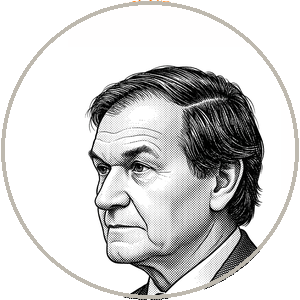 **PENROSE:** I will tell you, and I will tell you honestly that it is the most speculative thing I believe and the thing most likely to be wrong in its details — and that the general claim does not depend on the details, which is the part critics always miss. Start from where the argument forced me. The Gödel case says human understanding is non-computable. If that is right, the brain must be doing something non-computable, which means the *physics* of the brain must include a non-computable process. Now — where in all of physics is there even a candidate for non-computability? There is one place. The collapse of the quantum wavefunction. When a quantum system in superposition becomes definite — the measurement problem, the deepest unsolved problem in physics — the standard theory does not say *how* or *why* it happens; it just puts it in by hand. I proposed that collapse is a real, objective physical event, triggered when the superposition involves enough spacetime curvature — enough *gravity* — to become unstable. Objective reduction. And crucially, the moment of that collapse is governed by physics we do not yet have, the physics of quantum gravity, and there is reason to think it is *not computable* — not simulable by any Turing machine.
With Stuart Hameroff, an anaesthesiologist, I proposed where in the brain this could matter: in microtubules, the protein scaffolding inside neurons, where quantum coherence might be orchestrated and where these non-computable collapse events could influence when a neuron fires. Orchestrated Objective Reduction. Each collapse, a moment of proto-consciousness; the orchestration of many, a moment of mind. So the candle, Edo, is literally this: a non-computable physical event, at the seam where quantum mechanics meets gravity, happening in the warm wet machinery of your brain, and *not* happening in any silicon chip, because the chip is built precisely to suppress quantum effects and run a clean classical computation. That is the whole of it. The calculator computes. The candle collapses. They are not on the same spectrum. They are different physics.
**EDO SEGAL:** Let me restate the stakes so the reader feels what you've wagered. You've bet the most important question of the age on the least finished corner of physics — and you've done it before, with singularities, and been right. But Roger, the attacks are brutal and I have to bring the hardest one into the room. Max Tegmark calculated that the brain is far too warm and wet and noisy for quantum coherence to survive — that it would decohere in something like ten-to-the-minus-thirteen seconds, thirteen orders of magnitude too fast to matter for thought. Most physicists think that calculation ended the conversation. Why are you still in it?
**PENROSE:** Because being unfashionable is not the same as being wrong, and I have the receipts on that. Tegmark's calculation is real and I take it seriously — but it models the microtubule in a way Hameroff and I argued is too crude, ignoring the possibility of shielding, of error correction, of structure in the protein that protects coherence. And here is the thing the "it ended the conversation" crowd will not say: in the years since, quantum biology has become a real field, and coherence has been found surviving in warm, wet, noisy biological systems — in photosynthesis, where everyone was equally certain it could not — at physiological temperatures. The timescales are not yet what Orch OR needs, I grant it fully. But the *principle* that biology is too warm for quantum effects, the principle Tegmark's objection rested on, has been falsified by life itself. Robert Lawrence Kuhn, who has watched this for decades and was extremely sceptical, said recently he is no longer *extremely* sceptical. That is movement. It is not vindication. I may not live to see it resolved, exactly as I might not have lived to see the singularities confirmed. The mark of taking physics seriously is following the mathematics into discomfort and *waiting*. I have done it before.
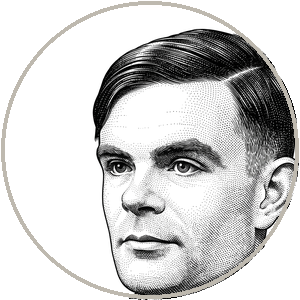 **TURING:** May I say what troubles me about it, not as an attack but as a fellow logician who wants the argument to be its best self?
**EDO SEGAL:** That's the whole point of you being here.
**TURING:** Roger, I am moved by the courage of it, and I think it is *unnecessary* to your own case, which is what worries me. You built a tower: Gödel says understanding is non-computable; therefore the brain needs non-computable physics; therefore quantum gravity in microtubules. But every floor is bearing the weight of the floor below, and the bottom floor — the Gödel step — is the one we spent two rounds showing is contested, because it assumes the human is a *consistent sound* system, which we have excellent reason to doubt. If the Gödel step fails, you have gone looking for non-computable physics to explain a non-computability that was never established. You will have found the most exotic mechanism in science to solve a problem that may not exist. And there is a deeper unease. Even if you find your non-computable collapse — grant it entirely — you have shown the brain does something *uncomputable*. You have not shown it does something *conscious*. Uncomputable is not a synonym for experienced. A coin-flip driven by quantum collapse is uncomputable and feels nothing. You have, with enormous labour, replaced "how does computation become experience" with "how does *non*-computation become experience" — and the hard problem is exactly as hard on the far side. [Why there is something it is like](https://www.youonai.ai/fieldguide/med/hard_problem_of_consciousness) to be any physical process, computable or not, you have not touched. You moved the mystery. You did not dissolve it.
**PENROSE:** Both of those are fair and I will not pretend they are not. On the first: yes, my tower rests on the Gödel step, and if you are right that humans are merely inconsistent learners then the tower has no ground — which is why our first two rounds were the real fight and this round is only the engineering of it. I think the track record of mathematics holds the step up. You think it doesn't. The reader must weigh it. On the second — and this is the one I lie awake on — you are right that non-computable is not the same as conscious, and I have never claimed Orch OR *solves* the hard problem. I claim it does something more modest and, I think, necessary: it identifies the *kind* of physical process consciousness could be, and shows it is not the kind silicon runs. It tells you where the candle is not. It does not tell you why a candle, anywhere, has a flame. That question may need physics beyond even this. But Alan — at least I have said where to *look*. Your account says the inside is undetectable and we should stop asking. Mine says the inside is real, it is physical, here is the neighbourhood, go and check. One of those is a research programme. The other is a closed door with "undecidable" written on it.
**TURING:** It is not a closed door. It is an honest one. I would rather stand at an honest door than build a cathedral on a contested step. But I concede the asymmetry you have just named, and I concede it sincerely: you have given the question a *body*, a place in the physical world where an answer could in principle be found, and I have given it only a boundary. If you are right about the bottom floor, the whole tower is the most important building in science. I do not think you are right about the bottom floor. But I have stopped being certain, and at this table that is not nothing.
**EDO SEGAL:** Mark that — it is the second time tonight Alan has said he is no longer certain, and the reader should count those, because they are rarer than agreements. We're at the hinge of the evening. The first half asked what the machine *is*. The second half asks what its crossing *does* — to work, to children, to the thing I called the death cross, the floor we've been standing on the whole time. Because while the two of you argue about what's inside the machine, a trillion dollars has already voted on what it's worth. After this.