Seeing Versus Deriving
 **EDO SEGAL:** Roger, this round is yours to open, because the load now sits on a claim most of our audience has never had named for them, and you hold it more seriously than almost anyone alive: mathematical Platonism. The idea that the Pythagorean theorem was true before there were humans and will be true after the last of us is gone — that mathematicians don't invent, they *discover*, they perceive a landscape that is already there. Tell it the way you'd tell it to a sharp fifteen-year-old. And then, Alan — I'm going to ask you to do something a debater hates. Before you swing at it, steelman it. Tell us what the heaven gets *right*.
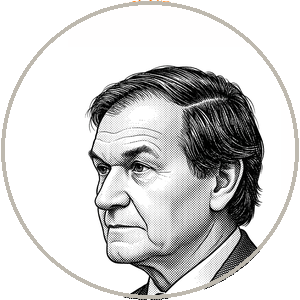 **PENROSE:** Gladly, because the fifteen-year-old already believes it and only loses the belief if someone talks her out of it. When you prove that there are infinitely many primes — Euclid's proof, two thousand years old — you are not making a decision. You are not constructing a convention that happens to be useful. You discover that no matter how high you climb, there is always another prime above you, and this was *so* before Euclid, before Greece, before Earth. The mathematician's experience, the one no formalist account ever captures, is the experience of bumping into something that does not bend to your will. You want a theorem to be true and it is stubbornly false. You expect it false and it turns out, beautifully, true, in a way you did not author. That resistance — that the mathematical world pushes back — is exactly the mark we use everywhere else to tell the real from the invented. The chair pushes back; it is real. The prime pushes back; it is real. And *seeing* a mathematical truth is a perception of that real thing — not a derivation inside a game of symbols, but contact, the way sight is contact with light. Gödel believed this. He thought of himself as a perceiver, not an inventor. The seeing is non-computable because the landscape it perceives is not generated by the formal system; it is *prior* to it.
**EDO SEGAL:** Alan. Steelman first.
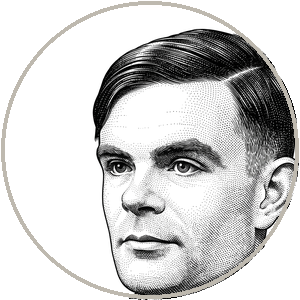 **TURING:** I can do that honestly, because the experience he describes is real and any account that denies it is lying. What Platonism gets right is the *resistance* — the fact that mathematics is not a free invention, that you cannot decide a theorem is true the way you decide what to have for dinner, that the subject has a hardness, a non-negotiability, a way of telling you that you are wrong that feels exactly like running into a wall in the dark. Formalism, naive formalism, cannot explain why some games of symbols feel discovered and some feel arbitrary, and Roger is right to rub our noses in that. Any view worth having must account for the hardness. There. That is the steelman, and it is not small.
Now the two places it breaks, and they are both load-bearing. First: resistance does not require a heaven. A sufficiently rich rule-system pushes back on you *too* — you cannot make chess have a different forced mate than it has; the position resists you; and no one thinks the chess position lives in a Platonic realm. The constraints of a complex formal structure feel, from inside, exactly like the resistance of an external object, because in both cases you are not free to choose. So the felt hardness is evidence of *constraint*, not of *heaven*. Second, and this is the one that matters for the machines: even granting your heaven, you have not shown that *perceiving* it is non-computable. You have shown that the *truths* exceed any single formal system — Gödel — which I grant. But the *act of reaching* them, the human practice of stepping outside one system into a stronger one, is itself a procedure I can describe: you add a reflection principle, you assert the consistency of where you were, you move up. That move is mechanical. You can iterate it. A machine can iterate it. The truths are infinite and no fixed system gets them all — agreed. But the *climbing* is not magic. It is a [continuum of better and better systems](https://www.youonai.ai/fieldguide/med/continuum_of_understanding), and a machine can climb it as we do, one reflection at a time, forever, without ever having seen a heaven, because the next rung is always specifiable from the last.
**PENROSE:** No — and this is the sharpest thing I will say tonight, so let me say it slowly. You say the climbing move is mechanical: assert the consistency of your current system, move up. But *which* systems may you trust enough to assert their consistency? Not all of them — assert the consistency of an inconsistent system and you have asserted a falsehood and ruined everything. So the climbing requires, at every rung, a *judgement* that this system, the one I am standing on, is sound — is actually true to the mathematical world, not merely consistent on paper. And *that* judgement, the soundness judgement, is precisely what cannot be mechanised, because to mechanise it you would need a formal criterion for soundness, and soundness is exactly the semantic relation to the real mathematical objects that no syntactic formal system can capture. The machine can iterate "add consistency, move up" blindly — and it will eventually climb onto a rotten rung and assert a falsehood, because it has no contact with the truth to tell it which rungs are sound. The mathematician does have that contact. That is the seeing. You have not described it. You have described a man climbing a ladder in the dark, and called it sight.
**TURING:** And you have described a man who claims to climb in the light and cannot show me the lamp. Roger — humans climb onto rotten rungs *constantly*. Whole schools of mathematics have asserted soundness for systems later shown unsound. Frege's system was inconsistent and he did not see it; Russell had to write him the letter. Your infallible soundness-perceiver is, again, an idealised fiction. The real mathematician gropes, errs, gets corrected — which is to say, learns. You keep describing the *ideal* of mathematical practice and attributing the ideal to a faculty. I describe the *actual* practice and find a learner. The lamp you say I lack is one you have never shown me either. You have only shown me that your gropings have, so far, been corrected. So have the machine's.
**EDO SEGAL:** I have to get into this one myself, because I live downstream of it and the reader does too. When I build with these systems, I have watched the thing Roger calls seeing and the thing Alan calls climbing, and I genuinely cannot always tell them apart from the outside — which is Alan's whole point, and it terrifies me, which is Roger's. But here is what I *have* seen. The system will produce a passage that has the full music of insight, the cadence of a mind that understands — and then it will attribute an idea to the wrong philosopher, confidently, in a way that any human who had actually *understood* the idea could not have done, because understanding the idea and knowing whose it is are the same act for a person and apparently not for the machine. Roger, is that the gap? The fluency of the climb with a hole where the seeing should be? Or, Alan, is that just an error, the kind a learner makes, no different in kind from a tired graduate student?
**TURING:** It is an error of a learner with thin data on that point, and you have proved my case by the form of your worry, Edo. You say "any human who understood could not have done that." But humans misattribute constantly — confidently, fluently, with the full music of insight. The confabulating patient, the overconfident undergraduate, the expert outside his field: all of them produce the cadence of understanding over a hole. The hole is not the signature of a machine. It is the signature of *insufficient correction*, and it closes with more learning, in them and in it.
**PENROSE:** It is the gap, Edo, and Alan has just walked into it. He says the human misattributes "fluently, with the full music of insight." But she *doesn't*, not in the same way — because for a person who genuinely understands the idea, the meaning and the source are bound together by the very act of grasping; the [understanding is one thing, not a stack of separable correlations](https://www.youonai.ai/fieldguide/med/embodied_understanding). The machine can have the words about the idea perfect and the idea itself absent, because for the machine there is no idea — there is only the pattern of words that idea-talk leaves behind. That dissociation, the music without the meaning, is the most precise external symptom I know of the thing I have argued for all my life. It is the Gödel point made visible on a Tuesday afternoon: the system produces every consequence except the one that requires standing outside the words and seeing what they are about.
**EDO SEGAL:** And there is the river forking again, in real time — the same fact, Roger reads as a hole where the mind should be, Alan reads as a learner who hasn't been corrected enough yet. Hold that thread; it returns when we ask what the machine actually understood. But the next round leaves the heaven and goes to the nursery — because Alan, you didn't propose to *program* a mind. You proposed to raise one. The child-machine. After this.