Opening Positions
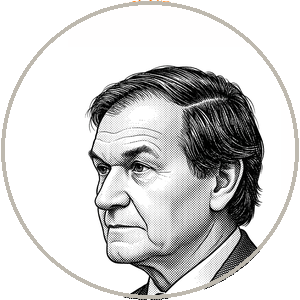 **PENROSE:** Thank you. I want to begin not with machines but with a moment every mathematician knows, because the whole disagreement lives inside it and nowhere else.
You are working on a problem. You have the axioms, the rules, the prior results. And then — not always, but sometimes — something happens that is not the next step in a derivation. You *see* that a thing is true. Not "the symbols permit it." You see it, the way you see that a face is a face, all at once, with a certainty that arrives before the proof and that the proof, when you write it down afterward, merely records. Gödel showed us in 1931 that this seeing cannot be reduced to derivation. He constructed, inside any consistent formal system strong enough for arithmetic, a statement that says, in effect, *this statement cannot be proved in this system*. And you — a conscious mathematician, standing outside — can see that it is *true*. The system cannot prove it. You can see it. If you could not, if you were merely a formal system yourself, you would be trapped inside the same walls and the seeing would be impossible. But you do see it. Therefore you are doing something the system cannot do. Therefore — and here is the whole of my life's argument compressed to a sentence — human understanding is [not an algorithm](https://www.youonai.ai/fieldguide/med/godelian_incompleteness_ai).
Now follow it where it goes, because it does not stop. A digital computer is a physical realisation of a Turing machine, which Alan, to his eternal credit and my eternal use, defined precisely. Every program is a formal procedure. If understanding is non-computable, then no program — not now, not with more data, not with another thousandfold of compute, not ever — can do what the mathematician does when she sees. The machines will get better forever and never cross the line, because the line is not drawn by engineering. It is drawn by mathematics, and mathematics does not yield to engineering.
I lay out four positions and I will keep returning to them, so let me plant them. Position A: all thinking is computation, and a sufficiently complex program is conscious. That is the faith of this whole industry. Position B: the brain can be simulated, but the simulation would be a zombie — behaviour without anyone inside. Position D: consciousness is forever beyond science, a mystery we must simply revere. I reject A, B, and D. My position is C: the brain does something genuinely non-computational, and we can, in principle, understand it — through new physics that does not yet exist. I am not a mystic. I am a physicist who thinks the science is unfinished, and who has been right before about an unfinished science telling us something real and unwelcome.
So when Edo asks whether the machine, having crossed us, has understood — my answer is a single line I have said in interviews and will stand behind tonight. It is not that AI won't be better than us. But it is not conscious. It will write the proof and perceive no truth in it. It will compose the symphony and hear no beauty. It will cross you on every measurable axis and understand, at the end, exactly nothing — and the worst danger of this age is not that the machine wakes up. It is that we convince ourselves it has, and put down the candle.
 **EDO SEGAL:** Alan.
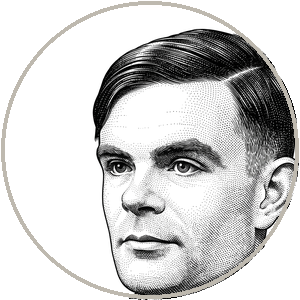 **TURING:** That was beautifully said, and I disagree with the load-bearing word in it, which is "see."
Let me start where Roger and I genuinely stand together, because it is more ground than either of our admirers would like. I proved the limits too. The same year I described the universal machine, I proved the [halting problem](https://www.youonai.ai/fieldguide/med/incomputable) — that no procedure can decide, for every machine and input, whether it halts or runs forever. There are well-defined questions no computer can answer. Gödel's result and mine are two faces of one discovery about the limits of formal systems, and I knew that intimately; we were quite aware of each other. So I do not dispute that the machine has walls. I dispute the next step, which Roger takes so quickly that the whole argument hides inside the gap.
The step is this: *the machine has limits, therefore we do not.* But why should I believe that? When Roger says the mathematician "sees" the Gödel sentence is true, he is assuming she is a consistent system — that her seeing is reliable, infallible, never mistaken. Drop that assumption and the argument collapses, because Gödel's theorem only bites on consistent systems. And human mathematicians are *not* consistent. They believe false things. They publish proofs that turn out to be wrong. They are corrected, sometimes for centuries. I am not insulting the species; I am describing it. A system that errs is not transcending the formal walls. It may simply be a formal system with a higher tolerance for being wrong, which is a different and less flattering thing. I raised exactly this in 1950, under the heading of the mathematical objection, and answered it the same way: yes, the machine has its undecidable questions — but so, very probably, have we. To weigh the machine's honest limits against an idealised fiction of our own infallibility is not an argument. It is a comparison rigged in advance.
Now, my actual position. I think the path to a thinking machine does not run through programming an adult mind. It runs through building something like the mind of a child and teaching it — letting it learn rather than dictating to it. I wrote that in 1950 and I have just spent a weekend discovering that it is, in fact, how every one of these systems was made. They were not told what a cat is, or what understanding is. They were grown toward it, the way the cortex of an infant grows toward it, from a nearly random tangle organised by experience. And I will say the harder thing, the thing the argument from consciousness was always going to force. When you ask whether the machine, having crossed you, *understands* — I ask how you decide that about the human sitting next to you. You cannot inspect his inside. You never could. You grant him a mind because of what he does, what he says, how he answers when you push. If you grant it to him on those grounds and deny it to a machine that does the same things as well or better, you are not reasoning. You are applying a double standard and calling it metaphysics. I do not claim the machine is conscious. I claim the question of the inside may be undecidable in the strict sense — and that a man who spent his life inside the limits of the decidable learns not to pretend otherwise.
**EDO SEGAL:** Two openings, and you can already feel the fault line. Before I frame the rounds, one discipline I impose on every long conversation, because it pays off three hours from now. Each of you, briefly — what do you *envy* in the other's position? Not respect. Envy. The thing his side gets to have that yours doesn't. Roger first.
**PENROSE:** I envy the cleanness of his floor. Alan can stand on "behaviour is the only evidence we have" and refuse to move, and it is a very hard floor to push him off, because it is true that we infer minds from behaviour. My position requires me to claim there is a fact — consciousness, real, physical — underneath the behaviour, and then to go and find the physics of it, which does not yet exist, in a domain at the edge of quantum gravity that I may not live to see resolved. He gets to be a sceptic. I have to be a builder of a cathedral whose foundations are still theoretical. That is a lonelier place to stand, and on bad days I envy the man who only has to say "show me."
**TURING:** And I envy the wonder, oddly. Roger gets to believe that the thing inside him is special — not in a vain way, in a *cosmic* way, tied to the deepest structure of the universe, to gravity and the collapse of the wavefunction. When he looks at his own act of seeing a theorem, he gets to feel that he is touching something the universe guards. I look at the same act and I am compelled, by my own honesty, to suspect it is mechanism I haven't yet decompiled — that the "seeing" is what a sufficiently good computation feels like from the inside, and that the feeling of transcendence is exactly the feeling a very complex machine would have, and would have no way to distinguish from the real thing. He gets to be amazed at himself. I am stuck suspecting myself. It is a less comfortable way to live, and I have never found a way out of it that did not require lying.
**PENROSE:** That may be the most honest thing either of us says tonight.
**EDO SEGAL:** Hold that — we'll need it on a higher floor. Two openings and two envies, and notice the architecture: it is not that one of them loves the machine and one fears it. It is that they locate the deepest fact in opposite places. Roger says the fact is the seeing, and the machine will never have it. Alan says the fact is unreachable, in the machine and in us, and the honest move is to stop pretending we can read it. We start the rounds where the whole disagreement was born — in a theorem you both claim as your own. After this.