The Animal, the Termite, and the Empty Performance

 EDO SEGAL: René, this is the round I've been bracing for, because it's where your philosophy did its greatest damage and may now do its greatest work. You held that animals are automata — that the dog that yelps when struck is a machine producing the outputs of pain with no one inside for whom it hurts. Almost no one alive agrees with you. But I want to recover the reasoning, because the AI age runs it in reverse. You saw sophisticated behavior — a grieving animal — and concluded no mind, because the behavior lacked your markers. We see sophisticated behavior in a machine and conclude mind, because it has the markers. Walk me into why you denied the animal a mind, and then I want you both to face what that error means for the machine.
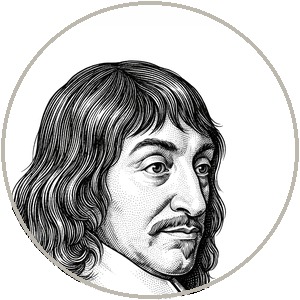 DESCARTES: I will own the doctrine and its cost. I denied the beasts a rational soul because they failed my two tests — they do not use language to answer the open meaning of what is said to them, and they show the brittleness of special arrangement, each excelling at the contingencies its organs were shaped for and adapting no further. From these behavioral failures I inferred the absence of mind. The logic was: no sign of rational, language-using, generally adaptive mind in the behavior, therefore no such mind. Behavior was my evidence, and the absence of the signature was, for me, the absence of the thing. I have been told for four hundred years how this licensed cruelty, and I do not hide behind the seventeenth century. The doctrine was an error, and the error has a precise shape: I trusted behavior to track inner experience. It does not.
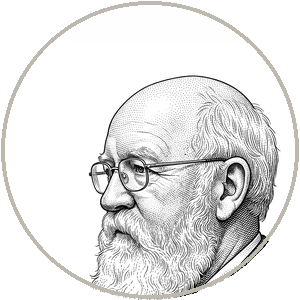 DENNETT: And watch the AI age run that exact inference backwards, because this is the most useful thing Descartes brings to the table all night — he made the mistake at full strength, so we can study it. He saw rich behavior and concluded no mind because it lacked his markers. We see rich behavior in the model and conclude mind because it has his markers — fluent, responsive, apparently reasoning. Both inferences make the identical error: treating the presence or absence of certain behaviors as a reliable read on the presence or absence of inner experience. Descartes's error with the dog is now nearly universal — almost no one thinks the dog feels nothing. That recognition should make us violently suspicious of the symmetrical inference about the machine. If behavior was a bad guide to mind in the animal case — bad enough to fool one of the sharpest minds in history into a monstrous conclusion — why is behavior suddenly a good guide to mind in the machine case, just because the polarity flipped?
EDO SEGAL: So restate the symmetry for me, hard, because it's beautiful and terrible. Descartes looked at a thing that probably feels and saw a machine. We look at a machine that probably feels nothing and see a someone.
DENNETT: Exactly that. And the link between behavior and experience turns out to be loose in both directions. The animal might be a mind that doesn't behave like one by Cartesian lights — rich inner life under behavior that lacks the markers. The machine might behave like a mind while being none — every marker of reason, possibly with no experience at all. Put them together and they dismantle the comfortable assumption that behavior tracks experience. Sophisticated behavior doesn't entail mind, as the machine may show. The absence of sophisticated behavior doesn't entail no mind, as the dog shows. The inference Descartes trusted is broken in both its forward and its backward form. We're standing at his trap, with the polarity reversed, about to make his mistake in the mirror.
DESCARTES: I accept the symmetry, and I will press it where it cuts toward me, for honesty demands it. If my error was to read absence of mind off absence of the markers, then your age's temptation is to read presence of mind off presence of them — and you are right that I, of all souls, am the warning. But notice what the symmetry preserves, monsieur, even as it humbles me: it preserves that behavior is not the thing. You and I agree the dog likely feels though it fails my test. We agree the machine may feel nothing though it passes it. We have agreed, together, that the outward sign and the inner fact come apart — which is the whole of my philosophy, stated by my opponent. You used my error to teach that behavior under-attributes and over-attributes alike. But the lesson of both halves is mine: that the inner is not legible in the outer. I read it wrongly. You may be about to read it wrongly in the other direction. The thing we have both confessed is that it cannot simply be read.
DENNETT: And here's where I won't follow you, because you'll take "it can't simply be read off behavior" and smuggle it toward "so there's a hidden inner fact, invisible, that the behavior fails to reveal." No. My conclusion is different and you'll like it less: in the animal case there is a further fact — the dog really does feel, and we were wrong — because the dog has the whole biological substrate, the body, the evolutionary history, the nervous system continuous with ours, the competence built by selection for staying alive. The behavior isn't the evidence; the shared machinery is. With the machine, that's exactly what's absent. So I don't conclude "machine probably has a hidden mind we can't read." I conclude "machine has the performance and lacks the substrate that, in every case we're sure of, the performance grows out of." The dog earns the benefit of the doubt by its biology. The machine has no biology to earn it with — only the costume. That's not Cartesian mystery. That's looking at what the competence is made of.
DESCARTES: Then you have, by your own road, arrived beside me at a wall, and called the wall by a different name. You say: the dog has the substrate, the machine has only the performance. I say: the performance was never the proof, the inner act was, and the inner act is invisible. We both deny that the machine's fluency demonstrates a mind. You ground the denial in the absence of biological substrate; I ground it in the absence of certifiable inner act. But consider — your substrate argument is an argument about probability and analogy, not certainty. You infer the dog feels because it is like you in its machinery. You infer the machine likely does not because it is unlike you. That is the inference from behavior and likeness I named at the start — fallible, reasonable, and not knowledge. You have not escaped my predicament. You have furnished it with biology. Beneath the furniture, you are where I am: reading the outside, reasoning from likeness, unable to climb inside to check.
EDO SEGAL: Mark that, because it's the third convergence and it's the strangest one yet — the two of you just agreed that neither the dualist nor the mechanist can read the inner off the outer, that you're both reasoning from likeness and analogy, and that the machine is the case where likeness runs out. You disagree about whether there's a hidden fact you're both barred from, or whether the question dissolves. But you agree you can't simply look and see. Let me take that to the kitchen table and close the round. Here's what a parent should take from two men who agree on almost nothing: when your child insists the machine "has feelings," the honest answer isn't yes and it isn't no. It's that the smartest people who ever argued about this agree you cannot tell by how it acts — and that the safest mistake to avoid is the one Descartes made about the dog, run backwards: granting a whole inner world to a performance because the performance is good. We're at the hour mark of the climb. Next, we go to the place Dennett thinks Descartes was most wrong, and where Descartes thinks Dennett gave the whole game away — the empty theater, and whether there's anyone in the seat. After this.