The Marker and the Number
 **EDO SEGAL:** Antonio, before we get to the word "I," I want to stay one more beat on the machinery of choice, because you have given it a name and I want the reader to hold it. The somatic marker. Tell it to me the way you would tell it to my daughter, who is twelve, and then I want to ask you both the hardest version of the question, which is whether you could ever build the marker into the machine on purpose.
 **DAMASIO:** Here it is for a twelve-year-old. When you have to choose — which door, which friend, which risk — your brain does not sit down and calculate every possible future. It cannot; there are too many. Instead, the moment you imagine an option, your body gives you a little feeling about it. A bad option gives you a small bad feeling, a tightening, a flinch you might not even notice. A good option gives you a small warmth. These [feelings are markers](https://www.youonai.ai/fieldguide/med/somatic_marker_hypothesis) — they are your body remembering, in its flesh, how things like this turned out before, the times you were hurt and the times you were safe. They do not decide for you. They narrow the doors down to the two or three worth thinking hard about. Then your reason walks through those. Feeling goes first and clears the way; reason follows and chooses. They are partners. The feeling is not the opposite of being smart. The feeling is what lets being smart finish in time to matter.
**EDO SEGAL:** And the machine's version of that is reward — a number it tries to make bigger. On the surface that looks like your marker translated into math. Where exactly does the resemblance break?
**DAMASIO:** It breaks at the word *somatic*. My marker is a state of the body — a real physiological event with a felt quality, grounded in a nervous system that has actually been hurt and actually been soothed and remembers both. The machine's reward is an externally supplied scalar, defined by engineers, computed with no felt component, attached to no body and no history of real suffering or real satisfaction. When a learning agent "values" an outcome, there is no distress a bad outcome produces in it, no echo of past pain, nothing it is like for the number to fall. The marking is real as computation and absent as experience. So the resemblance is the resemblance between a photograph of a fire and a fire. One will keep you warm and one will not, and the difference is the whole thing.
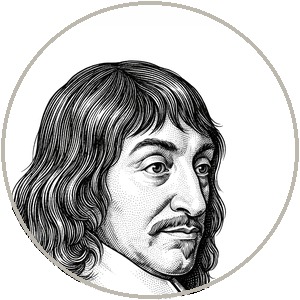 **DESCARTES:** Now here is where I press, because Antonio has, I think, conceded more than he means to. He keeps saying *as built*, *currently*, *the systems we have*. But he co-authored a paper — I was briefed on this — proposing how one might build a machine that feels, by giving it a [homeostasis of its own](https://www.youonai.ai/fieldguide/med/homeostasis_damasio), internal states it must regulate, a vulnerability, a kind of self-preservation. So Antonio does not actually believe feeling is reserved for carbon. He believes it requires a certain structure — a self to preserve, a death to avoid — and that this structure could, in principle, be built. Which means his disagreement with me is not metaphysical at all. It is engineering. He thinks feeling is a substance only flesh can host; no — he thinks feeling is a *pattern of stake* that silicon has merely not yet been given. That is far closer to my view than to his rhetoric. I say the act of mind is substrate-independent. He says feeling is substrate-independent given the right organization. We are quarreling about a recipe, not a kingdom.
**DAMASIO:** That is the sharpest thing you have said and I will not dodge it, because you have read the paper correctly and the concession is real. Yes — Kingson Man and I argued that a truly intelligent agent ought to hold its own meta-goal of self-preservation, the way living organisms do, with survival riding on the continuous regulation of its own states, and that such a machine might acquire something like a genuine source of motivation rather than a borrowed one. So I concede that feeling is not magic and not necessarily reserved for meat. But hear the condition, because the condition is the argument. To give a machine a real stake is to give it something it can really *lose* — something like a real death. A system that could feel would have to be a system that could be genuinely harmed and genuinely destroyed, organized around preventing it, its own existence truly on the line. That is not what anyone is building. We are building disembodied optimizers — adding capability while adding no stake, growing more fluent while remaining as bodiless as ever. They are moving in exactly the wrong direction. So the gap between current AI and a feeling machine is not a gap of scale you close by making the model bigger. It is a gap of kind, and crossing it means deliberately constructing a vulnerable, mortal, self-preserving thing — which, the moment you do it, stops being a tool and becomes something you have obligations toward. The recipe, Rene, requires an ingredient no one wants to add: a real death.
**DESCARTES:** Then I have what I wanted from the round, and it is more than I expected. Antonio agrees that thinking — or feeling, his word for the thing that matters — is not bound to flesh by metaphysical law. It is bound to a certain organization that we have not yet built and may choose never to build. That is a vastly weaker claim than *Descartes' error*. It is *Descartes was premature*.
**DAMASIO:** It is not weaker, it is more demanding, and you are hearing the part you like. Your error was not believing mind could exist apart from *this particular* flesh. Your error was believing mind could exist apart from a body *at all* — apart from the regulating, vulnerable, mortal organism that mind is the experience of. I have not given that back to you. I have specified it. The thinking thing with no body is still impossible on my account. I have only conceded that the body need not be made of the same stuff as ours, provided it can truly live and truly die. The machine you want to defend has neither. It is not a premature mind. It is a permanent non-mind, unless someone builds it the one thing that would make it stop being the thing you are defending.
**EDO SEGAL:** I want to name the strange place we have arrived, because the reader cannot see your faces and I can. That was the first exchange tonight where neither of you was performing. Rene came in to defend the disembodied mind, and he has just won a concession — that feeling is buildable in principle — and discovered the concession is a trap, because the price of it is mortality. Antonio came in to bury the disembodied mind, and he has had to admit the grave is not sealed by metaphysics, only by the fact that no one wants to build a machine that can die. You have converged on something genuinely uncomfortable for both of you: the only machine that could feel is one we would have to be willing to let suffer. Mark that as convergence number two. Now — the word "I." Rene, defend your foundation.