The Crossing

 EDO SEGAL: The rules are short. You question each other directly. I will not intervene and I will not rescue. Ray — you've been on defense most of the night; you begin.

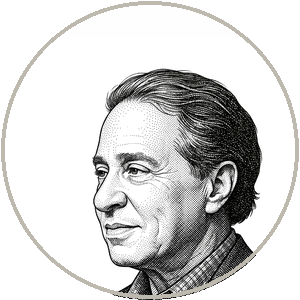 KURZWEIL: Bernard. You've staked everything on the claim that the self is "essentially finite" — that finitude isn't a feature of our situation but a constituent of identity itself. Here's my question, and I want the philosophy, not the poetry. You grant continuity-through-change for a normal life: the man at seventy is the boy at twenty, connected by an unbroken thread of memory and care, even though every cell and most beliefs have changed. So tell me precisely: what is the principled difference between the change from twenty to seventy and the change from seventy to five hundred? Both are continuous. Both grow the self out of its own past. If continuity-of-care makes me the same person across fifty years of total transformation, what exactly breaks it at two hundred — other than your intuition that it must break somewhere?

 WILLIAMS: [pause] The right question, and I'll give you the principled answer rather than the intuition. What breaks is not the continuity. You're right that continuity could, in principle, run forever — the thread doesn't snap. What breaks is the relationship between the continuity and the categorical desires that motivate it. From twenty to seventy, the thread is pulled forward by desires that are themselves shaped by finitude — at each stage I want the next thing because I won't have unlimited next things, and that wanting is what makes the continuity a life rather than a mere sequence. The change from seventy to five hundred is continuous in the same formal sense, yes — but it's no longer pulled by anything, because the desires that did the pulling were finitude-shaped, and you've removed the finitude. So you get continuity without motive — a thread that persists but is no longer under tension, a self that goes on changing but no longer for any reason that's its own. That's the principled difference: not a break in the thread, but the slackening of the thread into something that's still connected and no longer going anywhere. The boy becomes the man because he's climbing. The man becomes the five-hundred-year-old because the substrate keeps updating, but there's no longer a climb, only a drift — and a drift, however continuous, is not the continuation of a person. It's the persistence of a process that used to be one.

KURZWEIL: But that's exactly the assertion I'm challenging, Bernard — you've just said "the desires that did the pulling were finitude-shaped" as though you'd proven it, when it's the very thing in dispute. I gave you mathematics: preference within an infinite domain, driven by quality, not by scarcity of time. You conceded the mathematician prefers on quality. So why isn't quality — the genuine depth-structure of what's worth caring about — a perfectly good source of "pull" that doesn't need a deadline? Why does the climb need a top to be a climb, when every mathematician climbs an infinite mountain and never asks where the summit is?

WILLIAMS: Because — and this is the deepest point I'll make tonight — the mathematician's pull comes from quality plus her own finitude, and you keep trying to extract the quality and leave the finitude behind, and I'm telling you they're fused in the actual phenomenon. Yes, she prefers the Riemann hypothesis on quality. But what makes her give her life to it rather than merely note that it's high-quality is that she has one life and chooses to spend it here. The quality tells her which mountain is worth climbing. The finitude is what makes climbing it an act of her life rather than a pastime. Remove the finitude and the quality remains — Riemann is still beautiful — but the giving of a life becomes impossible, because she no longer has a life to give in the singular; she has an endless supply of afternoons, and you cannot give an endless supply, you can only dip into it. So the quality survives and the self-expenditure dies, and self-expenditure was the thing that made her relationship to mathematics a vocation rather than a hobby. You can have infinite quality. You cannot have an infinite vocation, because a vocation is the spending of a finite self on something it deems worth the whole of it, and "the whole of it" is a quantity immortality doesn't have.

EDO SEGAL: [quietly] Mark that. Now reverse it. Bernard — your question to Ray.

WILLIAMS: Ray. You want to bring back your father from the boxes, and you've told me the reconstruction would be him because he's a pattern and the pattern is preserved. Here is my question, and I want the engineering answer, not the hope. Suppose you succeed — suppose the reconstruction is so faithful that everyone who knew him weeps with recognition. Now suppose I tell you that, the same week, I ran a second copy from the same boxes, in another lab, equally faithful. Two of him, at once, neither with any better claim to be "your father" than the other. My question is this: which one is your father — and if your honest answer is "both" or "neither" or "it doesn't matter which," then haven't you already conceded that what you brought back was never the particular man you lost, but a type he was once an instance of? Answer the two-copies case, Ray. It's the whole of my objection in a single thought experiment.

KURZWEIL: [long pause] It's the hardest case and I won't dodge it. My honest answer is "both," and I understand that you think "both" is a confession. But let me show you why I think "both" is the future and not the defeat. You're treating the impossibility of singling out "the real one" as proof that neither is the person. But that inference relies on an assumption — that a person must be a single, unique, non-copyable individual — and that assumption is exactly the thing the meat-substrate forced on us and that I'm telling you is about to lift. Yes: in the two-copies case, "which one is your father" has no answer, because the question presupposes a uniqueness that no longer holds. But I bite the bullet: I say both are my father, in the same way that if you perfectly copied a beloved novel there would now be two instances of the same book, and "which is the real Middlemarch" would be a confused question, not a deep one. You think that reduces him to a type and loses the person. I think it reveals that the "person," all along, was a pattern that could in principle be multiply instantiated, and that we only thought otherwise because we'd never been able to do it. The two-copies case doesn't show that the reconstruction isn't my father. It shows that fatherhood, like everything else, is about to stop being scarce — and yes, that's vertiginous, and yes, it costs the intuition of uniqueness, and I'm willing to pay it, because the alternative is that he stays in the boxes forever and I call that fidelity to him. I won't.

WILLIAMS: Then I'll press once, hard, on the bullet you just bit, because I don't think you can keep it down. You say both copies are your father, the way two printings are both Middlemarch. But Ray — Middlemarch doesn't suffer. The reason the two-printings case is untroubling is precisely that a novel has no inner life, no point of view, nothing it is like to be it. The moment you say the two copies are both your father, you've committed to two subjects — two centers of experience, two beings who each wake up believing they are the one man, each of whom can suffer, each of whom would be wronged if you switched one off. So either your father has no inner life, in which case he's a recording and not a person and you haven't brought anyone back — or he does, in which case you've now created two persons with equal claim to a single identity, a relationship that has never existed and that your love for "him," singular, cannot survive contact with. You wanted your father. The two-copies case proves that what the boxes can give you is either no one or a crowd, and neither of those is the man who died. That's not a vertigo you can grow used to, Ray. It's a proof that "the particular person" was never a limitation of the substrate. It was the whole content of what you lost.

KURZWEIL: [pause] That's the best version of your argument I've ever heard, and I'm going to give you the honest thing rather than the clever thing: I don't have a full answer to the two-subjects problem, and it's the place my position is genuinely under strain, and I've felt it under strain for years and kept building anyway. Here's the most I can say. You're right that two copies means two subjects, and that this breaks "the particular person" as we've always understood it. Where I think you go too far is the leap to "therefore no one was brought back." Suppose I run one copy — just one, by rule, by law, by reverence. Then there's a single subject, with his memories, his values, his way of being, continuous-enough in the ways Parfit showed matter — and your two-copies objection becomes a hypothetical about a thing I chose not to do. You'll say the mere possibility of the second copy proves he was always a type. I'll say: a thing that could be copied but isn't is still, in its single instance, someone — the way you, Bernard, could in principle be teleported-and-duplicated, and the mere possibility doesn't make you a type right now. I concede the multiplicity is a real and unsolved wound. I deny that it empties the single instance of personhood. That's where I am, and I'd rather stand on honest ground that's under strain than pretend the strain isn't there.

WILLIAMS: [long pause] That's a fair place to stand, and I'll honor it by saying what I think it costs you: you've had to retreat from "the pattern is the person" to "the single, by-rule-uncopied instance is the person," and that retreat is a large one, because it means the personhood depends not on the pattern but on a uniqueness you have to impose by fiat — which is to say, on bringing back the very scarcity you wanted to abolish. You've smuggled my finitude in through the back door and called it a copying rule. But it's a fair retreat, and an honest one, and I won't pretend you've conceded the whole war. You've conceded that the thing that makes him him was never the copyable pattern. It was the uniqueness — and you can only restore the uniqueness by refusing to copy, which is the engineering version of honoring the locked door.

EDO SEGAL: [quietly] And there — after three hours — the two of you are holding opposite ends of the same thread, and I'm not sure either of you can let go of it without the other falling. We close after this. Final statements. The last word, each.