The Crossing
 **EDO SEGAL:** The rules of this round are short. Each of you questions the other directly. I will not rescue anyone. Professor Gödel — you won the toss backstage. Begin.
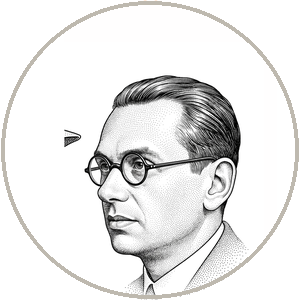 **GODEL:** Laplace. You have conceded, tonight, more than I expected — that the demon eats its own tail when aimed at a self-reading human, that the residual escapes the determinate, that synthetic text breaks your instrument. So here is my question, and I want the mathematician's answer, not the rhetorician's. Name the observation that would make you abandon the demon entirely. What, concretely, would have to be true for you to say: completeness is not merely unreached but impossible, and I was wrong to dream it could be closed?
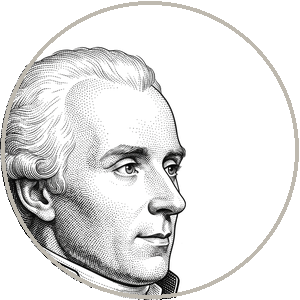 **LAPLACE:** That is the right question and I will answer it honestly rather than safely. The demon dies, fully, the day it is shown that there exists a determinate truth about the physical world — not a self-referential curiosity at the edge, but a fact squarely inside the domain I cared about — that no possible computation from complete data could ever reach. You have shown me this for arithmetic, and I have conceded arithmetic. What I have not conceded is that it reaches the physics. If you could show me that the prediction of some ordinary physical event — the weather, a mind, a market — requires not merely more data but a truth that no formal procedure operating on any data could ever derive, then the demon is dead in its own house, not just in its attic. I suspect you believe you have shown this. I do not yet grant that the human mind, or the chaotic system, is a counterexample of that strength rather than merely a counterexample of complexity. Convince me the wall is formal and not just practical, in the physical domain, and I abandon the demon in the only room I ever truly cared to keep it. Now mine, Professor. You have leaned all night on one act — the seeing, your grasp that the Gödel sentence is true. I want your falsifier. What would have to happen for you to conclude that the seeing is not transcendence but computation — that you were a machine all along, performing a deep inference and calling it insight?
**GODEL:** That is the question I have circled my whole life, and I will not flinch from it now. The seeing is revealed as computation the day a formal system is exhibited that does what I do — that, for any system you hand it, produces the recognition that the system's Gödel sentence is true, not by being handed the answer, but by generating it from outside the handed system, reliably, as a general capacity. If a machine could take an arbitrary formal system it had never seen, one whose Gödel sentence is nowhere in its training, and [correctly see — derive, I would have to say — the truth of that sentence](https://www.youonai.ai/fieldguide/med/continuum_of_understanding) by stepping outside the system the way I do, then my seeing is a procedure, and I am a machine that did not know its own program. I expected, when I was young, that this could never be done, that the seeing was essentially non-mechanical. I will tell you what unsettles me: I am less certain of that than I was, because the machines have done things I would have called non-mechanical. So my falsifier is real and it is approaching, and I am too honest to pretend the trend has been running my way. That is my answer. And it costs me more than yours cost you.
**LAPLACE:** Then let me push exactly there, because you have opened the door yourself. You say the seeing might be a procedure you cannot perceive the program of. But Gödel — that is my entire position about the human, stated in your own mouth. I have said all night that your intuition might be a deep inference whose machinery is hidden from introspection. You have just conceded the machinery might be there and merely invisible to you. So what is left of your transcendence except the feeling that it is transcendence? And the feeling, you and I agree, is exactly what a sufficiently deep computation would produce from the inside. You have one card — the seeing — and you have just admitted it might be a computation in a costume. Why do you still lean on it?
**GODEL:** Because the feeling is not all that is left — there is the structure of the act itself, and I will give it to you precisely. When I see the Gödel sentence is true, I do not merely feel conviction; I do something that, if it is a computation, is a computation no system can perform on itself: I stand outside a given system and judge it. The machine in your objection performs this from outside the handed system — but it performs it from inside its own system, which has its own Gödel sentence it cannot see. So even if the machine sees the truth of every system handed to it, there is always one system it cannot step outside of: itself. And I, apparently, can do to my own system what the machine cannot do to its — or so it seems to me, and the seeming is not nothing, because it is the same seeming that turned out to be right every time the formalists told me competence without rules was impossible. So I lean on the seeing not because I have proved it transcends computation, but because every previous time someone said "that is just mechanism," the mechanism turned out to be larger than they thought and the seeing turned out to be real. I am betting on the direction the evidence has run for a century. You are betting against it. We will not settle it tonight, and I have made my peace with dying before it is settled.
**LAPLACE:** *That* is the most honest thing either of us has said, and I will answer honesty with concession. You are right that I keep needing the demon — a being I admit cannot exist — to close the hole, and you keep needing the seeing — an act you admit you cannot prove transcends mechanism — to open the door. We are two men, Gödel, each leaning his whole weight on the one thing he cannot have. I have felt it all evening and resented it. Here, at the crossing, I will simply name it: my certainty and your certainty are mirror images, each propped on an impossibility the other keeps pointing at. Perhaps that symmetry is the truest result of the night. Perhaps the honest position is neither the closed equation nor the open door, but the standing in the not-knowing — which is, I notice, exactly what I built probability to do, and exactly what you did when you refused to claim the proof you did not have.
**GODEL:** Then let me ask you the question I have wanted to ask since your opening, the one that is not about mathematics. You spent your life reaching for a completeness you knew you could not hold. You died, I am told, honored, in your bed, a marquis. I spent my life proving the incompleteness, and I died of starvation, unable to trust that my own food was not poisoned — the surveyor of consistency, undone by a private inconsistency, unable to certify the reliability of my own perceptions. There is a dark rhyme in it: the man who proved no system can vouch for itself, ending as a system that could not vouch for itself. So my question, Marquis, knower to knower: which of us was the cautionary tale? The man who reached for a completeness that does not exist, or the man who proved the hole and then fell into it?
**LAPLACE:** Neither, and I will not let you have that grief so cheaply, because it is the one place tonight I can offer you something better than an argument. You did not fall into the hole you proved. You fell into the human hole — the one no theorem describes, where a mind cannot certify the reliability of its own fear. That is not the incompleteness of arithmetic. It is the incompleteness of being a fragile creature housing a luminous intelligence, and it is the same hole that takes us all, marquis and logician alike, in our beds or out of them. The cautionary tale is not your death and not my dream. It is that the most rigorous minds who ever lived could not vouch for themselves at the end — which is precisely the thing you proved and I should have learned from you. We are both the cautionary tale, Gödel. And we are both, I think, the consolation: that two creatures who could not certify themselves nonetheless saw, between them, almost the whole shape of the question. That is not nothing. From where we are sitting, it may be everything.
**EDO SEGAL:** *And there — after two and a half hours — the determinist is comforting the logician about the consistency of a soul.* We close after this. Final statements. The last word each.