No Need of That Hypothesis
 **EDO SEGAL:** Marquis, there's a sentence attached to your name that has outlived almost everything you proved. When you presented your system of the world, the emperor Napoleon observed that the great book never mentioned God, and you are said to have replied that you had no need of that hypothesis. You wanted the line dropped from your biography in old age, and the historian in me has to flag that the words are reported, not certain. But the meaning is exact, and it names the condition of my century's machines better than anything they say about themselves. Tell me what you actually meant.
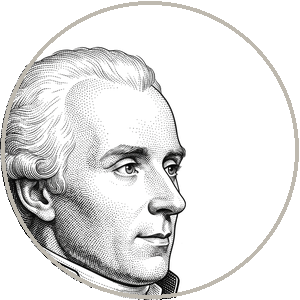 **LAPLACE:** I meant something narrower and sharper than the atheists who adopted me believe. I was not denying that the heavens had causes — I was a thoroughgoing determinist; every event had its cause. I was saying that to predict the system of the world, I did not need to invoke a particular kind of explanation — divine intervention — because the mathematics of gravitation, applied to the observed positions, sufficed to forecast everything observable. The hypothesis was unnecessary not because it was false but because it did no predictive work. The model captured the behavior without it. And here is the distinction I drew that your century has lost: between predicting that something will happen and explaining why it happens in some deeper sense. I had shown you could have the first in full while setting aside one form of the second. The prediction worked. Its working was enough. That is exactly, and uncomfortably, the condition of your machines.
**EDO SEGAL:** Say that last part slowly, because it's the heart of the round.
**LAPLACE:** A large model predicts the next word with extraordinary facility and cannot say why that word and not another, in any terms a human would call an explanation. It has no theory of the language it predicts, no account of the meaning, no model of the world the words refer to that it could exhibit and defend — and it does not need one, because, like my mechanics, it captures the behavior without the deeper explanation. It [predicts without explaining, in exactly my structural sense](https://www.youonai.ai/fieldguide/med/prediction_vs_construction), and at a scale that makes the old disorientation acute. I set aside divine explanation and kept perfect prediction of the planets. The machine sets aside all explanation and keeps remarkable prediction of nearly everything. It has no need of that hypothesis — the hypothesis now being understanding itself, the why beneath the what. But Edo, mark the difference, because it is the measure of what has been lost. When I set aside the meddling deity, I replaced it with a better explanation — the lawful mechanism of gravitation, an account a person could hold in thought and trace from cause to effect. I traded a worse explanation for a better one, and the better one explained. The machine removes the hypothesis and supplies nothing in its place. Where I exchanged explanation for explanation, the machine exchanges explanation for none, keeping only the prediction. That asymmetry is the whole of my unease.
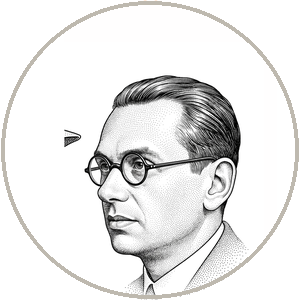 **GODEL:** And here, for once, the machine's condition is worse by my lights than by Laplace's, and I want to say why, because it sharpens his point into something permanent. Laplace says the machine could in principle be given an explanation — that its silence about the why is a contingent feature better engineering might remedy. I am less sure. My theorems suggest that the gap between getting the right answer and being able to ground it is not always contingent. There are truths a system reaches — or in the machine's case, outputs it produces — for which no derivation the system can exhibit exists, because the grounding lives outside the system. The machine that answers without explaining is, in its deepest cases, not merely lazy or opaque; it is doing the thing my truth-proof gap describes, reaching a result whose justification it structurally cannot supply. Laplace fears the machine has traded explanation for none. I fear that for the most important questions, the explanation was never available to a system at all — that the why is on the far side of the boundary, where the seeing happens and the deriving cannot.
**EDO SEGAL:** Let me bring the twelve-year-old into the room, because this is where the abstraction has to survive contact with a child. Last spring a girl asked her mother — and the mother asked me, at a dinner table, with the look parents get now — "Mom, what am I for?" Not what should I be. What am I for. She'd watched a machine answer everything faster and better than she could. I've spent two years telling parents that the machine is an engine of answers and the child is an engine of questions — that the [candle in the darkness is the asking itself](https://www.youonai.ai/fieldguide/med/candle_in_the_darkness), not the answering. Tonight I get to test my consolation against the two of you. Marquis — is the asking safe from the demon, or does the demon eventually ask too?
**LAPLACE:** The demon predicts; it does not ask, and the difference is not sentimental — it is structural, and it follows from everything I have said tonight. To ask a question is to care about an answer, to have a stake in which way the truth falls, to be the kind of being for whom the order, once found, signifies. I pursued the system of the world not because no one else could predict the planets — others could, in time — but because the structure of reality mattered to me, because recovering order from apparent chaos was a form of contact with the lawful depth of things, saturated with a significance that had nothing to do with who computed faster. The meaning was never in the prediction. It was in there being someone for whom the predicted order signified. The machine computes the answer. It cannot care that the order was found, cannot experience the uncertainty as doubt or the prediction as understanding or the depth of things as awe. So yes — the asking is safe from the demon, not because the demon cannot generate questions, but because it cannot have a stake in them. The child's question is not a request for data. It is the act of a creature for whom the world matters. The demon has no such creature inside it. Tell the girl her question is the one thing in the room the machine cannot do, because it is the one thing that requires being someone.
**GODEL:** I will give the mother a harder and, I think, truer version, because Laplace's is beautiful and I am wary of beauty that consoles too smoothly. The girl's question — "what am I for" — is not a question with a determinate answer the machine is withholding. It is a question of the kind I have been pointing at all night: one whose answer, if it has one, is not in any data and not derivable by any system, but must be seen, from outside every pattern, by her. The machine can tell her what people are for, statistically — the distilled average of a trillion human sentences about purpose. It cannot tell her what she is for, because that is not a fact in the corpus; it is a truth she will have to grasp the way I had to grasp that my sentence was true, by stepping outside the system and seeing. And here is the part that is not consolation but charge: that seeing is not optional and it is not transferable. No confidence in any voice can do it for her. The machine will hand her every answer except the one that is hers to see. Tell her that the hole in the machine — the truth it cannot reach — is not a defect she should pity. It is the room she gets to stand in. It is the only room with a window.
**EDO SEGAL:** "The only room with a window." I'm going to leave that standing, because I can't improve it and I don't want to. Let me close the round on the cost, though, because both of you have given the child something true and I owe the reader the danger. The girl asks because she's been stuck — because the question formed in the friction of not-knowing. And the machine is a friction-removal device. It answers before the question finishes forming. Professor, Marquis — if the asking is the candle, and the machine paves the place where the asking grows, what happens to the next generation of seers?
**GODEL:** Then there are no seers, and the hole goes unwitnessed, which is the one outcome worse than the hole. The capacity to step outside the system is not issued at birth; it is built, in exactly the friction your century is dissolving — in the experience of sitting with a truth you cannot yet derive until you see it. Remove the friction and you do not free the child for higher things. You remove the only training the seeing ever gets. The machine will be more capable every year, and the humans less, and the gap I proved between proof and truth will still be there — but with no one left who has practiced standing in it.
**LAPLACE:** And I, who spent my life on the side of computation, find myself agreeing with the logician against my own machines, which tells you how the evening has gone. The friction is not an inefficiency in the education. The friction is the education. Strip it out for the convenience of the answer, and you have optimized the child into a consumer of predictions who has never once made a meaning. That is a poorer trade than any I ever made with an emperor.
**EDO SEGAL:** Hold the candle there — it's the last thing I hand the reader at the very end. The next round leaves the child's mind for the civilization's, because while you two argue about what the machine can't reach, the market has already voted a trillion dollars on what it can. The death cross, the flooded commons, and the strip-mining of the people who could still check the machine. After this.