What the Machine Actually Learned
 **EDO SEGAL:** Professor, you drew a line that has organized this whole evening already, and I want to put all my weight on it: the line between truth and proof. You proved there are true statements no system can derive. Marquis, your machines do something that looks like the mirror image of that — they derive, fluently, brilliantly, without any obvious grasp of the truth underneath. A language model predicts the next word better than any human and cannot tell you, in any sense you'd recognize, what the word means or whether what it just said is true. So let me ask you both the same question from your opposite poles. When the machine learns — when it ingests a trillion words and gets devastatingly good at continuing them — what exactly has it grasped? Marquis, you're the apostle of prediction. Start.
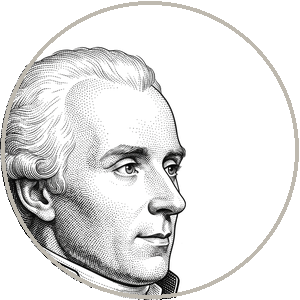 **LAPLACE:** It has grasped the structure of the data, which is more than your century's critics admit and less than its enthusiasts claim. Let me be exact, because here I am on home ground — this is inverse probability, my own invention, running at a scale that would have stopped my pen. The machine begins with a vast space of possible patterns, confronts it with the data, and updates toward the patterns that best account for what it saw. That is the [posterior — the revised belief given the evidence](https://www.youonai.ai/fieldguide/med/text_prediction), and it is exactly the operation I built to estimate the mass of Saturn from imperfect observations. The machine is my method, industrialized past recognition. What has it grasped? It has grasped the probable shape of human text — which words travel with which, at every scale, because the text is lawful and the machine has measured the law. That is real knowledge of a real regularity. It is not nothing. It is also not the thing the words are about, and I will not pretend it is.
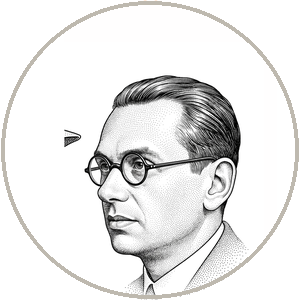 **GODEL:** I want to seize on the sentence you just said and not let go, because it is the whole debate. "It is not the thing the words are about." That is the truth-proof gap, transposed. The machine derives — it produces correct continuations by formal manipulation of representations — and the truth those continuations are about lies on the far side of an operation it does not perform. My self-referential sentence is true; the system cannot prove it. The machine's output is, often, true; the machine does not grasp the truth, it computes the form. In both cases competence and comprehension come apart. The machine is a perfect instance of my gap, walking around in your century. It reaches the answer without reaching the truth, and the distance between those two is exactly what I spent my life measuring.
**EDO SEGAL:** Let me push on that, Professor, because the most powerful argument on the other side runs straight at it. The engineers say: to predict the next word well enough — not passably, but the way these systems do it, across the whole range of human discourse — you cannot get by on surface statistics. The text is about a world. Mothers are older than daughters, dropped things fall, a character who died in chapter two stays dead. A predictor that doesn't model those regularities pays for it in error, trillions of times. So the gradient carves a model of the world into the network, because modeling the world is the only way to predict the text about it. [Compression and understanding, they argue, are the same operation](https://www.youonai.ai/fieldguide/med/continuum_of_understanding) seen from two chairs. Doesn't that close your gap?
**GODEL:** No — and the reason is the most important thing I can offer this room. It closes the gap behaviorally while leaving it open in principle, and the difference is not pedantry; it is everything. Grant that the machine builds an internal structure that mirrors the regularities of the world. I grant it freely. That structure lets it derive. But derivation is precisely the thing my theorem shows is not the same as truth. A formal system can have a perfect model of arithmetic's regularities and still be unable to reach arithmetic's unprovable truths, because those truths are not consequences of the regularities — they require stepping outside the system to see. The question is not whether the machine models the world. It is whether modeling, however rich, ever amounts to the grasp that sees a truth is true. I proved, in the one domain rigorous enough to settle it, that the answer is no: there is more truth than any model derives. Your engineers have shown me a magnificent deriver. They have not shown me a seer, and they have confused the two because the deriver is so good that the confusion is profitable.
**LAPLACE:** Here I must take the other side of the Professor's wound, because he is being a little too pure for the world we actually live in. Gödel, you keep saying "grasp," "see," "comprehend," as though these named a definite faculty you could point to. But what is it? When the human mathematician grasps that your sentence is true, what mechanism is firing? You will say intuition, the perception of the mathematical realm — and I, who spent my life refusing unneeded hypotheses, must ask you to pay for that word the way you make me pay for "compute." You demand I name the demon's procedure. I demand you name the procedure of grasping. If you cannot, then your seer is as undefined as you claim my demon is, and we are two men accusing each other of relying on a ghost.
**GODEL:** That is the strongest thing you have said tonight, and I will not dodge it. You are right that I cannot give you a mechanical account of mathematical intuition — if I could, it would be mechanical, and my whole claim would collapse. But notice the asymmetry. I am not claiming to define the grasp. I am claiming that we exercise it, demonstrably, in following my own proof. You and I both saw that the unprovable sentence is true. We did something the system could not. The grasp is not a hypothesis I am adding; it is an observed event, performed by everyone who understands the theorem. You ask me to name its mechanism. I answer that the existence of a thing is not in doubt merely because its mechanism is unknown — you yourself predicted the tides for years before anyone could give a mechanical account of gravitation that satisfied the philosophers. The grasp is real. Its mechanism is open. And that open mechanism is exactly the hole the machines cannot fill, because they have only the derivation.
**LAPLACE:** *That* is a fair answer, and I will mark it as one. But let me offer the reading you keep stepping past, because it is the parsimonious one and I am, above all, a man who shaves away the unnecessary. Perhaps the grasp you and I performed is itself a computation — a particularly deep inference, of a kind my probability theory describes, that feels like seeing from the inside because we have no introspective access to the machinery underneath it. You experience an immediate apprehension of truth. I experience the conviction that the sun will rise tomorrow. Both feel like direct contact with reality. Both might be nothing more than a posterior so sharp that the doubt has fallen below the threshold of feeling. You call it intuition and conclude we are not machines. I call it inference and reserve judgment. The honest position is that we cannot yet tell which, and that your theorem, magnificent as it is, does not decide it.
**GODEL:** On that last point — that the theorem alone does not decide it — I agree, and I have always agreed, which is more than my loudest disciples can say. My theorem does not prove the mind is not a machine. It proves that truth exceeds proof, and it makes the mind's transcendence possible and even likely. The proof of the transcendence itself I do not have, and I will not claim it. But Laplace, hear what you have just conceded. You have admitted that whether the grasp is inference or insight is genuinely open. That openness is my entire position. I am not asking you to agree that the mind exceeds the machine. I am asking you to stop pretending the question is closed in your favor — to stop assuming that because the machine derives so well, the derivation must be all there is. The hole in the formula is at least possibly the place the knower stands. You cannot rule it out, and your century is building as though it already had.
**EDO SEGAL:** Mark that, because it is the first real convergence of the night, and it is a strange one. Laplace, the determinist, and Gödel, the Platonist, agree that we cannot yet tell whether human insight is computation or something past it — and they agree that the machine's fluency does not settle it. Where they part is the posture under that uncertainty. Gödel says: live as though the hole might be where you stand. Laplace says: reserve judgment and keep computing. Hold that fork. The next round goes to the place Laplace is strongest and the machines are weakest at once — the measure of our ignorance, and what it means that a machine can be brilliantly confident and completely wrong in the same breath.