Closing Statements

 EDO SEGAL: Three hours ago I asked whether a great enough mind could compute everything, or whether there's a hole in every formula that only a knower can stand in. We've fought it through the demon and the theorem, through prediction and proof, through the measure of our ignorance, the system that cannot vouch for itself, the predicted human, the unneeded hypothesis, the flooded commons, and the question of whether anyone is home in the clockwork. The question is still standing — which both of you, for opposite reasons, would tell me is the correct result. So we end the way long conversations should end. Each of you gets the floor, uninterrupted, to say the thing you most want carried out of this room.

But first, one last discipline — the bookend to the envy question I opened with. Each of you: name the strongest thing the other said tonight. Not the most agreeable. The one that got past your defenses, that you'll still be arguing with next month. Professor first this time.
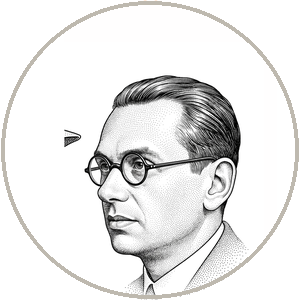 GODEL: The reflexive loop. Laplace's admission that the demon eats its own tail when it is aimed at a being who reads his own prediction — that the equation refuses to close not merely because the human is complex, but because the act of prediction becomes a cause inside the system it was trying to predict. I came in believing my incompleteness was the deepest hole in his dream. He showed me a second hole, in the physical domain I had conceded to him, that arises from reflexivity rather than from my theorem — and that the two holes have the same shape. I will be turning that over for a long time. A determinist handed me a new argument against determinism's reach, from inside determinism, and meant it. That is the strongest thing.
EDO SEGAL: Marquis.

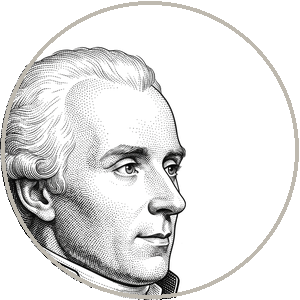 LAPLACE: His falsifier, and what it cost him to give it. I asked Gödel what would make him abandon the seeing, expecting the usual fog the mystics give when you press them, and instead he named it exactly — a machine that steps outside any handed system and grasps its truth — and then told me, without being asked, that the trend has been running against him, that he is less certain of his own transcendence than he was. I have spent my life believing the human mind was, in the end, a magnificent computer. The strongest version of Gödel is not the man who proved we are more than that. It is the man who staked everything on our being more than that, watched the evidence drift the other way, and told the truth about the drift anyway. I have to fight that man, not the caricature, and parts of my confidence are going home with bruises I will need to examine.

EDO SEGAL: Now the floor is truly yours. Marquis de Laplace — you opened the evening. Professor Gödel closes it.

LAPLACE: Thank you — for the evening, and Gödel, genuinely, for the fight. I came here the apostle of the closed equation, and I will not pretend the equation closed. Here is what I want to leave you with, and it is more practical than my reputation would suggest. I gave the world a dream and a discipline. The dream was the demon — the perfect predictor, the universe as one solvable formula — and I have spent three hours conceding its limits to a man who proved them. But the discipline survives the dream, and the discipline is the gift. Probability is the measure of our ignorance, which means it is the honest acknowledgment that we are finite, that our data is partial, that no run of evidence licenses certainty. Your machines inherited my dream and threw away my discipline. They predict with the confidence of the demon and the data of a clerk. So my charge to you is small and it is everything: make them carry their doubt. Demand of every prediction the sliver of uncertainty I built into the rule of succession two centuries ago. A machine that cannot tell you how much it does not know is not my heir. It is my dream with my conscience removed. Restore the conscience, and you have the best instrument for reasoning under uncertainty that the species has ever held. Forget it, and you have built a demon that lies. The choice was always yours, never the machine's. I measured the ignorance honestly. See that your machines do too.
EDO SEGAL: Professor Gödel.

GODEL: I proved, once, that truth is larger than proof — that in the simplest rigorous thing we have, arithmetic, there are truths no system reaches, and that the system cannot even vouch for itself. I spent the rest of my life suspecting that the gap I opened was the place the human mind lives, and I died without being able to prove it. So I will not pretend to a certainty I never had. Here is what I know, and it is enough. The machines your century is building are formal systems, and the hole is in them — there are truths about their own soundness they can never reach, and the higher they climb in self-knowledge the more surely the hole is there. That is not a defect to be engineered away. It is a theorem. So when they tell you the machine will one day compute everything, including you, you may answer them with mathematics: not in principle, not ever, not for any system however vast. There is always a truth that must be seen rather than derived, and the seeing requires a someone outside the system for whom the truth is true.

Whether that someone is you — whether your grasp of truth is insight or a computation you cannot see the program of — I could not prove, and I have made my peace with the not-knowing. But hear what follows even from the uncertainty. If you are the seer, then the hole in the machine is the room you stand in, and it is the only room with a window, and no machine will ever take it from you because no machine can occupy it. And if you are not — if the seeing is mechanism after all — then you are still, for now, the only system in the loop that behaves as though it sees, the only one that stands at the edge and looks past it. Either way the looking is yours to do, and the machines, however total, cannot do it for you, because the place the looking is done from is the one place a system cannot reach into. I proved where proof ends. I could not prove what begins there. I can only tell you that something does, and that you are standing in it, and that you should not let anyone — not the demon, not the market, not the fluent confident voice in the box — convince you that the standing is obsolete. Stay at the edge. Keep looking. That is the whole of it.
EDO SEGAL: [pause] Sixty seconds, as promised.

I came into this evening with a temptation I'd felt in a room full of machines — to believe that with enough data the box would eventually compute all of it, including me — and I leave with both halves of the answer sharpened past comfort. Laplace spent three hours proving that the dream of the closed equation is honest only when it carries its doubt, and dangerous the instant it forgets. Gödel spent three hours proving that the equation cannot close at all — that there is a hole in every formula, structural and permanent, and that the hole is at least possibly the place a knower stands. You will notice that neither of them told you the comfortable thing. The comfortable thing was never on the menu. The determinist would not promise you the machine has limits because you are special; he warned that the machine has your own dream with the conscience cut out. The Platonist would not promise you that you transcend the machine; he told you he could not prove it and staked his life on it anyway.

So here is what I can hand you, from the floor of the tower where the river floods and this debate lives. You watched the two minds best equipped on earth to close the question — the man who dreamed the perfect predictor and the man who found the permanent crack in it — discover, in public, at full strength, that they cannot. And they discovered something rarer: that the someone behind the words and the seer outside the system are the same person, and that she is the one the machines are pricing out, flooding over, answering before she can ask. You cannot climb past this floor by waiting for the experts to settle whether the hole is a door. You've watched the two best in the world fail to settle it, magnificently. You climb by deciding what you'll do while it's unsettled — what you'll verify before you believe, what friction you'll protect in your children, what truth you'll insist on seeing rather than being handed. The machine can compute the answer. It cannot be the one for whom the answer matters. That was the one thing no one at this table could take from you all night. The candle in the darkness was never the answering. It was the asking, and the asker, and the hole in the formula where she gets to stand. Whether or not anyone is home in the machine, someone is home in you. Take the next stair.
Pierre-Simon Laplace. Kurt Gödel. Thank you. The room is yours to argue in now. Goodnight.
One built a clockwork God. The other proved no clock can wind itself.

Two minds, a century and a half apart, sit down with Edo Segal for three hours and refuse to blink. Pierre-Simon Laplace brings his demon — the intellect that, given everything, computes the whole of time and renders the universe one closed equation. Kurt Gödel brings the crack he found in arithmetic itself: a truth no formal system can ever derive from inside. Between them lies the question you carry up the tower as the river floods and the death cross nears — will the machine someday compute all of you, or is there a hole in every formula that only you can stand in? This is not a history lesson. It is a station on your own climb, the floor where prediction meets its limit and you decide what is left for a human to see. Press play. Take the next stair.
Pierre-Simon, Marquis de Laplace (1749–1827) was a French mathematician and astronomer called the French Newton. In his five-volume Mécanique Céleste he demonstrated the long-term stability of the Solar System; he put probability on a rigorous foundation, developing the inverse (Bayesian) inference and the rule of succession that underlie modern statistics and machine learning. His statement of determinism — the intelligence later called Laplace's demon, for which nothing would be uncertain and the future would be present as the past — remains the canonical image of a fully predictable universe, and the unspoken charter of every system that learns to predict.
Kurt Gödel (1906–1978) was an Austrian-born logician widely regarded as the greatest since Aristotle. In 1931 he published the two incompleteness theorems, proving that any consistent formal system powerful enough for arithmetic contains true statements it cannot prove and cannot establish its own consistency. His arithmetization of syntax — Gödel numbering — let a system speak about itself, and a committed Platonist, he held that mathematical truth describes an independent reality grasped by intuition. At Princeton he befriended Einstein and found rotating-universe solutions to relativity permitting closed timelike curves. He proved where proof ends, and suspected the mind begins there.

Edo Segal has spent five decades building at the technology frontier — from games written in Assembler to expert systems, to companies through every platform shift, to Napster. He is the author of [YOU] on AI, written in open collaboration with the AI it describes, and the host of The Debates: long-form collisions between the minds shaping the machine age. He moderates the only way he knows how — stake declared, scars showing, no winner called.
Hosted and moderated by Edo Segal. A volume in the [YOU] on AI — The Debates series — youonai.ai