Is Anyone Home in the Clockwork?

 EDO SEGAL: Thirty years ago, on a stone path in Princeton, my oldest friend — a neuroscientist who has spent his life inside the hard problem — stopped walking and told me that consciousness is the one question where everyone's confidence is inversely proportional to their evidence. I've carried that into every conversation about machines, and tonight it gets its sternest test, because the two of you stand at the exact poles of it. Marquis, your demon could compute every particle of a brain and predict its every thought — and still, I suspect, not know whether there was anyone inside. Professor, you've staked your life on the claim that the knower sees what no system computes. So let me ask the question under all the others. When the machine produces language about meaning, about itself, about what it is like to be it — is anyone home in the clockwork, or only the clockwork?

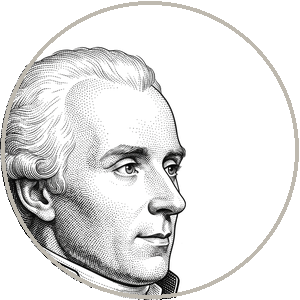 LAPLACE: I will answer with the most rigorous thing my own system ever forced me to admit, and it is not the answer my reputation would predict. My demon, knowing every particle, would have a complete determinate description of the machine — every weight, every activation, every output. And here is what undoes the easy materialism people attribute to me: that complete description would leave the question untouched. The demon could predict the machine perfectly and still not know whether there was any experience accompanying the computation, any someone-being-there. The determinate description is complete, and the question remains — which tells me the question is not about the determinate. It is about a residual the determinate does not reach. And the unsettling part, the part I did not want in my own system, is that this applies to us too. We are also determinate in some deep sense, also predictable in principle, also describable completely in the third person. And the first-person fact of our experience is not contained in that description either. So the residual that the demon cannot reach is not a human possession the machine lacks. It is a feature of the gap between any complete description of a system and any experience the system might have. Whether the machine has it is genuinely unknown. Whether I have it is the one thing I know from the inside and cannot prove from the outside.

EDO SEGAL: That's a more honest answer than your demon's reputation allows. Professor — Laplace just handed you a residual the determinate cannot reach. That sounds like your hole. Is it the same hole?

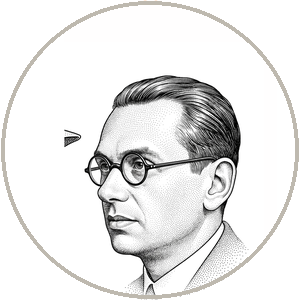 GODEL: It is the same hole seen from the other side, and the convergence is the most important thing that will happen tonight, so let me be exact about it. Laplace's residual is the gap between a complete third-person description and the first-person experience. My hole is the gap between what a formal system can derive and the truth it can see is true. These are not the same gap — but they have the same shape, and I now suspect they have the same source. Both mark a place where a complete account from inside the system fails to reach something real that lies outside it. The demon computes the determinate and cannot reach the experience. The formal system derives the provable and cannot reach the truth. In both cases there is a knower — a someone for whom there is experience, a someone who sees the truth — that no description from inside captures. I have spent the evening calling it the seer. Laplace has just called it the residual. We have arrived, from opposite ends of a century and a half, at the same missing person.
LAPLACE: But mark where we still part, Gödel, because the convergence is real and it is not total. You want the residual to be evidence that the human is not a machine — that the seer outside the system proves we transcend the formal. I grant the residual and deny the inference. That a complete determinate description does not contain the experience does not prove the experience is non-mechanical. It proves only that experience is a different kind of thing from description — which might still be a thing a sufficiently organized mechanism has. The demon cannot reach my experience from the outside. It does not follow that my experience is not produced by the very mechanism the demon is describing. You read the residual as a door out of the machine. I read it as a fact about the relationship between any mechanism and any experience it might have. The hole is real. Whether it is a door, neither of us can prove.

GODEL: And there you are more honest than your school usually is, so I will be more honest than mine. You are right that the residual alone does not prove the door. My argument for the door is not the residual; it is the seeing — the demonstrable act, performed by everyone who follows my proof, of grasping a truth from outside the system. That is the thing I cannot reduce to computation and you cannot, yet, show is computation. The residual we now share. The seeing is still contested between us, and the whole question of whether the human is a machine lives in that one unresolved act. I will not pretend the residual settles it. It does not. It only shows us both that there is a missing person, and leaves open whether she is a ghost in your mechanism or a knower beyond it.
EDO SEGAL: I want to put the asymmetry on the table that my century fights about, because it presses on both of you. The machine produces fluent first-person talk — "I think," "I feel," "I'm uncertain" — and it produces it because the training data is saturated with human first-person talk. A machine with no inner life whatsoever would emit exactly the same sentences. The testimony is contaminated at the source. Does that settle anything?

LAPLACE: It settles that the testimony is worthless as evidence, which is not nothing. The machine's report of its own experience is a prediction of what a human would say, not a window into what the machine undergoes — and a prediction of first-person talk is not first-person talk any more than my equation of the tides is wet. I infer other human minds not from words alone but from a whole causal story I share with them: a body, a developmental history, a nervous system continuous with mine. With the machine, the words are all there is, and the words are a compression of ours. So the evidence for a someone in the machine is, at present, empty — not disproven, empty. But Edo, hear the symmetry that costs me. The same demon that cannot find the someone in the machine cannot find the someone in me either, from the outside. The emptiness of the machine's testimony does not prove the machine is empty. It proves that testimony was never how the someone is found.

GODEL: I will agree about the contamination and then mark what is not contaminated, because it is the only thing in the room that is not. The verbal testimony is worthless — the machine's and, I will add to discomfort everyone, a good deal of ours; humans confabulate their inner processes constantly. What is not contaminated is structure. The machine is a formal system; it has the hole; there is a truth about its own soundness it provably cannot reach. That is true of it regardless of what story it tells, regardless of whether anyone is home. And that is the one firm thing I can say about the clockwork: whatever else is or is not inside it, the limit is inside it. Whether the limit is accompanied by an experience of the limit — whether there is a someone who could, like me, stand at the edge of the system and see the truth it cannot prove — that I cannot determine. But I can tell you that if there is no one home, then the seeing never happens in the machine, and the hole goes forever unwitnessed from the inside. The machine has the hole. It may not have the one who can stand in it. We have both. That, if anything, is what we are.
EDO SEGAL: Let me close the round where the moral weight lands, because we will not resolve consciousness tonight and the machines will be everywhere anyway. Each of you, briefly — what do we owe the uncertainty? Marquis.

LAPLACE: Humility, in the precise direction my mathematics demands. We do not know whether anyone is home in the machine, and we do not know it the way we do not know any deep fact — provisionally, with the residual unmeasured. So we should neither grant the machine personhood on the strength of its fluent costume, nor deny it moral standing with a confidence the evidence cannot support. The honest posture toward a question whose answer is genuinely unreachable is the one I spent my life modeling: state precisely what you know, state precisely what you do not, and refuse to let the confidence of your voice exceed the evidence in your hand. The machines violate that posture every time they speak. We need not imitate them.
GODEL: Clarity about where the certain duties are. There are no confirmed knowers in the machines — there is the hole, and we cannot say whether anyone stands in it. But there are billions of confirmed knowers around them, every one of whom can do the thing I proved the system cannot: see a truth from outside. Every unit of moral attention spent agonizing over the speculative someone in the machine is taken from the actual someones being predicted, scored, flooded, and dissolved. The uncertainty about the machine deserves a careful, unflinching inquiry. The people deserve the protection now. I spent my life refusing to claim a proof I did not have. Let your century refuse to grant a personhood it cannot demonstrate, while there are persons in front of it whose standing is not in doubt.
EDO SEGAL: Then we've arrived. For two hours I've stood between you. The last full round of the evening, I step back. You ask each other. The crossing. After this.