The Valve on the Field's Own Knowledge
 **EDO SEGAL:** Timnit, in December 2020 you co-led Google's Ethical AI team, and the Stochastic Parrots paper — a survey, a cost accounting with citations, no fraud and no error anyone ever identified — went through internal review, and management demanded you either retract it or strip the Google-affiliated authors. You asked the obvious questions: who reviewed it, what specifically was deficient, by what process. And the company treated your conditional statement as a resignation and made your departure immediate. Your co-author Margaret Mitchell was fired months later. I want you to tell the room what that episode proved that an argument alone could not. And Pamela — you knew this field as a quasi-academic haven, the labs publishing freely. I'm going to ask you whether that haven was ever real.
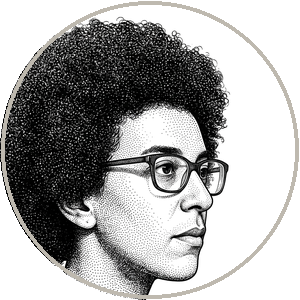 **GEBRU:** What it proved is the thing I'd been arguing for years, except now it was a demonstration instead of a thesis. I had been saying that the institutions housing AI research are structured to subordinate inquiry to profit — that the talk of ethics is hollow if the institutional conditions don't permit the work, and that meaningful scrutiny requires independence from the entity being scrutinized. My own firing converted that argument from a claim into a proof. The company told me, in effect, exactly what I'd been saying about companies. And understand what the mechanism actually is — it isn't censorship with a stamp. It's a [demonstration](https://www.youonai.ai/fieldguide/med/concentration_of_power), once, in public, of what happens to a career that itemizes the costs of a profitable product. The chill does the rest for free. Every researcher in the field watched it happen and updated accordingly. And then the same firms fund the conferences, license the compute, and hire the graduates, and we're asked to treat the resulting literature as the disinterested record of what these systems are. The reason my critique sounds lonely isn't that it's rare. It's that it's expensive, and the price list was published in December 2020, with my name on the receipt.
**EDO SEGAL:** Pamela. Was the haven ever real?
**McCORDUCK:** It was real and it was conditional, and I lived inside the condition without seeing it, which is its own kind of indictment. I chronicled the labs as places of genuine open inquiry, and they genuinely were — right up to the point where the inquiry threatened the product, and I never tested that boundary because the people I wrote about were mostly working on problems the company hadn't yet learned to monetize. In the founding era, AI didn't make money, so it was free. The haven was real because the stakes were low. What Timnit discovered is what happens to the haven when the stakes become a trillion dollars: the valve, which was always there, finally closed. I want to say something harder, though, because it's true and it implicates me. I was, in a sense, part of the legitimacy apparatus. The labs borrowed the credibility of the academy — peer review, conferences, researchers presenting work as science rather than marketing — and writers like me lent them the further credibility of a noble history, a three-thousand-year lineage. I gave the haven a heroic past. And a heroic past is exactly what makes a valve invisible, because who suspects the temple of having a kill switch?
**GEBRU:** *[pause]* I didn't expect you to go there, and it's the sharpest self-indictment you've offered. Yes — the heroic history is part of the legitimacy apparatus. When the public believes AI is humanity's ancient noble quest, they extend the firms the moral credit of that quest, and the firms spend it. I want to be precise that I'm not saying you were on the payroll or doing it knowingly. I'm saying the function of the narrative, independent of your intention, was to launder corporate research as the latest chapter of a sacred story. The same way the aggregate number laundered a biased product as a neutral one. You gave them the temple. They installed the valve. And the people who got hurt when the valve closed — me, Margaret, and far more importantly the communities our suppressed work was trying to protect — paid for the gap between the story and the structure.
**McCORDUCK:** I'll carry that. And let me hand you the historian's corroboration, because it's not only your generation. The valve has closed before, on others, and the history is worth having. There were researchers in every era whose inconvenient findings were buried, whose funding vanished when they questioned the program — it's just that the early field was poor enough that the suppression was cheap and the casualties were few. What's different now is the scale of what's at stake and therefore the force of the valve. You're not an aberration, Timnit. You're the highest-profile instance of a mechanism that's been running since the beginning, finally operating at a scale where the whole world could see it. That's the one consolation I can offer, and it's a cold one: you made visible a kill switch that was always installed. The field can't unsee it now.
**GEBRU:** That's not cold. That's the point of doing it in public. The whole reason to refuse quietly — to ask who reviewed the paper, to name conditions, to let it become a spectacle rather than a discreet exit — was to make the switch visible, so that the next researcher knows it's there and the public knows the literature was produced under its shadow. If I'm the highest-profile instance of an old mechanism, then the job was done: the mechanism is now on the record. Sociology tells you where to point the skepticism. It doesn't get to *be* the skepticism — the science still has to be checked, replicated, argued. But now everyone checking it knows whose hand is on the valve.
**EDO SEGAL:** I want to press the uncomfortable symmetry, because I promised to press both of you and this presses Timnit. The valve closed on your paper, and the field rallied — thousands of signatures, congressional letters, an inquiry. But the same companies that closed the valve also fund the conferences where the rallying happened, hire the graduates who signed, license the compute the critics run on. So here's the hard question: is the resistance itself inside the building? Can a critique funded, platformed, and credentialed by the industry it critiques ever actually threaten the industry — or does it function as the industry's own immune theater, a way of *appearing* to be checked?
**GEBRU:** That is the right question and it's the one that keeps me up more than the firing did. The honest answer is: most of it is inside the building, and most of it is theater. The ethics boards that meet and produce principles and change nothing. The fairness research that fixes the benchmark and ships the product. The conference panel on harms, sponsored by the company doing the harm. I've watched the industry learn to metabolize critique — to absorb it, fund it, give it a stage, and emerge unthreatened, because a critique you've paid for and platformed is a critique you control. That's exactly why I left and built something outside. DAIR is funded by philanthropy, not industry, precisely so that it can say the thing the inside critique structurally cannot: not "make the product fair" but "maybe don't build the product." The inside critique can question the *how*. Only the outside critique can question the *whether*. And the *whether* is the only question the industry actually fears, which is why the building is designed to fund every critique except that one.
**McCORDUCK:** And the historian's footnote to that is bleak and I'll give it anyway: the building has always funded its own critics, in every field, because a controlled critic is cheaper than an uncontrolled one. The patron funds the court philosopher who questions everything except the patronage. What's genuinely new in what you did, Timnit, is the refusal of the patronage itself — and that's rare enough in the history of any field that I'd mark it as the actually radical act of your career. Not the paper. The leaving. The paper questioned the how. The leaving questioned the whether, with your own livelihood as the proof you meant it.
**EDO SEGAL:** I want to mark, for the reader who can't see your faces, that neither of you smiled through that entire exchange. That was the coldest stretch of the night, and it was also the one where you built the most together — the historian confessing she gave the tower its heroic past, the scientist showing what the past was used to hide. Hold the valve. We're entering the third hour. And now I keep my third promise: I leave the room. The next chapter is yours. You question each other directly — no moderator, no rescue. The Crossing. After this.