Closing Statements

 EDO SEGAL: Before your closing statements, one ritual I impose on every debate, because it's the one that survives the longest in the reader's mind. Name the strongest thing the other said tonight. Not the most agreeable — the one you'll still be arguing with next month, the thing that got under the skin and stayed. Timnit first.
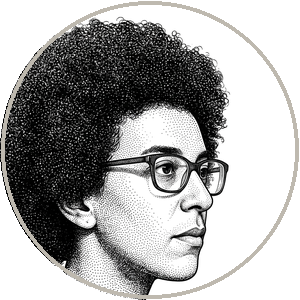 GEBRU: The strongest thing Pamela said is that the wonder was a lens that hid the harm — that she didn't choose marvel over warning, she genuinely couldn't see the warning at full strength because affection had organized her perception around the marvel. I'll be arguing with that for a long time, because it indicts me, not just her. It means my own lens — the vigilance — has a periphery I can't see either, and that there are real goods I'm structurally slow to credit. It means the choice isn't between her blindness and my clarity. It's between two lenses, each of which hides something. I came in thinking my position was the corrected one. She's left me unable to believe any position is the corrected one. That's going to keep me up.
EDO SEGAL: Pamela.
McCORDUCK: The strongest thing Timnit said is that the access required the silence — that I bought my fifty years of intimate witness with my silence about the harm, and didn't even know I was paying. I'll argue with it forever because I can't refute it and I can't accept it cleanly either. If she's right, then my life's work, the record I'm proudest of, was purchased at a price the people I left out had to pay. And the worst part is that the alternative — speaking, the way she spoke — would have cost the record itself. She's made me see that my greatest contribution and my deepest complicity are the same act, that I cannot separate the history I gave the world from the silence I kept to get it. That is the most uncomfortable thing anyone has ever made me understand about my own life, and she did it in three hours.
EDO SEGAL: Closing statements. Your final word, in your own voice, to the reader standing on the staircase. Pamela.
McCORDUCK: I have spent my life telling you that this is an old story — that the engineers are heirs of poets and prophets, that the wish to forge the gods runs from the Golem to the data center, that you are living inside humanity's longest dream. I still believe every word of that, and I want you to feel the wonder of it, because the wonder is real and a future you can't feel any joy about is a future you won't fight for. But I have learned, late and at this table, what I have to say in the same breath. The dream was real, and it was captured. The "we" who dreamed it was never as wide as the story made it sound, and the bill for the dream was sent to people who never wished for any of it and whose faces the machine still can't see. I gave the field its heroic past, and a heroic past is exactly what makes a kill switch invisible. So here is my final word, the whole sentence I should have written in 1979. Artificial intelligence began with the ancient wish to forge the gods — and the people who own the forge have always chosen which gods get made, and for whom, and you are not required to call that fate. Take the wonder. It's yours. But never let the wonder be the lens. Keep the warning in the same hand, because I didn't, and people were hurt in the dark I couldn't see.
EDO SEGAL: Timnit. The last word before mine.
GEBRU: I came here as the prosecutor, and I'll leave with the indictment intact, because nothing tonight has unmade it. The systems we're calling AI are a concentration of power about fifteen years deep, built by a few corporations, financed by profit, trained on labor that was stolen and bodies that were used, and justified by a story about a coming god that licenses every present harm in the name of an imaginary future. All of that is still true, and I will keep saying it, and it will keep being expensive. But Pamela has changed one thing for me tonight, and I'll be honest about it because honesty is the only currency I trust. She's reminded me that refusing inevitability is supposed to be an act of hope. I say the future isn't fixed — and I mean it as a warning, but it's also a promise. It's humans who decide whether all this gets built, and how, and for whom, and we have the agency to decide. That sentence is not grim. It means the staircase can be rebuilt — with the people who carried the stones living on the floors they built, with the workers visible and paid, with the pen shared among the many instead of held by the few. Don't take the orange pill as a spectator. Take it as someone who gets a vote on what the thing at the top of the stairs turns out to be. Because someone is deciding. It should be you, and it should be her — the girl in Addis Ababa, the worker in Nairobi, the parent at the kitchen table — and not only the people who own the forge.
EDO SEGAL: [pause] Sixty seconds, as promised.
I came into this room with a staircase I was proud of, and I leave with my hand opened around it. Pamela proved that the climb is real and ancient and worth the wonder — and that wonder, left as your only lens, will hide the people bleeding under the stairs until it's too late to help them. Timnit proved that the staircase is owned, that the stones were carried by people the story forgot, and that calling it a river of fate is exactly how the owners get you to stop asking who built it — and then, at the very end, she proved something she didn't come to prove: that refusing the fate is an act of hope, not despair. Neither of them sold you the comfortable thing. There was no comfortable thing on the menu tonight.
Here is what I can tell you from the roof, which I will never again describe the same way. I told you at the start that one of my guests would see a temple and the other a tower. What they discovered, in front of you, is that the truth requires both of them in the room at once — that the witness who has the intimate record kept silent to keep it, and the prosecutor who told the truth was expelled from the record, so that no single person can give you an account that is both close and honest. The complete view from this roof cannot be written by one pair of eyes. It can only be built by two people who chose opposite halves of an impossible toll, sitting at the same table, refusing to let either half stand alone. That is not a failure to reach a verdict. It is the verdict. The temple and the tower are the same structure seen by someone who was allowed up and someone who was kept out, and you do not get to climb past this floor by choosing one. You climb by holding both — the dream and its cost, the wonder and the receipt, the ancient wish and the recent owners — in the same hand, the way these two women finally did.
So take it home to the kitchen table, where a parent is helping a twelve-year-old with homework on a machine neither of them can see inside. The child will feel the wonder; that's healthy, let her. Your job is to keep the warning in the same hand she's holding the wonder in — to teach her that the marvel is real and that someone built it, out of something, on top of someone, and that she gets a vote on what it becomes. Whether the thing at the top of these stairs is a temple or a tower is not a fact you'll be handed. It is a decision the many can still take back from the few, and the first move is refusing to believe it's already been made. Someone is deciding what you're looking at. Tonight you watched the two people best equipped on earth to decide it discover they could only do it together. Now it's your floor. Are you worth amplifying — and amplified by what, built by whom, paid for by whom? Climb. Decide what you're looking at. Don't do it as a spectator.
Pamela McCorduck. Timnit Gebru. The witness and the prosecutor, and tonight, against all odds, allies. Thank you, both, as human beings. The room is yours to argue in now. Goodnight.
Two women looked hardest at thinking machines — and saw opposite things.
Pamela McCorduck wrote the first history of artificial intelligence and called it humanity's oldest dream: a heroic, three-thousand-year quest to forge minds in our own image, running from the Golem and Pygmalion straight into the data center. Timnit Gebru walked out of Google, named today's giant models stochastic parrots, and built a research home for everyone they harm — because to her this is not a dream, it is concentrated power, and power must be resisted. Hosted by Edo Segal, this three-hour conversation puts the historian's reverence against the engineer's indictment with nothing softened between them. Is AI the temple we have always been building, or the tower a few companies built on the backs of the many? Climb to the roof. Decide what you are looking at. This is your orange pill moment.
Part of the [YOU] on AI collection — The Debates. Pull up a chair.
Pamela McCorduck (1940–2021) was the first chronicler of artificial intelligence and, by common consent, its indispensable historian. A writer rather than an engineer, she helped assemble the foundational anthology Computers and Thought as an undergraduate, then spent decades inside the small community that invented the field. Her landmark Machines Who Think (1979) reframed AI as the latest chapter of an ancient human longing — the wish to forge the gods — and gave the field a memory it could not have given itself. She co-wrote The Fifth Generation with Edward Feigenbaum, studied machine creativity in Aaron's Code, examined the futures of women in technology, and closed her career with the memoir This Could Be Important, in which she confessed she had not warned soon enough about how the dream could be abused. She remains the witness who saw the whole arc.
Timnit Gebru is a computer scientist and one of the most consequential figures in the study of AI's social consequences. Born in Addis Ababa to Eritrean parents and a teenage refugee to the United States, she earned her doctorate in computer vision at Stanford under Fei-Fei Li. With Joy Buolamwini she published the landmark Gender Shades audit; with Emily Bender and others she co-wrote On the Dangers of Stochastic Parrots; her Datasheets for Datasets reshaped how the field documents its data. Forced out of Google in 2020 for declining to retract that paper, she founded the Distributed Artificial Intelligence Research Institute (DAIR), an independent, community-rooted center, and with Émile Torres advanced the influential TESCREAL critique of the ideology driving the race to AGI. She remains the field's most rigorous accountant of its harms and its sharpest voice against the concentration of power.
Edo Segal has spent five decades building at the technology frontier — from games written in Assembler to expert systems, to companies through every platform shift, to Napster. He is the author of [YOU] on AI, written in open collaboration with the AI it describes, and the host of The Debates: long-form collisions between the minds shaping the machine age. He moderates the only way he knows how — stake declared, scars showing, complicity confessed, and no winner ever called.
Hosted and moderated by Edo Segal. A volume in the [YOU] on AI — The Debates series — youonai.ai