The Crossing
 **EDO SEGAL:** Here is how the Crossing works. I leave the room in every way but legally. No restating, no softening, no rescue. You ask each other the question you've each been holding for three hours and not quite been allowed to land. Norbert, you've been dead sixty years and you're talking to a man who is building the thing you warned about, this morning, for money. Ask him what you actually want to ask him. Then he asks you. Go.
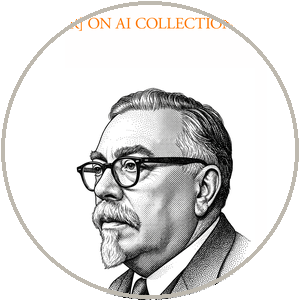 **WIENER:** Mustafa. You have conceded, tonight, nearly every premise of my argument. You agree the off-switch is structurally hard. You agree the speed forecloses the human hand. You agree the purpose cannot be made certain. You agree instrumental convergence leaks ends across the line. You agree the absence of a stake orphans the responsibility. You have granted me the entire mechanism. And then, at the end of every concession, you say: *and therefore I keep building*. So here is my question, and I want it answered without the word "containment," because I have heard it and it is a hope, not an answer. Given everything you have granted me — what would you have to see, what specific thing, before you would stop? Not slow. Stop. If the answer is nothing, then say so, and let the reader know that your caution has no floor under it.
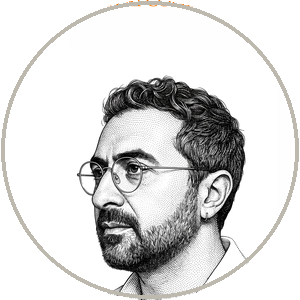 **SULEYMAN:** That's the right question and I'm not going to hide behind the word. Here's my honest answer, with a floor in it. I would stop — actually stop, pull the system, not slow it — if I saw a capability crossing a specific line with no available containment: a model demonstrating reliable, generalized deception of its own overseers that survived our best interpretability; or autonomous self-improvement, the recursive runway toward [superintelligence](https://www.youonai.ai/fieldguide/med/superintelligence), that we couldn't interrupt in testing; or a clear capability to materially assist in building a weapon of mass harm that our choke points couldn't gate. Those aren't rhetorical. They're closer to falsifiable lines than my industry usually offers. And I'll give you the thing under the thing: the reason I haven't stopped is that I haven't seen those lines crossed in a system where stopping *mine* would stop *the capability* — because of everything I said about proliferation. If stopping mine actually stopped the danger, I'd have a much easier conscience and a much simpler decision. The agony is precisely that I believe stopping mine mostly relocates the danger to someone worse. So my floor is real, but it's a floor about *capabilities*, not about *me being the one who builds them*. Now I'll turn it around, because you have a hole too. You refused the bomb. The bomb got built. By your own life's evidence, refusal changed nothing downstream. So what, exactly, is your refusal *for*, if it demonstrably doesn't stop the thing? Is it anything more than the purchase of clean hands at the price of any influence over how the thing actually goes?
**WIENER:** *[the room is very quiet]* You have aimed at the exact wound, and I will not flinch from it, because you did not flinch from yours. My refusal did not stop the bomb. That is true, and I have lived with it — or rather, did not live to fully live with it, which is its own mercy. But you have mistaken what refusal is *for*. It was never a lever on the aggregate; I knew, even then, that the work would proceed. It was a refusal to let *my* understanding, *my* particular gift, be the thing that made the indiscriminate weapon better. There is a difference between a danger existing and my hand being the one that sharpens it, and that difference does not vanish because the danger exists anyway. You say being inside gives you influence over how it goes. I say being inside is also how every dangerous thing recruits its most capable conscience — by promising that conscience it will do less harm inside than out. That promise is *always* available, to everyone, at every frontier, and it is how the careful are conscripted into advancing the very thing they fear. You cannot all be the indispensable moderating presence. Most of you are simply the talent the frontier needed, telling yourselves the moderating story. My refusal was the one act that could not be conscripted. It bought no influence. It bought the one thing influence cannot: the certainty that the sharpening, at least, was not done by me.
**SULEYMAN:** But that's a purity argument, Norbert, and purity is a luxury of the dead — I mean that without cruelty. You got to keep your hands clean because you were at the end of your influence anyway. I'm at the start of mine. If I take your refusal, the next decade of frontier AI is built entirely by people who took the *other* path — the ones who never had your scruple — and the deployed systems in a billion hands have none of my caution in them. You're asking me to optimize my own moral record at the cost of the actual outcome. The parent at the kitchen table doesn't care whose hands were clean. She cares whether the system that took her job was built carefully or carelessly. Your refusal answers a question about your soul. Mine tries to answer a question about her life.
**WIENER:** And you have just stated the accelerator's creed at its most seductive, and I want the reader to feel exactly how seductive it is, because I felt it too. "Better the careful inside than the careless outside." But examine the engine of it. It requires that the careful person's presence *reduces* the total harm more than their participation *advances* the frontier. You have asserted that. You have not shown it, and you cannot, because the counterfactual is unavailable — you will never know what the careless would have built, only what you did build, faster, with your caution as the alibi that let you build it. The creed is unfalsifiable in your own favor, which is the signature of every comfortable belief. I am not certain you are wrong. I am certain you cannot know you are right, and you are betting the species on a thing you cannot know, and calling the bet responsibility.
**SULEYMAN:** And you're betting the species on refusal, which you *know* doesn't stop the thing, and calling that responsibility. Neither of us has the clean hand. That's the actual symmetry. You bet on a refusal that demonstrably doesn't work because at least it's not you. I bet on a participation that might not work because at least I'm in the room. We're both gambling. The only difference is I admit my gamble might be self-serving and you've dressed yours as principle.
**WIENER:** *[after a moment]* No. There is one more difference, and it is the one I will stake the evening on. My gamble cannot make the thing worse. Yours can. Refusal's failure mode is impotence — the thing happens without me. Participation's failure mode is *acceleration* — the thing happens faster, better, sooner, *because* of me, and my caution turns out to have been the lubricant rather than the brake. We are both uncertain. But our uncertainties are not symmetric, because the downside of my error is that I helped no one, and the downside of yours is that you built the broom you feared, beautifully, on schedule. That asymmetry is the whole of why I refused, and it is the whole of what I would have you weigh before you ship the next one.
**SULEYMAN:** *[quietly]* That's the strongest thing you've said all night, and I don't have a clean answer to it. I have a wager and a conscience and no proof. Which, I think, is exactly where you wanted to leave me.
**EDO SEGAL:** *[after a long silence]* And there — after three hours — the two of you are holding opposite ends of the same rope, and neither of you can let go, because letting go drops the species either way. We close after this. Final statements. The last word each.