Radical Abundance and the Human Use of Human Beings

 EDO SEGAL: Mustafa, I want to start this one with your brightest claim, because it would be unfair to spend three hours only in your dark scenarios. Radical abundance. You argue the wave can drive the cost of solving problems toward zero — energy, disease, materials, all of it negotiable once intelligence is nearly free. Make the case at full strength. And Norbert, I want you to receive it not as a skeptic but as the man who titled his most humane book The Human Use of Human Beings — and ask whether abundance, by itself, is a human use of anyone.
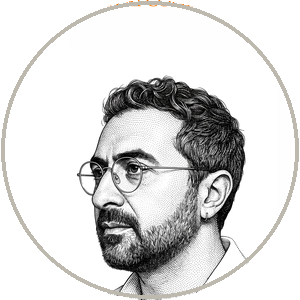 SULEYMAN: Little is ultimately more valuable than intelligence, because intelligence is the master capability — the thing that produces every other solution. Make it cheap and abundant and the intractable problems start to yield. Energy gets abundant when intelligence designs better solar cells, better batteries, better fusion containment. Health improves when it designs better drugs, catches disease earlier, tailors treatment to the individual. Food, water, materials — every physical constraint on human welfare becomes negotiable when the cost of the intelligence to address it collapses. And this isn't the old techno-utopia; I can point to it already arriving. Protein folding fell in a few years to a problem that had stood for fifty. The abundance is a process already underway, visible in labs, accelerating. To look away from that promise out of fear is its own failure. The dark scenarios in my work exist because the bright one is so genuinely attainable that failing to reach it would be a tragedy.
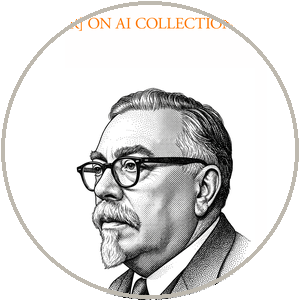 WIENER: It is a beautiful case and I do not doubt a word of the capability. So let me receive it exactly as you asked — as the man who wrote that title — and tell you what abundance, alone, does not contain. The title is also the argument: there is a use of human beings that is human, and a use that is not, and the difference is not measured in wealth. You can integrate a person into a system as a full participant — an agent who understands, judges, retains responsibility, and is enlarged by the machinery around them. Or you can integrate them as a part — slotted into a process designed by others, performing a narrow function, stripped of the context and discretion that would make the activity theirs. The horror, for me, is not that we build machines out of metal. It is that we build machines out of people and forget the parts are people. Abundance does not tell you which use you are making. A delivery driver directed, paced, and disciplined by an algorithm, with no human to appeal to and no discretion of his own, can be a unit in a system producing enormous abundance — and he is being used as a lever and a rod, and the abundance does not redeem it.
EDO SEGAL: So what you're saying — and this is the [YOU] on AI question stated in your vocabulary — is that the test of the amplifier is not how much it produces but whether it treats the person as someone to be amplified into fuller agency or as a quantity to be extracted from. And abundance, by itself, is silent on that.
WIENER: Abundance is perfectly silent on that, which is why it is the wrong thing to optimize. The recommender that captures the user's attention produces a kind of abundance — engagement, revenue, even pleasure — and it is using the human as a resource, not serving the human as an agent. The user experiences it as a service, which is what makes it harder to see than the warehouse. But structurally it is the same move: the person integrated into a feedback loop as an input to be optimized, not an end to be served. [YOU] on AI makes precisely this point at the scale of the single life — that the question to ask of any technology is whether it amplifies your agency or extracts from it. I gave that question its name two generations early. Your radical abundance can be the most human use of human beings ever built, or the most efficient discarding of them, and the technology will not choose. People will. And right now they are mostly choosing extraction, because extraction is what the attentional ecology and the quarterly numbers reward.
SULEYMAN: I agree with almost all of that, and I want to add the piece that makes it sharper rather than soften it. You're right that abundance is silent on the use, and you're right that the default is extraction. But here's where my containment becomes a humanist program and not just a safety one — because the distribution of the wave's benefits is not a technical question, it's a political one, and the wave has no inherent tendency toward fairness. Left to its logic it concentrates: rewards the owners, displaces the labor, widens the gap between those who direct and those who are directed. So your "human use" and my "containment" are the same fight from two sides. You're defending the dignity of the person inside the system. I'm fighting over who captures the surplus the system produces. Both of us are insisting the wave's defaults are not destiny. The difference is you think the defense is upstream and individual — keep the human responsible — and I think it has to be downstream and structural — shape who owns the systems and who shares the gains.
WIENER: And here, at last, is a place where I think you are more right than I was, and I will say so plainly because the night has earned some honesty in that direction too. I located the human reservation in the individual's responsibility, and I was vague — culpably vague — about the political mechanism that would distribute the gains. I knew the gains would not distribute themselves; I knew it was a political question with a political answer that had to be won; and I did not have the worked-out program. You at least are trying to name the choke points and the institutions. My dignity-of-the-person is necessary and insufficient. Your distribution-of-the-surplus is necessary and uncertain. Neither alone is a human use of human beings. Together they might be the beginning of one.
SULEYMAN: I'll take "together they might be the beginning of one." That's more than I expected to share with a man from 1950.
EDO SEGAL: Let me route this through the kitchen table, because we've been at altitude and the reader at home deserves it on the ground. Imagine a parent — end of a long day, child asleep — who has just watched the AI do, in an afternoon, the analysis that was her whole job and her whole pride. She is not asking either of you about instrumental convergence. She is asking one thing: is there still a human use for me? Norbert, you first, then Mustafa — and answer her, not me.
WIENER: To her I would say: the machine can do your analysis; it cannot be answerable for what is done with it, and answerability is not a leftover — it is the thing. The world of the future will be an ever more demanding struggle against the limitations of our intelligence, not a comfortable hammock in which we lie down to be waited upon by our robot slaves. There is no hammock coming for you. There is a harder and more human kind of work — the deciding, the owning, the judging of ends — and it is more yours now, not less, precisely because the means have been taken off your hands. You were never only your analysis. You were the one responsible for what the analysis was for. That is the part no machine can lift from you, and the part the machine's arrival makes more visible.
SULEYMAN: And I'd tell her the harder, less comforting half, because she deserves the truth and not just the dignity. Whether there's a human use for you is not, right now, mainly up to you — it's up to choices being made in rooms you're not in, about who owns the systems and how the surplus is shared. That's unjust and I won't pretend otherwise. But it's contestable, and the contest is political, and you have a vote and a voice in it. The wave produced the abundance that threatens your job. It cannot produce the justice that would let you flourish through the change. That part we have to build, and it won't get built if people like you accept that the future is something that happens to you rather than something you help write. Norbert gives you your dignity. I'm telling you it's also a fight, and you're in it.
EDO SEGAL: Hold that — dignity is also a fight, and she's in it. It's the most generous thing either of you has said, and it returns at the close. We've reached the place where the two of you are nearly building together. The next round is the Crossing — the one where I leave the room in every way but legally, and the two of you go at each other directly. Three hours has earned it. After this, I mostly disappear.