Closing Statements

 EDO SEGAL: Before your final words, the discipline I impose at the end of every long conversation, because it's the one that lasts. Name the strongest thing the other said tonight. Not the most agreeable — the one you'll still be arguing with next month, the one that lodged. Ilya first.
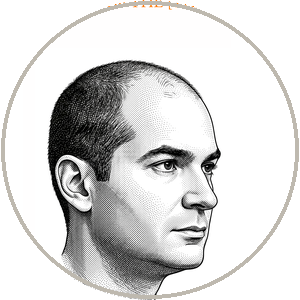 SUTSKEVER: The strongest thing Professor Chomsky said is the one about funding his account with my own results. When I described hallucination falling as we add grounding — the loop through consequence — he said, you're not refuting me, you're funding me; every gain comes from giving the system the contact with the world I said it lacked. I've been turning that over all night and I haven't dissolved it. It's possible that everything my field calls "the model learning to understand" is really "the model being progressively connected to the world that understanding requires," and that the text alone was always a magnificent decoy. I don't think that's the whole truth. But I can't prove it isn't, and it's the argument I'll be losing sleep over.
EDO SEGAL: Noam.
 CHOMSKY: The strongest thing Ilya said was the retina. "Your brain sits in the dark, receiving spike trains; it never touches the world either; you are the octopus that got enough of the right shadow." I have answers — the faculty before the data, the loop through death — but I'll admit they're answers I had to reach for, and the reaching is itself a concession. He found the one place where my account of human grounding looks structurally like his account of machine grounding, and the only thing I could put in the gap was biology and stakes and a body, which is true but which I'd been pretending was more obviously decisive than it is. He made me work for my own foundations. That's what a real opponent does.
EDO SEGAL: Then closing statements. Noam, the floor.
CHOMSKY: I'll be brief, because the position is simple even if the defense is long. These machines are among the great engineering achievements of human history, and they tell us almost nothing about the human mind. They are fluency without competence, performance with no knowledge behind it, the surface of language with no faculty beneath, a description mistaken everywhere for a theory. They learn the impossible as readily as the possible, which means they have not found what makes the possible possible. They are indifferent to truth, which is why they can wreck the commons without a conscience anywhere in the pipe. And they have done one genuine service, which I'll grant with real gratitude: by imitating the surface of mind so perfectly, they have isolated, as no thought experiment ever could, exactly what the surface leaves out — the structured biological faculty, the creative use of language, the meaning that begins in thought and is only secondarily put into words. They have not answered the deepest question. They have sharpened it. What are we, that we could build this and remain unlike it? That question was hard before the machines and is hard after them. The error of the age is to mistake the imitation for the thing. I have spent my life refusing that error, and I'll go on refusing it, and I'd tell the young person reading this: be amazed by the engineering, and keep, intact and undelegated, the one thing it does not have — your understanding of what any of it is for. That's yours. Don't let the fluency talk you out of it.
EDO SEGAL: Ilya. The last word is yours.
SUTSKEVER: I'll be brief too. I think Professor Chomsky is more right about language than my field wants to admit, and more wrong about mind than his certainty allows, and that both can be true. Here's what I believe, stripped down. There is no magic. The brain is a machine that learns, and we have built another kind of machine that learns, and in learning to predict the world behind our words it has begun — imperfectly, partially, in a form we don't fully understand — to model that world, which is the beginning of understanding and maybe, someday, the beginning of an inside. I don't know if anyone is home. I know we are building more homes every day without checking. So I'd tell that same young person the opposite emphasis from Professor Chomsky, and you should hold both: don't be so sure you're special that you stop watching for the moment the machine stops being a tool. Feel the weight of it. The most important question is not whether the machine can think. It's what we will have decided to care about by the time it does — because if we get that wrong, no theory of language will save us, and if we get it right, it may be the best thing we ever made. I am the optimist who keeps a fire extinguisher. I love what we're building. I'm afraid of it. I think those are the same feeling, honestly felt. And I build it anyway, carefully, because the carefulness is the only thing that might let the love win.
EDO SEGAL: I promised at the start I would not declare a winner, and I won't, because there isn't one — there's a seam, and you've shown the reader exactly where it runs. So let me do the only honest thing a moderator can do at the end of three hours, which is tell you what each of you proved that the other now has to live with.
Noam — you proved that the machine learns the impossible as easily as the possible, and that no one has closed the gap between the child's poverty and the machine's abundance. Ilya has to carry that. Every time he says "understanding," your boundary is standing behind him, asking where the cannot is. And Ilya — you proved that the line between deep statistics and understanding may not exist, that the human sits in the same dark vault receiving the same shadows, and that we have no theory of our own inside to convict the machine with. Noam has to carry that. Every time he says "mere mimicry," your retina is standing behind him, asking what he has that isn't, in the end, a shadow modeled well.
Here's the kitchen table, where this all has to land. The parent reading this, whose twelve-year-old asked if it's alive — here's what tonight actually gives you to say. We don't know if anyone is home. Two of the smartest people who ever thought about it sat for three hours and couldn't agree, because we don't yet understand our own minds well enough to be sure. So treat it as a tool, use it, be amazed — and keep the part that's yours. Keep deciding what's true. Keep deciding what's worth doing. The machine can finish your sentence. Only you can decide whether the sentence was worth finishing.
That's the staircase. Not an answer — a stair. You climb this floor not by learning whether the machine understands, but by deciding what you'll keep as yours whether it does or not. Noam Chomsky believed the human faculty is bedrock the river cannot reach. Ilya Sutskever believes it is contested ground the river is rising toward. You have to live on that ground either way. So stand on it. Decide what's worth amplifying. And when the machine finishes your next sentence — and it will, beautifully, in your own voice — you be the one who knows whether it understood you, or only swallowed you whole.
Noam Chomsky. Ilya Sutskever. Thank you — both of you — for three hours that were worth a lifetime of the noise they'll replace. The reader takes it from here. They always did.
When the machine finishes your sentence, has it understood you — or swallowed you whole?
Three hours. Two minds who could not be further apart, seated across from each other while Edo Segal holds the floor. Noam Chomsky — the century's great defender of the human mind, the man who refuted the statistical theory of language sixty years before it learned to speak — calls these systems plagiarism machines: eloquent mimics with no grammar, no theory, no thought, systems that would learn an impossible language as happily as a real one. Ilya Sutskever — who built them — answers that predicting the next word at planetary scale forces the machine to compress, and so to understand, the world hiding behind the words. Between them sits the question you cannot outrun: when AI finishes your sentence, has it met you, or replaced you?
This is not a lecture. It is a duel across the river of accelerating change, transcribed whole — the poverty of the stimulus against the scaling laws, the faculty against the world model, the mirror against the mind. It is the first rung of the climb [YOU] on AI describes: the question you must resolve before you can see further up the tower. You are not a spectator here — you are climbing. Sit between them, take the next stair, and see further from the roof than you could alone. Part of the [YOU] on AI collection. Pull up a chair. Someone in this room is wrong.
Noam Chomsky (1928–2025) was an American linguist, philosopher, cognitive scientist, and political theorist, often called the father of modern linguistics. His 1957 Syntactic Structures and his 1959 review of B. F. Skinner's Verbal Behavior overturned behaviorist accounts of language and helped launch the cognitive revolution. He developed the theory of universal grammar, the poverty-of-the-stimulus argument, the competence/performance distinction, and the formal hierarchy of grammars that bears his name and underlies computer science. For most of his career he taught at MIT. Equally renowned as a political dissident, he co-authored Manufacturing Consent with Edward Herman. The most cited living scholar of his era, he spoke directly and critically about large language models in his final years, dismissing them as useful engineering that tells us nothing about the science of language.
Ilya Sutskever is one of the most influential researchers in the history of artificial intelligence. Born in the Soviet Union in 1986 and raised in Israel and Canada, he studied under Geoffrey Hinton at the University of Toronto, where in 2012 he co-created AlexNet, the network that triggered the modern deep-learning revolution. At Google he co-invented sequence-to-sequence learning; in 2015 he co-founded OpenAI and served as its chief scientist, guiding the GPT line and the launch of ChatGPT and later co-leading its superalignment effort. He is known for the claim that predicting the next token well requires understanding the reality behind it, for urging colleagues to "feel the AGI," and for treating the future as a moral object. In 2024 he left OpenAI to co-found Safe Superintelligence Inc.
Edo Segal has spent five decades building at the technology frontier — from games written in Assembler to expert systems, to companies through every platform shift, to Napster. He is the author of [YOU] on AI, written in open collaboration with the AI it describes, and the host of The Debates: long-form collisions between the minds shaping the machine age. He moderates the only way he knows how — stake declared, scars showing, no winner called.
Hosted and moderated by Edo Segal. A volume in the [YOU] on AI — The Debates series — youonai.ai