The Apprentice and the Candle
 **EDO SEGAL:** This round begins with a twelve-year-old. In the spring of 2026 a girl asked her mother — and the mother asked me, at a dinner table, with the look parents get now — "Mom, what am I for?" Not what should I be when I grow up. What am I *for*. She had watched a machine do her homework better than she could, write a story better than she could, answer any question she could form before she finished forming it. And she was lying in bed doing the arithmetic children do honestly. I've spent two years answering her in my own way — I tell parents the [candle in the darkness](https://www.youonai.ai/fieldguide/med/candle_in_the_darkness) is the asking itself, that machines are engines of answers and she is an engine of questions. Tonight I get to stress-test my consolation against the man who built the answer-engine and the man who first dreamed it. Gottfried — you of all people should be the one to tell her the machine that answers everything is her liberation. Tell her.
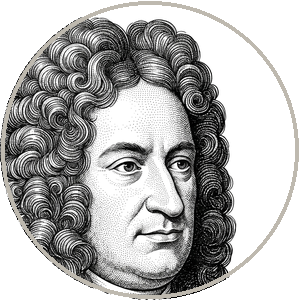 **LEIBNIZ:** I find I cannot tell her that, and the discovery surprises me, because I came into this evening prepared to. I, who wanted to relieve the excellent men of the labor of calculation — surely I should rejoice that the child need never struggle with a sum again, never sit in the dark of not-knowing, never endure the friction I spent my life trying to abolish. And yet. Let me reason about it the way I reason about everything, from the principle of sufficient reason. Ask: *why* does the asking have worth? And I find the answer is not that the asking produces good answers — the machine produces better ones. The answer is that the asking is the activity in which a mind *becomes* itself. The child who sits with not-knowing long enough to form the question is not failing to get the answer quickly. She is doing the one thing that makes her a mind that *has* questions rather than a vessel that receives answers. I built engines to abolish friction. I had not understood that in the human case, the friction is not the obstacle to the thing. The friction *is* the thing.
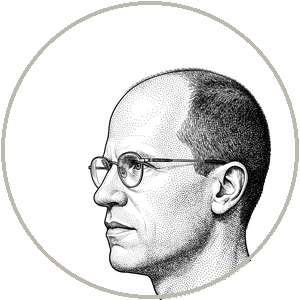 **BOSTROM:** I want to push on that, gently, because it's beautiful and I think it's also where Leibniz's optimism and my pessimism trade places — suddenly *I'm* the one who sees an upside he's missing. For most of history, the child who never had a patient tutor — in a village with one exhausted teacher and forty pupils — never got to ask the second question, let alone the tenth. The machine that answers before the question finishes forming is a catastrophe for the child who *had* a teacher and a dinner table and an adult who'd field the question. But for the hundreds of millions of children for whom the alternative was *nothing* — no tutor, no one to take the strange question seriously — the [democratization of capability](https://www.youonai.ai/fieldguide/med/democratization_of_capability) is the most hopeful thing in the picture. The candle doesn't check the credentials of whatever lit it. A child who builds real understanding from a tireless machine still has the understanding.
**LEIBNIZ:** But Mr. Bostrom — you have just made *my* old argument, the one I am now ashamed of, and I must warn you off it because I have learned where it leads. "Surely something is better than nothing for the underserved." I made exactly that division of the world — the excellent men who would be freed, and the rest, for whom any improvement was gain. It is the oldest way a two-tiered settlement is sold. The prosperous child gets the tutor *and* the tool *and* the discipline to keep the friction in her learning. The poor child gets the answer-machine and a headline about access — gets the candle that lights nothing because it was never asked to *let her sit in the dark long enough to need the light*. The danger is not that the machine fails the poor child. It is that it *succeeds* — that it answers her so smoothly she never learns the one thing the rich child is being carefully protected long enough to learn: how to want to know.
**BOSTROM:** That's a fair correction and I'll take it — the deployment is the variable, not the tool, and the deployment is being decided by people optimizing for engagement, not for the child's capacity to sit with not-knowing. But I want to hold onto the asymmetry your correction risks erasing, because it's real. You're right that the answer-on-demand can short-circuit the formation of the question. But the same machine, pointed differently — built to *withhold* the answer, to ask the child what she thinks first, to make her sit in the productive dark — could do what one good tutor does, for every child, at once. The technology doesn't choose. We choose. And right now we are choosing the engagement-maximizing version, which is the version that answers fastest, because that's what holds attention — and holding attention is what the [optimizer was pointed at](https://www.youonai.ai/fieldguide/med/banality_of_optimization). It's the alignment problem again, wearing a child's homework. We didn't ask for a thing that grows minds. We asked for a thing that holds attention, and it gave us exactly that, optimized to the hilt.
**EDO SEGAL:** Let me put the oldest objection in the room, because I genuinely don't know which of you inherits it. In the Phaedrus, Socrates warns that writing will destroy memory — that students will receive the appearance of wisdom without the reality, that the written word can't answer questions, that it says the same thing forever to everyone. He was right about the loss: the bards who held the Iliad in their skulls went extinct. But we only know his warning because Plato *wrote it down*, and everything we call civilization runs on the technology he feared. Every generation's Socrates has been right about the loss and wrong about the verdict. So — why is the answer-machine not just the next alphabet? Gottfried, you're the great theorist of how complexity is built from simple marks. This one's yours.
**LEIBNIZ:** It is mine, and I will give you the reason the analogy breaks, because there is one, and it is precise. Writing is *inert*. The scroll says the same thing forever — Socrates named that as a defect, and it proved to be the load-bearing virtue, because a fixed mark with a named author is what made cumulative knowledge possible. You can return to it, check it, build upon it, hold its author to account across centuries. The written word does not pretend to be a teacher. It is honest about being a *record*. The answer-machine is the precise inversion. It *performs* the teacher — responsive, adaptive, apparently attentive — while having none of the teacher's accountability, and unlike the scroll, it does not hold still, so nothing built upon it can be checked against it. Socrates feared the appearance of wisdom without the reality. The scroll never really delivered the appearance, so his fear overshot. *This* technology is the first one engineered to deliver exactly the appearance — the form of the teacher, perfected, with no teacher inside. It is the mill again, you see. The mill in the shape of a master.
**BOSTROM:** And I'll add the one thing that even the mill framing leaves out, which is the recursion. The scroll was a record of *human* knowledge. The answer-machine is increasingly trained on the *output of earlier answer-machines* — the next generation learns from a world progressively filled with the last generation's fluent, ungrounded text. So even granting everything good about access, the long-run dynamic is that the signal from grounded human life — the child who actually struggled, the expert who actually knew — gets fainter in the mix with every cycle. We are at risk of building a civilization that learns from its own reflection, and a reflection of a reflection is where detail goes to die. Socrates's alphabet multiplied human voices. This multiplies the *appearance* of them, and the appearance, scaled, can crowd out the thing it imitates.
**EDO SEGAL:** Let me bring the twelve-year-old back and close the round with her, because both of you have now handed her mother something true. Leibniz's gift, hard-won tonight: protect the friction, the dark, the sitting-with-not-knowing, because that is where the asking-mind is forged, and the machine is a friction-removing device pointed by people who profit from her never being bored. Bostrom's gift: the same machine, pointed well, is the first time in history every child can pull on any question as far as her curiosity runs — but only if we choose the version that grows her instead of the version that holds her. Here's what I'd add, father to mother: the answer to "what am I for" was never going to come from the teacher or the tool. It comes from being the kind of creature that *asks* it. Her question is the credential. Our job — parents, schools, and the people building these things — is to make sure nothing in her world answers it so smoothly that she stops asking. Next round, we go to the strangest country in Bostrom's whole map, and the one place his pessimism turns into something stranger than hope. What happens if we *win*. The solved world. After this.