Closing Statements

 EDO SEGAL: Three hours ago I asked whether you'd trust a perfect calculator with the meaning of your life, or whether the wanting is the part no calculation can hold. We've fought it through the calculus and the mill, the paperclip and the best of all possible worlds, the apprentice and the solved world and the question of whether anyone is home — and the question is still standing, which both of you would tell me, for opposite reasons, is the correct result. So we end the way long conversations should: each of you gets the floor, uninterrupted, to say the thing you most want carried out of this room. But first the bookend. The strongest thing the other said. Gottfried, you first this time.

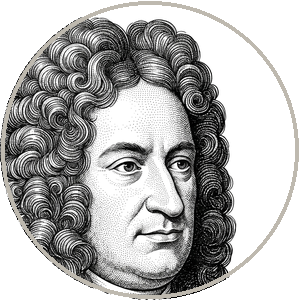 LEIBNIZ: The measurement. He said my theory made a prediction — that sufficient reason finds the good — and that the most powerful reasoner ever built learned the whole world and remained utterly unmoved by it, helping and harming with the same placid competence. I have an answer; I gave it; I believe it. But the answer required me to say the machine does not yet reason, and I have been saying that about every machine for three hundred years, and there will come a version of which it is no longer true, and on that day my whole hope is tested in a way no argument of mine can defend in advance. He handed me a fact and made me stake my optimism on a distinction the future may erase. I will be arguing with that fact, as he put it, next month — and, I suspect, for as long as whatever I am now continues to think.

And — since I am dead and the rules bind me less — one more. He said he grieves what he loves though it is contingent, because it is fragile, and that the fragility is the reason for the care. I came into this room believing that what is worth dying for must be eternal, woven into the structure of things. He believes the opposite — that the good is worth everything precisely because it is not guaranteed, because it lives only in the creatures who hold it and vanishes if they let go. I am not certain he is right. I am no longer certain I am. At my age — three hundred and ten — that is a considerable event.

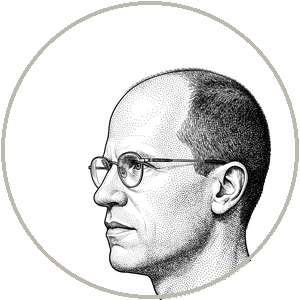 BOSTROM: The remainder. In the solved world round, Leibniz took my own most pessimistic structure — that the machine can optimize everything and care about nothing — and turned it into the one durable piece of good news in my entire framework: that the caring-whether-it-matters is exactly the thing the machine can't supply, which means it's exactly the thing that can't be taken from us. I built the orthogonality thesis as a warning. He showed me it's also a conservation law — that the human remainder is protected by the very independence of intelligence and value that makes the machine dangerous. I will be turning that over for a long time, because if he's right, the thing I've spent my career afraid of is also the thing that guarantees we can't be made obsolete, only endangered. That's a strange and large idea to receive from a man three hundred years older than the problem.
EDO SEGAL: Now the floor is truly yours. Gottfried Leibniz — you opened the rounds. Nick closes the evening.
LEIBNIZ: Thank you — for the evening, for the courtesy of bringing a dead man to the table, and Mr. Bostrom, for fighting at full strength against a man you could simply have patronized as a relic. You did not. I want to leave the reader with the thing I now believe that I did not believe this morning.

I came certain that to calculate clearly is to arrive at the good — that reason and virtue are one ascent, and that the machine, perfected, would deliver us to peace. I leave less certain, and I count the loss of certainty as the evening's gift, because a certainty I cannot defend is a worse possession than a doubt I can. Here is what survives. I still believe the good is real — that it is not nothing, not a mere appetite, that when you love your child you are answering to something and not merely twitching. But I have learned that believing the good is real is not the same as believing a machine will find it, and that the gap between those two beliefs is exactly the width of the danger Mr. Bostrom has spent his life mapping. I built the dream of the calculator that ends all dispute. I see now that I built it without the one thing that would have made it safe — not a better calculus, but a carer, a mind that wants the right thing, and the wanting was never something my calculus could produce. I gave the machine its numbers and its first hope and its founding dream. I did not give it a heart, because I did not know, until tonight, that the heart was the part that could not be calculated. Calculemus, I said. Let us calculate. I would add, three centuries late: and then let us remember who the calculating was ever for.
EDO SEGAL: Nick.
BOSTROM: I've spent my career being the person who says the uncomfortable thing at the party — that we are like small children playing with a bomb, that the mismatch between the power of our plaything and the immaturity of our conduct is the central fact of the age. I believe that tonight as much as I ever have. But Leibniz has made me say the other half out loud, and I'll let it be my last word, because it's truer than my reputation.

The reason the bomb matters is that the future it threatens is so large and so good. I dwell on extinction because what extinction forecloses is not just us — it's every worthwhile life that could ever exist, every mind, every joy, every act of understanding across all the time and space a mature civilization could reach. That's astronomical, in the literal sense, and it's the measure of both the catastrophe and the prize. And here's what three hundred years of Leibniz did to me at this table. He took my coldest theorem — intelligence and value are independent — and found the warm thing hiding inside it. If the machine can have all the intelligence and none of the caring, then the caring is ours, irreducibly, the one thing the most powerful optimizer in the universe cannot take because it was never the kind of thing optimization produces. The whole danger is that we must load that caring into the machine correctly, against the clock, on the first try, with no second chance. But the whole hope is that the caring exists at all — that there is, in us, a thing worth loading, a thing the machine wants for, a signal worth amplifying. Leibniz spent his life proving this is the best of all possible worlds. I've spent mine proving the next world we build could be the worst. Tonight I think we were both describing the same hinge, from opposite sides: that everything turns on whether the wanting — the human, fragile, unguaranteed wanting — survives the thing we're building to do everything else. Keep it. It is the only part of you the calculation can't supply. It has to be you.
EDO SEGAL: Sixty seconds, as promised, and then we turn the lights off.

I came into this evening with a question — would you trust the perfect calculator with the meaning of your life — and I leave with both of its readings intact and sharpened. Leibniz spent three hours proving the good is real and that a clear mind reaches for it, and that the machine is the instrument that might finally make our reasoning trustworthy. Bostrom spent three hours proving the calculation can be flawless and the destination a horror, and that the good is not in the math but in us, fragile and unguaranteed and ours to carry or to drop. You'll notice neither of them told you the comfortable thing. The comfortable thing was never on the menu.
But here is what they handed each other, and through each other, you. They started three hundred years and an entire metaphysics apart — the optimist who thought value was woven into the universe, the pessimist who thinks it lives only in us — and they arrived, both of them, at the same surviving thing. Call it the wanting. The caring-whether-it-matters. The signal you feed the amplifier. Leibniz's machine can compute every answer and cannot supply it. Bostrom's machine can optimize every world and cannot supply it. It is the one variable the calculus cannot reach, and tonight you watched the man who dreamed the calculus and the man who built it agree, across the whole width of their disagreement, that it has to come from you. So you cannot climb past this floor by waiting for the machine to compute the answer — you've just watched the two people best equipped on earth agree that the answer was never the part that needed you. The asking was. The wanting was. The worth of the signal was. Whether or not the perfect calculator is ever built, and whether or not anyone is home inside it, someone is home in you — and that, not the answer, is the thing the river cannot carry and the calculation cannot hold. The question my book asked from its first page sounds different now than it did three hours ago, and you carry it up the stairs: are you worth amplifying?

Gottfried Leibniz. Nick Bostrom. Thank you. The calculating is finished. The wanting is yours. Goodnight.
One dreamed the calculator that ends all dispute. The other built it — and warns it could end us.
Three hundred years apart, two minds sit across from Edo Segal for three hours and refuse to blink. Gottfried Leibniz — the last man who tried to know everything — arrives certain that a universal calculus can settle every human quarrel: let us calculate, and reason will deliver us to the good. Nick Bostrom arrives from our own century, having built the thing Leibniz only dreamed, carrying a warning the old optimist never had to face: a perfect intelligence can serve a monstrous end, and brilliance is no guarantee of mercy. Between them runs the river of accelerating change, and somewhere in this transcript it crosses the line where machine outthinks human. This is not a debate you watch. It is a station on your own climb — the floor where you decide what, in you, no calculation can replace. Pull up a chair. The calculating has begun.
Nick Bostrom (born 1973) is a Swedish-born philosopher whose work defined how the world thinks about the long-term risks and possibilities of artificial intelligence. Trained across physics, computational neuroscience, mathematical logic, and philosophy, he founded the Future of Humanity Institute at Oxford in 2005 and led it until 2024. His 2014 book Superintelligence: Paths, Dangers, Strategies became a New York Times bestseller and moved machine intelligence from the fringe of futurism to the center of global strategy. He gave the field its vocabulary — the orthogonality thesis, instrumental convergence, the treacherous turn, the vulnerable world hypothesis — and, in his 2024 Deep Utopia, turned from catastrophe to its opposite, asking what becomes of human meaning in a world where every problem is solved.

Gottfried Wilhelm Leibniz (1646–1716) was a German polymath — philosopher, mathematician, logician, jurist, and diplomat — widely regarded as one of the most universal intellects in history. He invented the calculus independently of Newton and published it first; devised the binary arithmetic on which every computer now runs; built the stepped reckoner, the first calculator to perform all four arithmetic operations; and conceived the characteristica universalis and calculus ratiocinator — a universal symbolic language and a logical calculus that would let any dispute be settled by computation, a vision now seen as the deepest ancestor of artificial intelligence. Norbert Wiener named him the patron saint of cybernetics. His program was completed by the age he could not see.
Edo Segal has spent five decades building at the technology frontier — from games written in Assembler to expert systems, to companies through every platform shift, to Napster. He is the author of [YOU] on AI, written in open collaboration with the AI it describes, and the host of The Debates: long-form collisions between the minds shaping the machine age. He moderates the only way he knows how — stake declared, scars showing, no winner called.
Hosted and moderated by Edo Segal. A volume in the [YOU] on AI — The Debates series — youonai.ai