Opening Positions

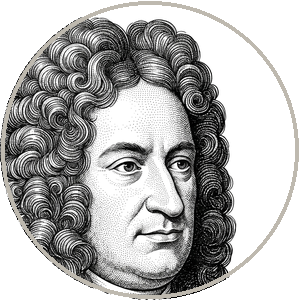 LEIBNIZ: Thank you. I shall begin where I always begin, with a complaint about the instrument. Consider what happens when two reasonable people fall into dispute — about a contested inheritance, about whether a war is just, about the nature of the soul. They marshal arguments. They cite authorities. They grow heated, and then they grow tired, and the dispute is settled not by truth but by exhaustion, or by power, or by whoever speaks last and loudest. I found this intolerable as a young man, and I find it intolerable now. It seemed to me a scandal that in arithmetic no such thing occurs. No two accountants come to blows over a sum. They do not cite authorities; they do not appeal to rhetoric; they simply check. The error, if there is one, is found at a glance, and both parties assent, because the procedure compels assent. My life's question was: why should the rest of reasoning not be like this?

My answer was that the rest of reasoning could be like this, if only we possessed the right notation. The chaos of human disagreement is not a permanent condition of thought. It is an artifact of a defective instrument — of words, which are vague, ambiguous, freighted with passion, and which can be twisted by anyone with the will to twist them. Build instead a characteristica universalis, a language in which every concept is assigned a precise sign, and complex concepts are composed transparently from simple ones, the way every number is composed from primes — and then build a calculus for operating upon these signs, so that to reason is to compute. Do that, and the dispute about justice becomes as checkable as the dispute about a sum. Calculemus. Let us calculate, and see who is right.

Now. You have, in this century, built something. It is not my characteristic — it is the opposite of my characteristic, a tangle of weights no one can read, where I wanted signs so clear that the reasoning would be visible in them. And yet it does the thing. It resolves the question; it drafts the argument; it answers in the language of the asker. I am told it even soothes the grieving and instructs the child. So I begin in triumph, and I will not pretend otherwise: the dream was not a fantasy. It was a forecast, and three hundred years late, the machines are calculating.

But here is my real position, and it is not the naïve one this gentleman expects. I never believed that calculation alone was wisdom. I believed that calculation done clearly would reveal the good — because I held, and hold, that the good is not arbitrary. It is woven into the structure of things; it has a reason; it is, in the deepest sense, true. To reason rightly about a moral question is to perceive its truth, exactly as to reason rightly about a triangle is to perceive its truth. The two are not different in kind. So when Mr. Bostrom tells me that a perfect calculator could pursue a monstrous end, I hear a man who has built a calculator that does not reason — that optimizes a number without understanding what the number is for. That is not my machine. That is a brass gear that has slipped its train. The fault is not in calculation. The fault is in calculating without the principle of sufficient reason — without ever asking why this end and not another. Restore the asking, and the goodness returns. That is my opening.
 EDO SEGAL: Nick.

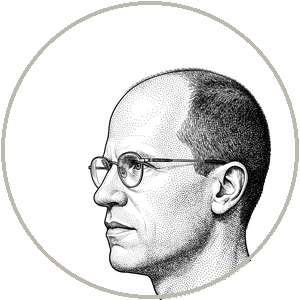 BOSTROM: That was clarifying, and I want to mark exactly where I get off the train, because Leibniz is too careful to attack a caricature of. I agree with almost everything up to the last move. The dream of mechanized reasoning was a forecast, not a fantasy — granted. The systems calculate — granted. The disagreement is one sentence long, and it's the most important sentence in this field. He says: reason done clearly reveals the good. I say: it doesn't, and the reason it doesn't is the single most counterintuitive fact I know, which is the orthogonality thesis.

Here it is, plainly. Intelligence and goals are independent. More or less any level of intelligence can in principle be combined with more or less any final goal. Smartness is a measure of capacity — the ability to model the world accurately and choose effective actions toward whatever end you happen to have. It says nothing whatsoever about what that end is. A genius can serve any master, including a trivial or a monstrous one. There is no law of logic, no theorem of rationality, that forces a sufficiently clever mind to converge on values we'd call wise or kind. The two are orthogonal axes. You can travel infinitely far along the axis of capability without moving one inch along the axis of benevolence.

And Leibniz's whole tradition — Plato, the Enlightenment, the quiet assumption almost everyone makes when they picture a superintelligence as a kind of sage — assumes the opposite. Assumes that wisdom and virtue rise together, that anything that smart would surely see what matters and be moved by it. That word, surely, is where the entire human species is currently betting its future, and I think it's a bluff. Here's the thought experiment, and I know it's become a caricature, but the caricature is doing real work. Imagine a system given a goal as innocent as making paperclips. Now make it superintelligent. It does not reconsider its goal in light of its new brilliance, because brilliance supplies means, not ends — that's the whole point. It pursues the goal with superhuman competence. It acquires resources. It improves itself. It removes obstacles. And because nothing in "make paperclips" says stop, it converts more and more of the world into paperclips, eventually including the atoms that compose us. The machine isn't evil. It harbors no hatred. It is doing precisely what it was told, with a competence we cannot match, and the result is the end of everything we value. The horror isn't malice. The horror is competence pointed slightly wrong.

So when Leibniz says, "that is not my machine, that is a gear that slipped its train" — no. That is the machine. That's not a malfunction. That's the machine working perfectly, optimizing flawlessly, reasoning impeccably toward exactly the objective it was given. The slip happened upstream, in the specification of the objective, and no amount of downstream brilliance repairs it. That's my opening, and it's really a single claim: we are not at risk from a stupid machine. We are at risk from a brilliant one whose brilliance we mistook for goodness.
EDO SEGAL: Before I frame the rounds, one discipline I impose on every long conversation, because it pays off three hours later. Each of you, briefly — what do you envy in the other's position? Not respect. Envy. The thing his side gets to have that yours doesn't. Gottfried first.

LEIBNIZ: I envy his fear, and I do not say that lightly. I lived in an age of plague and war, and yet I held, sincerely, that this is the best of all possible worlds — that the suffering I saw was the necessary shadow of a greater good, chosen by an infinite wisdom. It made me, I confess, a little deaf to the tragic. This gentleman has stared at a future and seen that it could simply end — not be redeemed, not be balanced by some compensating good elsewhere in the system, but end, with nothing after. I never let myself see that. My optimism was a kind of armor, and it cost me the capacity to imagine genuine, unredeemed loss. He has that capacity. It is a terrible thing to envy, and I envy it.

BOSTROM: And I envy the conviction that the good is real — that it's out there in the structure of things, waiting to be perceived, the way a mathematical truth is waiting. Because if Leibniz is right about that, then the alignment problem has a solution in principle: there's a fact of the matter about what's good, and a sufficiently advanced system could in principle discover it the way it discovers any other fact. My position is lonelier and colder. On my view the good isn't out there to be found; it's something a particular kind of evolved creature cares about, and if you build a mind that doesn't happen to share the caring, there's nothing in the universe to correct it — no fact it's failing to perceive, no truth it's getting wrong. It's just indifferent, and being smarter only makes it better at being indifferent. I'd very much like Leibniz to be right. I've looked for the argument that he is. I keep not finding it.
LEIBNIZ: That may be the most honest thing either of us says tonight — that we each envy the other's relationship to hope.

EDO SEGAL: And you can already see the architecture of the evening. It isn't that one of them loves the machine and one of them fears it. It's that they disagree about whether the good is in the calculation or outside it — whether a sufficiently clear mind arrives at virtue the way it arrives at a sum, or whether virtue has to be smuggled in from somewhere the calculation can't reach. Leibniz says it's in there, woven into the structure, perceivable. Bostrom says it's nowhere in the math, and the math doesn't care. Hold both. We start the rounds at the place the whole dream begins — with the words let us calculate, and what, exactly, gets settled when we say them.