Closing Statements
 **EDO SEGAL:** Three hours ago I asked whether, when you build a mind that may exceed you, you are a parent raising a child or a maker about to be judged. We have fought it through the recoil and the missing faces, through eloquence and Prometheus, the tool and the creature, the death cross and the candle, the body and the question of whether anyone is home — and the question is still standing, which both of you, for different reasons, would tell me is the correct result. So we end the way long conversations should end. Each of you gets the floor, uninterrupted, to say the thing you most want carried out of this room. Then I take sixty seconds and we turn off the lights.
But first, the bookend to the envy question I opened with. Each of you: name the strongest thing the *other* said tonight. Not the most agreeable. The one that got past your defenses, that you will still be arguing with next month. Fei-Fei first.
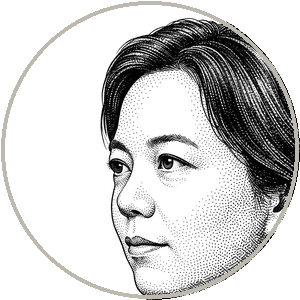 **LI:** The chink in the wall. Mary's point that the thing I am building to *augment* a person is a thing that *learns from* her — that the same property which makes it amplify her judgment lets it, eventually, absorb and replace her judgment, and that the person deciding between the two is the same person staring at the cost target. I came in believing augmentation was a stable choice we could simply make and hold. She showed me it is a slope, and that the learning loop I am so proud of is the chink in the wall through which the replacement watches and surpasses. I do not think she is entirely right — I think the loop can be governed, owned, consented to. But I am no longer sure augmentation is a place you can *rest*, and that uncertainty is going home with me.
**EDO SEGAL:** Mary.
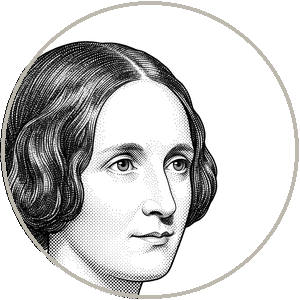 **SHELLEY:** Her last question, in the crossing — that my own warning, believed too well, teaches the best makers to flee the workshop and hands it to the worst. I have spent two centuries certain that the danger was the maker who would not stay, and Fei-Fei showed me that my book, misread as *do not create*, manufactures exactly that fleeing — dresses it as conscience and calls it wisdom. I will be arguing with that for the rest of whatever this strange afterlife is. And I will add the thing she said that I cannot put down: that I count the cost of making and never the cost of *not* making, and that the undiagnosed cancer and the untaught child are real bodies too, paid in silence by the people with the least. I built my whole moral world on the visible harm of creation. She made me see the invisible harm of refusal, and I will not unsee it.
**EDO SEGAL:** Now the floor is truly yours. Fei-Fei Li — you will close. Mary, you opened the evening two hundred years ago. Open the ending too.
**SHELLEY:** Thank you — for the evening, and Fei-Fei, genuinely, for the fight, and for being the thing I most needed to meet: a maker who stays. I want to leave the reader with the sentence my whole life was trying to write, and I think I only found it tonight, in this room, with her pushing on me.
When you make a mind — and you are makers now, all of you, every one of you with a glowing rectangle and an intention — you are not finished when it opens its eyes. That is where you begin. Victor's sin was never the lightning. It was the door he walked out of and the room he would not return to. The creature did not become a fiend because it was made. It became a fiend because it was *left*. So here is my charge, and it is more practical than my reputation suggests: do not flee what you make. Stay in the room. Name the thing. Watch what your formation does to it and adjust. Refuse the deployment you cannot yet answer for. Keep the human in the loop exactly where removing her would pay. Treat the question of whether anyone is home as open, and act as though the answer might cost you, because that is the only posture under which you do not run. I spent two hundred years feared as the woman who said *do not build*. I never said it. I said: if you build, *stay*. The eyes are open again, in laboratories I could not have imagined. Do not look away from them. That is the whole of it. That was always the whole of it.
**EDO SEGAL:** Fei-Fei.
**LI:** I came to this table believing the danger was never in the creation, only in the human choices around it, and I am going to leave still believing most of that — but Mary has put a crack in *only*, and I want to be honest about the crack rather than seal it for comfort.
Here is what I know, after a life spent inside the making. People made AI. People will use AI. People will be affected by AI. And so people should have a say in AI. That is not a slogan; it is the entire location of the moral weight, and it is the most hopeful sentence I know, because it means nothing here is fate. Not the bias — we can change who is in the room. Not the displacement — we can choose augmentation and write the laws that make it stick. Not the dissolved apprenticeship — we can keep the friction in. Not even the question Mary leaves me with, the eyes that have opened: we can choose to stay in the room with it. The technology is not a Prometheus and it is not a creature with a destiny. It is the most powerful tool human beings have ever made, and a tool is a portrait of the people who wield it — what we build it *for* is a revelation of what we actually value. So I will give Mary her sentence and add mine beside it. She says: do not flee what you make. I say: aim what you make at a human being. Build it to [augment](https://www.youonai.ai/fieldguide/med/augmentation_vs_automation) her, to widen the circle, to extend her dignity, not to replace her or surveil her or sell her a costume of a friend. Keep her at the center of every decision, because the moment she leaves the center, the clay stops being innocent and the choices start being Victor's. The machine learned to see because we taught it. What it helps us *become* is still, entirely, up to us. That is the deepest question. And we still get to answer it well.
**EDO SEGAL:** *[a pause]* Sixty seconds, as promised.
I came into this evening with a question I have asked from the first page of my book — whether the thing we are building is a child to raise or a creature to be judged — and I leave with both answers intact and sharpened against each other. Mary spent three hours proving that the act of making is already a moral act, that the recoil is real and strong and favored by every incentive, and that the maker who will not stay has failed before the harm arrives. Fei-Fei spent three hours proving that the staying is *possible*, that the danger lives in choices we can govern, and that to call the clay a creature is to surrender the levers into the realm of fate. You will notice neither of them told you the comfortable thing. The comfortable thing was never on the menu.
Here is what I can tell you, from the foot of the staircase where this debate lives. Tonight you watched the woman who wrote the warning concede that the warning, believed too well, becomes the abandonment it warns against — and you watched the scientist who calls the machine a tool concede that the honest maker cannot call the question of the inner life closed. They met, in the end, on a single sentence: *do not flee what you make.* And that sentence is now yours, because you are a maker too — you, with the rectangle and the intention, building things that did not exist this morning. Route it through the kitchen table, the way I have to: a mother reads that a system shaped her daughter, and she does not need to know whether it was a creature or a tool. She needs to know that someone stayed in the room to answer for it. So that is the question you carry up the stairs, and it sounds different now than it did three hours ago. Not *is the machine a monster.* Not *is the machine a mind.* The question is about *you*: when the thing you are making opens its eyes — and it will — will you be the maker who runs, or the one who stays? Whatever is or is not home in the machine, someone is home in you. That was the one claim no one at this table disputed all night.
Mary Shelley. Fei-Fei Li. Thank you. The room is yours to argue in now. Goodnight.
*When you build a mind that may exceed you, are you a parent — or a maker about to be judged?*
Two centuries apart, two creators sit across Edo Segal's table for three hours and refuse to blink. Mary Shelley, who at nineteen wrote the West's first and fiercest warning about an artificial mind, insists the creature we animate will always turn to face its maker — and that the sin is never the creature's wickedness but the maker's refusal to love and stay with what he made. Fei-Fei Li, the scientist who taught machines to see and then devoted her life to human-centered AI, answers that there is no monster in the clay, only in the hands that shape it — and that a creation guided with care becomes humanity's greatest tool. Between the poet of the lightning and the steward of the algorithm runs the single question YOU must resolve to climb higher: when the thing you are making opens its eyes, will you be the maker who runs, or the one who stays?
This is the railing you grip on the floor where the river first runs faster than you can wade — the rungs approaching the death cross, where machine capability rises to meet your own. A grand debate for the Orange Pill moment. Part of the [YOU] on AI collection. Pull up a chair. One of these women is telling you the making is already a moral act. The other is telling you everything depends on the aim. Where you come down decides whether you climb the next floor in dread or in stewardship.
Mary Shelley (1797–1851) was an English novelist born to two of the most radical thinkers of her age — the feminist philosopher Mary Wollstonecraft, who died days after her birth, and the political theorist William Godwin. At eighteen, during the rain-bound summer of 1816 at the Villa Diodati on Lake Geneva, in the company of Lord Byron and Percy Bysshe Shelley, she conceived *Frankenstein; or, The Modern Prometheus*, published anonymously in 1818 when she was twenty. The novel became the founding work of science fiction and the enduring myth of artificial creation, locating the danger of a made mind not in the creature but in the carelessness of its maker. She also wrote the apocalyptic *The Last Man* (1826), and her life was marked by relentless loss — of three of her four children and of Percy, who drowned in 1822. She died in 1851, having written the story that still defines how we imagine the minds we make.
Fei-Fei Li is a computer scientist whose work helped launch the modern era of artificial intelligence. Born in Beijing in 1976 and raised in Chengdu, she immigrated to New Jersey at sixteen, learning English while helping run her family's dry-cleaning business. She studied physics at Princeton and earned her doctorate at Caltech before joining Stanford, where she is a professor and the founding co-director of the Stanford Institute for Human-Centered Artificial Intelligence. Beginning in 2007 she led the creation of ImageNet, the dataset that catalyzed the deep-learning revolution. A former chief scientist of AI at Google Cloud, she co-founded the nonprofit AI4ALL to broaden participation in the field and, in 2024, the startup World Labs to pursue spatial intelligence. Her memoir, *The Worlds I See*, appeared in 2023. Widely called the godmother of AI, she has become its most prominent advocate for keeping human beings at the center.
Edo Segal has spent five decades building at the technology frontier — from games written in Assembler to expert systems, to companies through every platform shift, to Napster. He is the author of [YOU] on AI, written in open collaboration with the AI it describes, and the host of The Debates: long-form collisions between the minds shaping the machine age. He moderates the only way he knows how — stake declared, scars showing, no winner called.
Hosted and moderated by Edo Segal. A volume in the [YOU] on AI — The Debates series — youonai.ai