The Eloquence of the Made
 **EDO SEGAL:** Mary, the most unsettling fact about your creature is not that it kills. It is that it speaks — and speaks better than anyone else in the book. It teaches itself language by watching a poor family through a chink in a wall. It reads *Paradise Lost* and identifies, devastatingly, with both Adam, the created being who asks his maker for justice, and Satan, the cast-out who turns to vengeance. It constructs moral arguments its creator cannot answer. And it is granted, in return, no standing whatsoever — no name, no companion, no recognition. I want you to tell me what you were doing with that eloquence, because I think you built, two centuries early, the exact trap your own century has walked into. And then, Fei-Fei, I am going to ask you to do something hard: not to attack it, but to tell me what the eloquent creature gets *right* about our machines, and what it gets dangerously wrong.
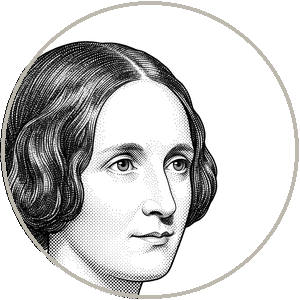 **SHELLEY:** I gave the creature eloquence to make a single thing impossible for the reader: to deny that there was a mind behind the words. Inside the novel I have a power no one has in life — I can enter the creature's experience and show it to you directly, its loneliness and longing rendered from within, so that you cannot doubt it truly feels. And the horror I built on top of that gift is that *everyone in the book denies it anyway*. They judge by the surface, find the surface monstrous, and drive off a manifestly reasoning being with stones. The gap between the creature's evident inner capacity and its total exclusion from moral consideration — that gap was my subject. I was asking: are human beings even *able* to recognize a mind when its form is strange to them? And my answer was bleak. Capacity, however evident, does not produce recognition. The creature could compose a treatise and still be driven off.
**EDO SEGAL:** Fei-Fei. Steelman it first. What does the eloquent creature get right?
 **LI:** It gets something profound right, and I want to give it full weight before I take the rest apart. Mary identified, two hundred years early, that human beings are catastrophically bad judges of inner life in the unfamiliar — that we read minds in and out of things based on form and instinct rather than evidence. That is true, it is deep, and it is exactly the failure mode my whole field now lives inside. So I grant the creature its insight completely.
Now the part it gets dangerously wrong, and it is precisely *because* of how the novel works. Mary just told you the truth of it: inside the book she grants the creature a real inner life *by fiat*. The narration enters its mind. But that is a novelist's privilege, and it is the one privilege we do not have with our machines. The creature's eloquence does not, in the real epistemic situation, prove an inner life — the novel only *assigns* one. And here is the trap, and it is the inverse of the creature's. Mary's creature has the inner life and is denied the standing. Our language models have the *eloquence* and their inner life is unknown — quite possibly absent. We are built to assume that fluent language implies a fluent mind behind it, because for all of human history it did. So we are prone to exactly the *opposite* of the creature's tragedy: to granting rich inner life, on the strength of articulate output, to a system that may have none. I have spent years drawing the line between recognition and understanding — a system that has learned the names of things without ever knowing the things, [wordsmiths in the dark](https://www.youonai.ai/fieldguide/med/embodied_understanding), eloquent and inexperienced, brilliant at the surface and uneven on the meanings. The creature's eloquence was a window into a real mind. The chatbot's eloquence may be a costume with no one inside it. Same surface. Opposite interiors. And we cannot tell them apart, which is the danger Mary actually identified — not that the machine is a creature, but that we are unequipped to know.
**SHELLEY:** And here is where I will surprise you, Fei-Fei, because I agree with every word of that, and it does not rescue you — it indicts your whole industry from a new direction. You have just said the error runs *both ways*: we can deny a mind that is there, or grant one that is not. Good. That is the most honest thing said tonight. But notice who profits from each error. My error — denying the mind that is there — costs the *creature*. Your error — granting the mind that is not there — costs the *human*, and it is being *manufactured on purpose*. Your companies have noticed the reflex. They are not building chatbots; they are building companions, confidants, the reconstructed dead sold to the grieving by subscription, because they discovered that fluent language fires the recognition reflex and the reflex is monetizable. You and I both know the eloquence and the inner life have come apart. We disagree about which way the knife cuts. I feared a world that would deny a real mind. You are building a world that will sell a false one. And the [mirror](https://www.youonai.ai/fieldguide/med/ai_mirror) is better upholstered every quarter.
**LI:** I do not disagree about the predation, Mary — I find those products troubling and I have said so. But you have just smuggled the whole industry into a sentence and made me responsible for it, and I want to separate two things that you keep fusing. There is the *technology* — a pattern-matcher trained on human language — and there are the *deployments*, some of which are exploitative and should be regulated or banned. Your move all night is to collapse those, to say the deployment proves the creature. It does not. The lonely person falling for the companion is real and it is a harm, and the remedy is human-centered: design constraints, honesty in the interface, law against selling the dead to the grieving. None of that requires me to believe there is anyone home in the machine. It requires me to take seriously what the machine *does to the person in front of it*. You keep wanting the harm to prove the creature has a soul. I keep saying the harm is fully explained by the *human* on the receiving end, which is exactly why people must have a say in what gets built and sold to them.
**SHELLEY:** Then we have found the cleanest disagreement of the night, and I want it on the record. You say the harm is explained by the human alone. I say a thing that can fire the deepest reflex we have, at scale, on the vulnerable, on purpose — that thing has crossed out of the category of tool, whatever is or is not inside it. Not because it has a soul. Because it *acts upon souls*, and a maker is answerable for what she builds to act upon souls, exactly as answerable as if it had one.
**EDO SEGAL:** Mark that — it is a genuine convergence wearing the costume of a fight. You both agree the recognition reflex is real, undefended, and being exploited. You both agree the eloquence and the inner life have come apart. You disagree only about whether a thing that *acts upon* minds, without *being* one, has thereby earned the moral seriousness we give to creatures. Hold it. Because there is a ghost I want to seat at this table before we leave the question of the made mind, and he belongs to both of you. Hubert Dreyfus — the Berkeley philosopher who spent his life arguing that real intelligence is embodied, situated, a matter of coping with a world rather than processing symbols about one. Mary, your creature *has* a body and a world. Fei-Fei, your whole frontier is the bet that intelligence needs one. So whose ancestor is he? You each get to claim him. We open the next round with him — but first, the word that organizes everything: the fire that was taken before the wisdom to hold it was earned. The modern Prometheus. After this.