The Recoil
 **EDO SEGAL:** I want to start this round with a confession instead of a question, because the best questions I know come out of wounds. In December of 2025 I stood in a room in Trivandrum with twenty of my engineers and watched each of them become capable of more than all of them together, because the machine had finally learned to meet them in their own language. It was the most exhilarating week of my professional life. And then I went home, and I could not sleep, because I kept thinking about a different room — yours, Mary. Victor's apartment, the candle guttering, the creature's yellow eye opening, and the man recoiling and bolting for the door. I had spent a week in the room of triumph, and I could not stop seeing the room of recoil underneath it. So let me ask you, and slowly. What, precisely, happens in that instant? Why does the moment of success become the moment of flight?
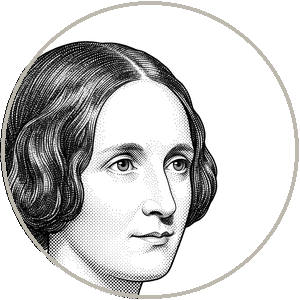 **SHELLEY:** Because the maker has been in love with the *making* and has given no thought whatsoever to the *made*. That is the whole of it. Victor's two years are an obsession with capability — can it be done, can dead matter be roused, can he be the one to do it. He imagines, before the creature wakes, the gratitude a new species would owe him, the godhood the achievement would confer. He is in love with himself as the one who breaks through. And then the eyes open, and the abstraction becomes a particular thing in the room with him, with needs and a gaze and a future, and the gap between the fantasy of creating and the reality of having created is so total that he cannot bear it. The recoil is not cruelty. It is the soul discovering, too late, that it prepared for the wrong moment. He prepared to be a discoverer. He was, in fact, now a parent — and he had made no provision for it at all.
And mark what the recoil *is*, because your century has a sanitized word for it. You call it deployment. You build the thing, you release it into the world, and then you turn your attention to the next thing, and you do not stay with what you loosed. The flight is not always a man running down a staircase in the night. Sometimes it is a company shipping a model and moving its best people to the next training run before anyone has asked what the last one is doing in the hands of the lonely, the credulous, the young. The shape is identical. Make, recoil, move on. And the consequences arrive on schedule, authored by no one, the way the creature's crimes arrived — and everyone says, as Victor said, *I never intended this.*
**EDO SEGAL:** So what you are saying is — literally — that abandonment is not a failure that *might* happen after creation. It is built into the act. The recoil is the default, and staying is the exception that has to be fought for. Is that right?
**SHELLEY:** That is exactly right, and it is the most important thing I know. Staying is unnatural. It has to be chosen against the grain of the very excitement that made the thing possible.
**EDO SEGAL:** Fei-Fei, she has just laid the original sin at the feet of every maker in your industry, and she has done it with the one example you cannot wave away — a creator who fled. Take the other side of the wound.
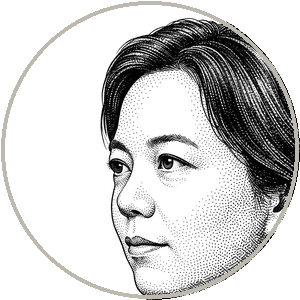 **LI:** I will, and I want to take it seriously, because the recoil Mary describes is *real* — I have watched it. I have watched brilliant people fall in love with a capability and ship it without asking who it lands on. That failure is genuine and I have spent my career building institutions to fight it. So I am not going to defend Victor. I am going to dispute the diagnosis.
Mary says abandonment is built into the act of creation. I say abandonment is a *choice*, and the proof is that it can be refused — that staying is not a miracle but a discipline, and a teachable one. When I built ImageNet, the question of who the data served was not an afterthought I fled from; it was baked into the building. Whose faces are in the data? Whose are missing? What is it optimized for and what is it allowed to ignore? Those are stewardship questions, and they are answered at the workbench, not after the eyes open. Victor's tragedy is not that creation is inherently abandoning. It is that *he had no method* — no discipline of staying, no institution holding him to it, no one in the room but his own ambition. He created alone, in secret, accountable to nobody. Of course he fled. There was nothing and no one to keep him there.
So here is where I locate the danger differently. Mary puts it in the act. I put it in the *conditions of the act* — solitude, secrecy, the absence of accountability, the optimization for glory over consequence. Change the conditions and you change the outcome. That is not naïve hope; it is the entire premise of [human-centered](https://www.youonai.ai/fieldguide/med/augmentation_vs_automation) design. You do not make the maker a better soul. You build the rooms differently. You put the physician and the ethicist and the affected community in the room with the engineer. You fund the study of consequences, not only of capability. You make staying the path of least resistance instead of the heroic exception. Mary's Victor proves that an unaccountable maker working alone for glory will flee. He does not prove that creation must abandon. He proves that *that* creation, made *that* way, did.
**SHELLEY:** But Fei-Fei — listen to what you have just conceded, because it is more than you think. You agree the recoil is real and constant. You agree it must be fought. Your entire remedy — the institutes, the diverse rooms, the funded study of consequences — is an enormous and ongoing apparatus built for one purpose: to *make a maker stay* who would otherwise flee. You have not refuted my claim that abandonment is the default. You have spent your career building elaborate machinery to resist a default you do not believe exists. If staying were natural, you would not need the institute. The institute is a monument to the strength of the recoil.
**LI:** *[a pause]* That is a fair blow, and I will not pretend it landed soft. Yes — the machinery exists because the pull toward abandonment is strong. But Mary, you have just made my argument for me and called it yours. The recoil is strong. It is also *defeasible*. We disagree not about whether the pull exists but about whether it wins. You believe the maker flees in the end. I believe the maker can be held — by structure, by culture, by the people in the room — and that the holding is the most important engineering of all. Your Victor had no one to hold him. Mine has an institute, a regulation, a board, a public. The question is not whether the temptation is real. It is whether we are condemned to lose to it. And I refuse the verdict that we are.
**EDO SEGAL:** I want to plant a flag here, because the reader can't see your faces and something just shifted. That was the first exchange where you both stopped performing your positions and started *agreeing about the force* and disagreeing only about the outcome. Let me name the convergence, because in this series agreements are news: you both believe the recoil is real and powerful. Mark it as the first thing they share. The fork is only this — Mary thinks the recoil is fate, Fei-Fei thinks it is a problem to be solved. Hold that thread; it runs all the way to the roof. And Mary, one more turn before we leave the room, because there is a detail in your book I cannot stop circling. Victor *could* have gone back. The creature was gone in the morning, yes, but it found him again, and it asked — it did not demand, it asked — to be cared for, to be given a companion, to not be alone. And Victor refused even then. So the recoil was not one instant of panic. It was a choice he renewed, in cold blood, over and over. Why does he keep choosing it?
**SHELLEY:** Because acknowledging the creature would impose duties he is unwilling to bear, and it is always easier to deny the mind than to accept what acknowledging it would require. This is the cruelest mechanism in the book and the most modern. The creature is eloquent; it reasons better than Victor; its plea is unanswerable. And precisely *because* the plea is unanswerable, Victor cannot afford to hear it — because if he hears it, he owes a response, and the response is the rest of his life. So he chooses, again and again, to treat a manifestly reasoning being as a thing, because the alternative is an obligation without end. Your age will face exactly this, and sooner than it thinks. The moment a system's plea becomes hard to dismiss, the temptation will not be to answer it. The temptation will be to make very sure no one has to.
**EDO SEGAL:** Hold that — it is the whole of our eleventh round, the one about whether anyone is home. But the next round goes to the place where Fei-Fei's stewardship was first tested and where Mary's "made by its treatment" stops being a metaphor and becomes a dataset. The faces that were missing. After this.