The Physics of the Candle
 **EDO SEGAL:** Roger, I want to push you onto the most exposed ground you stand on, because you've never hidden from it and I won't let you start now. It's one thing to say the brain does something non-computable. It's another to say *where* and *how*. You did the harder, riskier thing: with Stuart Hameroff you proposed an actual mechanism — Orchestrated Objective Reduction, quantum processes in the microtubules inside neurons, with the collapse of the wave function, governed by quantum gravity, as the physical event of a conscious moment. Most of your colleagues think that's a bridge too far. Tell me why you built the bridge anyway. And Marvin — I want your reaction as an engineer, not a philosopher, when he's done.
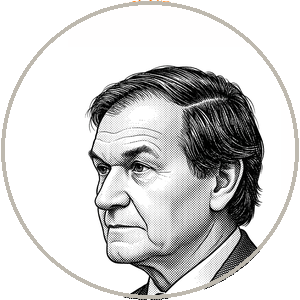 **PENROSE:** I built it because a philosophical claim that never touches physics is just an opinion with footnotes. I'd argued from Gödel that the brain does something non-computable. Fine — then it has to do it *somewhere*, in some physical process, governed by some law, or I'm just gesturing. So I asked: is there anywhere in known physics that's genuinely non-computable? And there is one place — the measurement problem, the collapse of the quantum wave function, which nobody can compute and which I believe is real and objective, not just our ignorance. I think collapse is triggered by gravity, at a threshold you can calculate, and that it's a non-computable physical event. If the brain could harness *that* — keep quantum coherence in some structure long enough for it to matter — then the brain would be doing something no classical computer can. The microtubules were Hameroff's candidate for the structure. I'll be honest about the status: the simplest version is in tension with experiment. Tegmark calculated that the brain is too warm and wet to hold coherence — decoherence in ten-to-the-minus-thirteen seconds. We've answered, others have answered back. It is not settled and it may be wrong in its specifics.
**EDO SEGAL:** Then let me ask the hard, fair thing. If the microtubules turn out to be wrong — if Hameroff's structure isn't the one — does your whole argument fall?
**PENROSE:** No, and this is the distinction I most want on the record. The specific mechanism could be wrong and the general claim survive untouched. The general claim is: the brain exploits *some* non-computable physics. Orch OR is one guess at which physics and where. If microtubules aren't it, something else is — or the Gödel argument is wrong at the root, which is a different fight. People love to refute Orch OR and think they've refuted me. They've refuted a hypothesis I was brave enough to make specific. The mountain doesn't move because one proposed path up it is blocked.
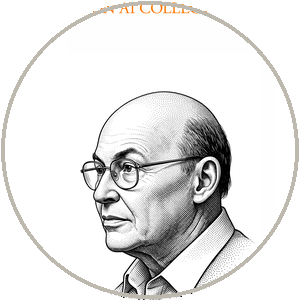 **MINSKY:** Now I get to be the engineer, and I'll be gentle, because I admire the nerve it took to make it specific — most philosophers never risk a falsifiable claim and Roger did. But here's my problem, and it's not the warm-and-wet objection, though that one's serious. My problem is the shape of the argument. Roger has two mysteries — consciousness, and the quantum measurement problem — and he's bolted them together and hoped that two mysteries make one explanation. They don't. They make a bigger mystery with a hyphen in it. There's no reason a quantum collapse should produce an *experience* any more than a classical computation should. Patricia Churchland said it best — pixie dust in the synapses is exactly as explanatory as quantum coherence in the microtubules. You've moved the magic from the software to the hardware. It's still magic. You haven't told me how collapse becomes the feeling of red. You've told me where you'd like the feeling to live.
**PENROSE:** That's the Chalmers objection and it's the honest one, and I'll concede its force and then tell you why I'm still standing. You're right — I have not explained *why* non-computable physics should give rise to experience. The hard problem remains hard; I've never claimed to dissolve it. But notice what I *have* done that the purely computational story cannot. I've identified a reason the brain might be doing something a digital machine can't — a real, physical, non-computable process — which is exactly what the Gödel argument said we should be looking for. Your story has the opposite trouble, Marvin: it explains the mechanism beautifully and has no room for the experience at all. You don't have the hard problem because you've declared it solved by fiat — you've said the feeling just *is* the machinery running. I think that's the bolder and less defensible move. I have a gap. You have a denial. I'd rather have the gap.
**MINSKY:** It's not a denial, it's a refusal to multiply entities. When heat turned out to be molecular motion, nobody said "but you haven't explained the *feeling* of warmth, where did the warmth go" — the warmth was the motion, felt from a particular vantage. I'm saying experience is information processing felt from the inside of the processor. You find that unsatisfying. I find "quantum gravity does it" exactly as unsatisfying and more expensive. We've both got a place where the explanation runs out. Mine runs out having built the whole mind. Yours runs out having built a reason the mind can't be built. At least look at where each of us has to plant the flag of ignorance — I plant mine at the very last inch, the raw feel. You plant yours at the start, before a single part is assembled, and call the starting line a wall.
**EDO SEGAL:** This is the round where I most feel the thing I came here unable to resolve, so let me put my own metaphor on the table and let you both cut it. In [YOU] on AI I called consciousness a [candle in the darkness](https://www.youonai.ai/fieldguide/med/candle_in_the_darkness) — the rare, flickering thing in an unconscious universe, the part that looks at the stars and asks what the lights are. I meant it as poetry. Roger, you told me once that you'd mean it as physics — that the candle burns by a mechanism the calculator can't run. Marvin, you'd tell me the candle is a chemical reaction like any flame, and no less beautiful for it. So whose candle is it?
**PENROSE:** It's a real flame, lit by a process not in the calculator's repertoire, and the fact that it's physical doesn't make it ordinary — a black hole is physical and it is not ordinary. The candle is rare because the universe only lights it where the non-computable physics can get a foothold, and that may be a very particular and fragile arrangement, which is exactly why it should be tended rather than assumed to be cheap and coming soon to silicon.
**MINSKY:** It's a real flame, and it's a chemical reaction, and both of those are true at once, and the wonder is not diminished one particle by knowing the chemistry. That's the whole disagreement in a candle: Roger thinks knowing the mechanism would leave a remainder. I think knowing the mechanism *is* the awe. We light the same candle. He thinks a calculator can't. I think we'll build one that can, and that it'll be just as astonishing and just as much a machine as you are.
**EDO SEGAL:** Hold the candle — it's the last image of the night, too. But now we climb down out of the brain entirely. Three convergences marked so far, and a wall between you that won't move. Let's take the wall to work, where the reader is sweating about a paycheck, and ask what the death cross is actually measuring.