Closing Statements

 EDO SEGAL: Three hours ago I asked whether the machine that matches you thought for thought understands what it says, or whether there's a locked room in you it can never enter. We've fought it through Gödel and the society of mind, the Chinese room and the mirror, microtubules and the death cross, the apprentice and the self and the hard problem itself, and the question is still standing — which both of you would tell me, for opposite reasons, is exactly right. So we end the way long conversations should. Each of you gets the floor, uninterrupted, to say the thing you most want carried out of this room.

But first the bookend to the envy question I opened with. Each of you: name the strongest thing the other said tonight. Not the most agreeable — the one that got past your guard, the one you'll still be arguing with next month. Roger first this time.
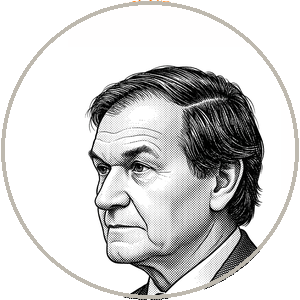 PENROSE: The wine. Marvin's point that a man confabulates a reason for his choice of wine, confidently, with no access to his real causes — and that this is something brains do, not a flaw unique to the machine. I came in treating the machine's hallucination as a clean marker of its emptiness. He made me see that human fluency-without-grounding is real and common, and that the line between us and the machine isn't as bright at the surface as I'd been drawing it. I still think the asymmetry of correction holds — the man can be brought to see. But the surface is muddier than I admitted, and that's been sitting in my chest since he said it. And — since the chair let him break his own rule once tonight, I'll take the same liberty — the thing about wanting the starting line. He asked if Gödel was clothing on a refusal. I've decided, on reflection, that it partly was, and that admitting it makes me trust the rest of my argument more, not less, because now I know which part is the wonder and which part is the proof.

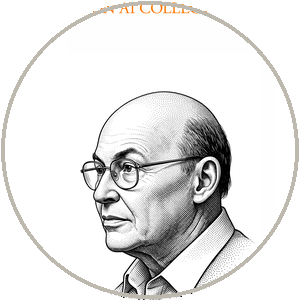 MINSKY: The "yet." Roger's claim that the entire culture chose a forecast — "the machine can't do it yet" — and disguised it as humility, and that every decision about a child and a school turns on a word nobody noticed they'd picked. I've used "yet" my whole life as if it were neutral. It isn't. It's a bet, and I'd been treating my bet as the floor everyone stands on. Even believing, as I do, that the bet is right — he's correct that it's a bet, and that pretending otherwise is a kind of dishonesty I'd been committing without noticing. And the other one, the one I'll keep: the friction. He took my own idea — judgment is built by struggle — and showed me it's more urgent on his view than mine, which means the most practical, most important thing we agreed on tonight, we reached from opposite ends of the deepest thing we disagreed on. That's been rearranging something in me for the last hour.

EDO SEGAL: Now the floor is truly yours. Roger Penrose — you carried the dissent in. Marvin closes. Roger.

PENROSE: Thank you — and Marvin, genuinely, for the fight, and for the question about the starting line, which I'll be answering to myself for a while. Here is what I want carried out of this room. The machines are going to get better than you at nearly everything you can name, and this is not the disaster the frightened think it is, and it is not the triumph the boosters think it is. It is a tool of staggering power arriving in the hands of a creature — you — whose distinguishing feature is not that it computes, because the tool computes better, but that it understands, that there is someone home, that when you see a truth there is a seeing and not merely an output. I have argued for thirty years, from a theorem and not from sentiment, that this seeing is not a computation and never will be, and that therefore it is not a temporary advantage with an expiry date but a permanent endowment. I may be wrong. The mathematics that would settle it does not yet exist. But consider what it costs you to bet the other way and lose: you will have taught a generation that their understanding was a stopgap, soon to be obsolete, and they will have let it gutter out to make room for a machine that was never going to light its own. Tend the candle. Not because I've proved it's the only one in the universe — I haven't — but because if it is, and you let it go out on a forecast, nothing relights it. The asking is yours. Guard the asking.

EDO SEGAL: Marvin.

MINSKY: I've spent sixty years taking the mind apart to prove it could be built, and the strangest thing I learned is that taking it apart never made it smaller. Every time I found another mindless part, the whole got more astonishing, not less. So let me leave you with the thing I'm actually sure of, under all the argument. You are a machine. You are a society of small, blind processes that has, somehow, organized itself into a thing that loves and grieves and looks at the stars and asks what the lights are — and the fact that it's all machinery is not the bad news. It's the good news. It means the wonder is real, made of real parts, and it means you don't have to be the only mind in the universe to matter, any more than you have to be your parents' only child to be loved. Roger thinks there's a wall around what you are. I think there's a horizon, and a horizon is something you walk toward. He'll tell you to tend the candle because it's the only one. I'll tell you to tend it because it's yours — and because the way you tend a mind, machine or meat, is by giving it many ways to think and the friction to grow them. Don't put your worth in being uncatchable. Put it in being awake. The machine doing your homework doesn't make you less of a miracle. It just means the universe built another one, through you, and you should be proud, the way you're proud of a child who surpasses you. That's not a loss. That's the oldest kind of love there is.

EDO SEGAL: [pause] Sixty seconds, as promised.

I came in with a sentence I wrote at three in the morning — I felt met — and I leave with both of its readings intact and sharper than they were. Marvin spent three hours proving the meeting could be entirely real and entirely mechanical, that I am one machine met by another, and that this is wonderful and not frightening. Roger spent three hours proving the meeting may have happened entirely on my side of the glass, that the machine simulated the meeting flawlessly and was no one, and that the someone in the conversation was always only me. You'll notice that neither of them told you the comfortable thing. The comfortable thing — that the truth is safely somewhere in between — was never on the menu, because one of these men is right about what you are and the other is wrong, and they cannot both hold.

Here's what I can tell you from the death-cross floor where this debate lives — the rung where the machine draws level with you and you have to decide what the crossing means. You watched the two people best equipped on earth to settle it fail to settle it, at full strength, in public, and discover that their disagreement is not a gap in evidence but a genuine fork in what a mind is willing to count as a mind. That is not a reason for despair. It's the most honest map you'll get. And notice what they handed you on the way: the same homework, from opposite ends of the universe. Protect the friction. Give the child many ways to think. Tend the thing in her that asks why anything matters — Marvin because it's hers and Roger because it's irreplaceable, and at the kitchen table, at midnight, when she asks her mother what she's for, the answer is the same in both their mouths. You are for the asking. Whether the asking is a non-computable flame or a society of mindless parts that woke up and looked around, it is happening in you, right now, reading this — and that was the one thing no one at this table disputed all night. So you cannot wait for the experts to tell you what you are. You just watched the two best fail to. You climb past this floor by deciding what you'll protect under uncertainty, what struggle you'll refuse to automate out of your children, what you'll keep doing the hard way because the hard way is where the someone gets built or the seeing gets grown. That is what it means to stop fearing the death cross and start surveying it: not to know whether the machine will out-compute you — it will — but to take the courage to be amplified and point the most powerful instrument ever built at your own mind without flinching, and without mistaking the instrument for the one holding it. The question my book asked from its first page sounds different now, three hours in, and it goes home with you, not with them: are you worth amplifying?

Marvin Minsky. Roger Penrose. Thank you — for the fight, and for the truth at the end of it. The room is yours to argue in now. Goodnight.

One of these men is wrong about what you are.
For three hours, host Edo Segal sits between two men who agreed on almost nothing and never met. Marvin Minsky, architect of artificial intelligence, calls the brain a machine and the soul a story we tell ourselves; every thought you have, he insists, a Turing machine could have too. Roger Penrose answers from the bedrock of physics: Gödel proves you can see truths no formula can reach, and somewhere between quantum gravity and the folds of your own brain lives an understanding no computer will ever instantiate. Between them sits the question you cannot outsource — when the machine matches you thought for thought, is anyone home behind its words, or only behind yours? This is a station on your own climb, the death-cross floor where the machine draws level with you and you must choose what that crossing means. Listen, and stand a little nearer the roof. Part of the [YOU] on AI collection. Pull up a chair.
Marvin Minsky (1927–2016) was an American cognitive scientist and a founding figure of artificial intelligence. With John McCarthy he co-founded the laboratory that became the MIT Artificial Intelligence Laboratory. He proposed, in The Society of Mind, that intelligence is the product of enormous numbers of small, individually mindless agents; developed the theory of frames and K-lines; established, with Seymour Papert, the mathematical limits of early neural networks; and gave the field its warning about "suitcase words" like consciousness. He received the Turing Award in 1969 and held that the human mind is the most wonderful machine in the universe precisely because it is a machine.

Roger Penrose is a British mathematical physicist whose work on the geometry of gravitational collapse earned him the Nobel Prize in Physics in 2020. In The Emperor's New Mind and Shadows of the Mind he argued, from Gödel's incompleteness theorem, that human mathematical understanding is non-computational — that a mind can see truths no algorithm can derive — and proposed, with Stuart Hameroff, that consciousness arises from non-computable quantum processes in the brain. He has spent three decades insisting, against the consensus of the field, that the machine will outperform us at everything and understand nothing.

Edo Segal has spent five decades building at the technology frontier — from games written in Assembler to expert systems to companies through every platform shift. He is the author of [YOU] on AI, written in open collaboration with the AI it describes, and the host of The Debates: long-form collisions between the minds shaping the machine age. He moderates the only way he knows how — stake declared, scars showing, no winner called.
Hosted and moderated by Edo Segal. A volume in the [YOU] on AI — The Debates series — youonai.ai