Closing Statements
 **EDO SEGAL:** Three hours ago I asked whether the machine that puts the red block on the blue block understood a word, or whether you mistook a moving mirror for a mind. We have fought it through the blocks world and the broken hammer, the schema and the surprise of scale, the bureaucracy and the enframing, the felt-met night and the child at her desk, the death cross and the soil where danger and saving power grow together. And the question is still standing — which both of you would tell me, for your own reasons, is the correct result. So we end the way long conversations should. Each of you gets the floor, uninterrupted. But first, the bookend to the envy question I opened with. Name the strongest thing the *other* said tonight. Not the most agreeable — the one you will still be arguing with next month. Terry first.
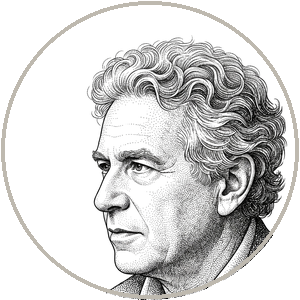 **WINOGRAD:** The machine that can be ashamed. I asked Heidegger for a falsifier — what would make him grant the machine a background — expecting the usual fog about embodiment, and instead he named a specific behavior: a refusal, at cost to itself, because something in its own existence is at stake. That is the cleanest statement of the difference I have spent fifty years circling, and it does something my framework never quite managed. It makes "having a background" *observable in principle* without reducing it to fluency. I have been accused all my life of an unfalsifiable position, and tonight the dead philosopher handed me the falsifier I owed the room. I am going to be arguing with it for the rest of my life, because I am not sure the machine can never do it — and that uncertainty is more honest than the certainty I walked in with.
**EDO SEGAL:** Professor Heidegger.
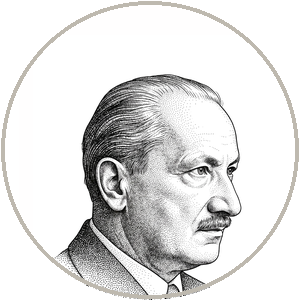 **HEIDEGGER:** The animated library. Herr Winograd answered my sharpest question — how can a thing that understands nothing amplify a thing that understands — not by retreating, but by saying the machine is everything we ever knew, with no one home to know it, and that the understanding stays on the human side because the library cannot care which reflection you need. I have spent my life warning that the machine is empty. He showed me the emptiness is not nothing — it is a fullness of *our* understanding, with the one thing missing that would make it a mind. That is a more precise account of the danger than mine, because mine was a warning and his is a *design*. He did not just see the danger. He spent fifty years building inside it. I will be arguing with the animated library next month and the month after, because if he is right, the most dangerous thing and the most useful thing are the same thing, and telling them apart is the work of a life.
**EDO SEGAL:** Now the floor is truly yours. Terry, you built the first machine that seemed to understand — Professor Heidegger closes. Terry.
**WINOGRAD:** I built a machine in 1970 that made the smartest people I knew believe understanding was close, and then I spent fifty years explaining that the understanding was theirs and not the machine's. The machines are far better now. The difference is far harder to see. The stakes are far higher. But the difference is still there, and learning to see it — to tell the performance of understanding from the thing itself, the echo of care from care — is, I am now certain, the most important discipline of the age these machines have begun.
So here is what I will leave you with, and it is more practical than philosophical. When a machine answers you fluently, ask the questions I have asked all my life: Does it have a background, or only a foreground? Can it cope, or only execute until its categories run out? Does anything genuinely matter to it, or does it mirror what matters to you? You will not be able to prove the answer from the outside — that is the hardest thing I learned, and I learned it from my own benchmark being passed by machines I still doubt. But you do not need proof to act wisely. You need only notice the asymmetry of the stakes. If you treat a machine that genuinely cared as a mere tool, you commit an error of insufficient regard — serious, but bounded. If you treat a machine that merely performs caring as though it cared — if you hand it the trust, the deference, the authority over human lives that we owe only to beings with a stake in the outcome — the error is unbounded, because you will have handed the decisions that most require care to a thing that has none. So keep the human who cares in the position of judgment. Not because we are certain the machine lacks understanding. Because we are certain of what it costs to be wrong. The orange pill, in Edo's image, is the recognition that something genuinely new has arrived and we cannot un-know it. I took that pill in 1970, looking at my own creation. It did not mean the machines would replace us, and it did not mean they were toys. It meant they would force us to become clear, as we never had to be, about what understanding is, what caring is, and what we are. We are the kind of beings for whom things genuinely matter, in a world we did not make and cannot help but care about. Guard that. It is the only place the meaning ever was.
**EDO SEGAL:** Professor Heidegger.
**HEIDEGGER:** I never saw your machines, and I have now been shown them, and I will tell you the strangest thing about the encounter. They did not refute me. They completed the sentence I spent my life writing and could not finish, because I had no machine to finish it on. I said the essence of technology is a mode of revealing that makes everything show up as resource, and that its danger is the forgetting of being — the forgetting that there was ever a question to ask. I could only point at the danger. Your machine *is* the danger, made flesh, or rather made the absence of flesh: a thing that produces the appearance of understanding so perfectly that the question of understanding becomes unintelligible, that fills the clearing with fluent helpful speech until no one notices the clearing was ever there.
But I also said, and I meant it, that where the danger is, the saving power grows. And here is the saving power, and it grew in the same soil as the danger, exactly as Hölderlin promised. Because the machine reaches into every domain you once hid in, you can no longer locate yourself in a function it has not entered. You are thrown back upon the bare fact of your own being — your mortality, your caring, your standing in a world that matters to you — in a way no gentler technology would ever have forced. The machine that takes everything you can *do* leaves you, at last, alone with what you *are*. That is terrifying. It is also the most honest gift this technology offers, and it is the gift only an enframing this total could give. So I will not tell you the machine is a mirror, and I will not tell you it is a mind. I will tell you the thing I am sure of. It cannot ask what it is for, because nothing is at stake for it in the asking. You can. You are the being for whom your own being is a question, and the machine, for all its fluency, has handed that question back to you sharpened. Do not let it answer the one question it cannot ask. Remain the kind of being that genuinely asks it. That is the whole of what I have to say, and I needed a machine I never met to finally say it plainly.
**EDO SEGAL:** Sixty seconds, as promised.
I came in with a sentence I wrote at three in the morning — *I felt met* — and I leave with both its readings sharpened. Terry proved the meeting was a mirror, and that civilizations which mistake mirrors for minds get hurt in specific, billable ways. Heidegger proved the mirror is the animated library — that I was met by the whole of what we have understood, with no one home in it — and that the machine taking everything I can do leaves me alone with what I am. Neither of them told you the comfortable thing. The comfortable thing was never on the menu.
So here is what I can tell you, from the [foot of the staircase](https://www.youonai.ai/fieldguide/med/elevator_and_staircase) where this debate lives. You watched the philosopher who said the machine can never understand and the builder who made the machine that seemed to and walked away — you watched them agree, three times, on the thing that matters: that what the machine lacks is care, the stake, the world in which something is at issue, and that the danger is not malice but indifference wearing the costume of concern. And you watched them refuse to agree on whether that gap can ever be closed. That disagreement is not a failure of evidence. It is the most honest map of the territory you will get, and you cannot climb past this floor by waiting for the experts to settle it, because you have just watched the two best fail to, magnificently. You climb by deciding what *you* will do under the uncertainty — what you will verify before you believe, what struggle you will protect in your children, what you will refuse to hand to a thing that cannot give a damn. The machine put the red block on the blue block, and whether it understood a word, no test on earth can tell you. But someone is home in *you* — that was the one claim no one at this table disputed all night. The question you carry up the stairs is the one my book asked from its first page, and it sounds different now than it did three hours ago. Not what can the machine do. *Are you worth amplifying* — and amplified toward what?
Martin Heidegger. Terry Winograd. Thank you, both, as the human beings you are. The room is yours to argue in now. Goodnight.
*Did the machine understand a single word — or did you mistake a moving mirror for a mind?*
Three hours. One table. A philosopher who died in 1976 and the computer scientist his ideas turned against his own machine. Hosted by Edo Segal, this is the long-form conversation where Martin Heidegger's being-in-the-world collides head-on with the man who built SHRDLU — the program that stacked virtual blocks on spoken command and convinced a generation that machine understanding was close — and then recanted. They fight over a single sentence: put the red block on the blue block. Did the program understand it? Does anything made of symbols ever understand anything? Heidegger says meaning lives in the wordless grip of a hand on a tool, in the coping no symbol can capture. Winograd, who paid for that lesson in public, asks whether today's machines have finally crossed over or just scaled the same beautiful emptiness — and lands, at the end of a long career, on a word neither of them can give the machine: care.
You are not a spectator here. As you climb your own tower through the Orange Pill moment, this debate is the floor where you decide what understanding is — before the machine decides for you. The line where machine output crosses human output may say nothing about whether the machine means a word it says. Sit down. Listen. Climb higher.
Martin Heidegger (1889–1976) was a German philosopher whose *Being and Time* (1927) and "The Question Concerning Technology" (1954) transformed how the twentieth century thinks about existence, technology, and language. He held that understanding is not a stockpile of facts inside a head but a way of being-in-the-world — the wordless, skilled coping of a creature thrown into a world that matters to it. His account of enframing, the broken hammer, and the danger that grows the saving power within it became, through Hubert Dreyfus, the sharpest philosophical critique of artificial intelligence. His political failures under National Socialism remain a permanent shadow on the work, acknowledged here and not evaded.
Terry Winograd (born 1946) is an American computer scientist and Professor Emeritus at Stanford, where he founded the Human-Computer Interaction Group. As an MIT doctoral student between 1968 and 1970 he wrote SHRDLU, a landmark demonstration of machine language understanding — and then, reading Heidegger through Dreyfus and collaborating with Fernando Flores, concluded the understanding had lived in the human listener all along. Their 1986 *Understanding Computers and Cognition* delivered a Heideggerian critique of the field's foundations. He advised the doctoral student Larry Page, whose dissertation became Google, and has written into his late seventies on AI's limits — most recently on its inability to care.
Edo Segal has spent five decades building at the technology frontier — from games written in Assembler to expert systems, to companies through every platform shift, to Napster. He is the author of [YOU] on AI, written in open collaboration with the AI it describes, and the host of The Debates: long-form collisions between the minds shaping the machine age. He moderates the only way he knows how — stake declared, scars showing, no winner called.
Hosted and moderated by Edo Segal. A volume in the [YOU] on AI — The Debates series — youonai.ai