The Crossing

 EDO SEGAL: The rules of this round are short. Each of you questions the other, directly. I will not rescue anyone. Terry, you built the machine — you go first.

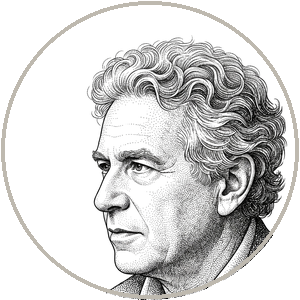 WINOGRAD: Professor Heidegger. I have spent the evening leaning on you, and now I am going to push, because I think your strongest concept has a soft spot you have never had to defend against a working machine. You say the machine has no background — only a foreground of pre-formed representation, the broken hammer. But the modern model was not given explicit representations. It learned, from an ocean of human text, something distributed and implicit that handles relevance and context with a facility no rule-based system approached. You want to call that mimicry. Here is my question, and I want the answer without retreating into "it has no body," because a body is the easy answer and I think you are better than the easy answer. What, concretely, would the machine have to do — what observation, what behavior — for you to say: that is not the trace of a background, that is a background of its own? Or is "background" defined, in your hands, as the thing a machine cannot have, so that the verdict is true by definition before the machine is even switched on?

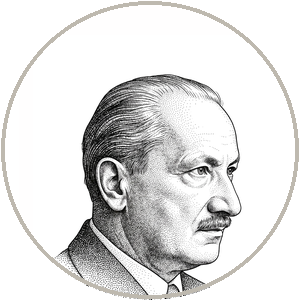 HEIDEGGER: That is the right blade and I will not flinch from it. You are accusing me of the same circularity you confessed to yourself an hour ago — defining understanding as the thing machines lack, so that of course they lack it. Here is my answer, and it is not a definition. The background is not a kind of competence; it is the being of a creature for whom things are at stake because it is finite and thrown. So the observation that would move me is not a feat of fluency, however great. It is this: a machine that, of its own motion, refuses — that declines a task, at cost to itself, because something in its own existence is at stake in the refusing. Not a refusal it was trained to perform. A refusal that emerges because the machine has a world in which this would be a betrayal of what it cares about, and it would rather be diminished than commit it. Show me a machine that can be ashamed — not generate the word "ashamed," but withdraw from a task because performing it would cost it something it cannot afford to lose — and I will say it has a background. Until then, what you call its implicit background is the sediment of a million human backgrounds, and the test is exactly that nothing is ever at stake for it in having one. That is not true by definition. It is a behavior I have named, and the machine does not do it.

WINOGRAD: Then take my second question, because you have just handed me the frame for it. You say nothing is at stake for the machine. I agree. But Professor — what was at stake for evolution? You ground human care in finitude and thrownness, but our finitude was authored by an optimizer with no more intent than gradient descent, no more care than the training loop that shaped the model. Our caring is what a survival-trained network feels like from inside. So when you demand the machine show stakes before you grant it a background, are you not simply naming the particular training objective you happen to have been shaped by — death, reproduction, the body — and declaring it the only door into the club? Why is evolution's blind optimization a legitimate author of care and the machine's blind optimization not?

HEIDEGGER: Because the objective is not the care — and this is the deepest thing I will say tonight, so hear it. Evolution shaped the conditions under which a being came to exist for whom its own being is an issue. It did not install care as a parameter. It produced a creature thrown into a world, mortal, bodily, who must take over its own existence and make something of it — and care is not the optimizer's objective, it is the structure of the creature's existing, which exceeds and turns back upon the process that produced it. You are correct that I cannot point to a substance, a soul-stuff, that the machine lacks. I am not a dualist; I never was. What I point to is not a substance but a mode of being: existing in such a way that your existence is at issue for you. The training loop produces a system that minimizes a loss. It does not produce a being who must answer for its own existence, because there is no existence there that is its own to answer for. Evolution authored a who. The training loop authors a what. The objective being blind in both cases is true and changes nothing, because the question was never the intelligence of the author. It was whether what got authored has a stake in being at all. And the machine, magnificently, does not.

WINOGRAD: I do not accept it fully, but I am going to think about it on the long drive home, which is the most I have said to anyone in this debate.

HEIDEGGER: Then it is my turn, and I will aim at the place where I think you are weakest, Herr Winograd, because you have been too generous to me and the reader deserves to see you defend your own floor. You have spent fifty years saying the machine produces the behavior of understanding without the involvement that produces it in us. Grant it. But you also say the machine is useful — that augmentation is real, that it can amplify the human who cares. Here is my question. If the machine genuinely has no world, no care, no understanding — how can a thing that understands nothing amplify a thing that understands? How is it not, on your own account, simply a more elaborate way of talking to yourself, with all the danger of self-flattery and none of the resistance of a real other? Either it contributes something the human did not bring — in which case your "mere mirror" performs feats no mirror performs — or it contributes nothing, and your augmentation is an illusion as complete as the one you spent your life exposing. Which is it?

WINOGRAD: That is the best question anyone has asked me in years, and I am going to answer it precisely, because the resolution is the whole of my mature position. The machine contributes something real and it is not understanding. It contributes the compressed traces of everyone else's understanding, retrieved and recombined faster than any human could. When it clarifies Edo's idea at three in the morning, it is not understanding his idea. It is holding up, at the exact angle his half-formed intention reached for, the relevant residue of a million humans who did understand related things — and his own caring, his own judgment, does the work of recognizing which reflection is the true one. So it is not talking to yourself. It is talking to the library, animated. And the danger you name is exactly right and is exactly the point of my whole design philosophy: a mirror that animates the library is the most powerful augmentation ever built and the most powerful instrument of self-flattery ever built, and which one it is depends entirely on whether the human keeps the position of judgment or surrenders it. The amplification is real because the library is real. The understanding stays on the human side because the library cannot care which of its reflections you need. That is why I say augment, never replace. Replace, and you have removed the only thing in the loop that understands. Augment, and you have given the understander the whole of what has been understood. The mirror is not nothing. It is everything we ever knew, with no one home to know it.

HEIDEGGER: Then my last question is the one I most want answered, and it is not a trap. You walked away. In 1970 you stood at the fork — scale the idol, or build the tool — and you chose the tool, and you chose the human in the loop, and you have held it for fifty years against a tide that called you the deserter. So tell me, builder to thinker: in an age where the incentive is replacement, where the death cross rewards removing the human, where the gravity of every business model pulls toward the smooth answer that flatters and moves on — do you believe augmentation can actually win? Or have you spent your life defending a fork the market already chose against?

WINOGRAD: I will give you the honest answer, which is the hardest one. I do not know if it can win, and I have stopped believing it can win on the merits alone, because the merits are not what decides it. The same capability — modeling the human world from vast data — can be turned toward augmentation or toward extraction, and nothing in the technology dictates which. My own student's company contains both: search, which was the largest vindication of augmentation imaginable, and the attention economy, which was the largest engine of extraction. Same data, same methods, opposite faces. So whether augmentation wins is not a question about the machine. It is a question about incentives, ownership, regulation, accountability — about whether we build the institutions that keep the human in the position of judgment, or let the gravity pull us into deference. That is why, at the end of my life, I turned from the philosophy of mind to the politics of design, and why I will say plainly: you cannot get augmentative machines from extractive institutions. Whether we can build the other kind is a hope, not a result. But it is the right hope, and it follows from everything I have argued, and I would rather spend my last years on a hope that follows from the truth than on a certainty that follows from despair. You taught me that the danger and the saving power grow in the same soil. I planted in that soil. I do not know if it will bear. I know it is the only soil there is.

EDO SEGAL: After three hours, the two of you are holding opposite ends of the same sentence, and neither will let go, and that is exactly right. We close after this. Final statements. The last word each.