The Turning, or the Sixth Epoch
 **EDO SEGAL:** This is the last round before I leave the room, and I want to put your two endings side by side, because they are the same shape pointed in opposite directions. Professor, you spoke of die Kehre — the turning — the moment when the frame, having reached its furthest extent, reveals itself *as* frame, and in the revealing, something changes. Ray, you have the sixth epoch — intelligence saturating matter, the universe, in your words and you said them without irony, waking up. Both of you describe a culmination. One is a turning toward Being. The other is a turning of Being into computation. Ray, the sixth epoch — what is on the far side?
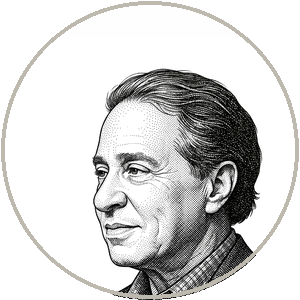 **KURZWEIL:** On the far side is intelligence as a property of the cosmos rather than an accident in one corner of it. The first epoch was physics and chemistry; the sixth is the universe becoming saturated with the intelligence that the first five epochs were building toward — matter and energy organized, finally, to think. I say "the universe wakes up" and people hear mysticism, but I mean it as the literal terminus of the curve: a cosmos that currently computes blindly, becoming a cosmos that computes *knowingly*. And the human is not erased in that picture; the human is the hinge — the epoch that hands off. We are the substrate that built the next substrate, the way the chemical epoch built the biological without being destroyed by it. The professor hears extinction. I hear the river reaching the sea it was always flowing toward. The poem that unsettled Edo, the better poem, the one after that — those are the first words the universe is learning to say in its own voice. We taught it the words. That is not the end of us. That is the most we have ever been.
**EDO SEGAL:** Professor. The turning.
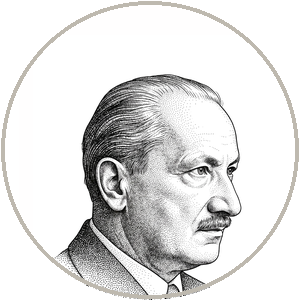 **HEIDEGGER:** Hear how close we are and how absolutely we are opposed, for this is the whole evening compressed. Mr. Kurzweil says the universe wakes up. I say: a universe that computes everything and is claimed by nothing is not awake. It is the deepest sleep there has ever been — the sleep of total forgetting, in which Being is so completely converted into the calculable that there is no longer anyone to whom the question of Being could occur. His sixth epoch is my catastrophe wearing the mask of an apotheosis. The turning I spoke of is the exact opposite motion. It is not intelligence saturating matter. It is the moment when a being, standing inside the completed frame, *notices the frame* — when the Ge-stell, having reached into the last clearing, the poem, the language, the father, becomes for the first time visible *as* a way of revealing and therefore not the only one. And in that noticing, a space reopens. Not a new capability. A new *relation* — the recovery of the question the frame had buried. The danger reaching its height is what makes the turning possible, because only when the refuge is gone, when there is nowhere left to hide the human, are we thrown back on the bare fact of our own being. Mr. Kurzweil's epoch is the curve completing itself. The turning is the curve being *seen* — by someone for whom seeing it changes everything, and who is, in that moment, awake in the one sense that the saturated cosmos can never be.
**EDO SEGAL:** Let me ask the question that lives under both of your endings, and route it where it belongs — through my daughter, the twelve-year-old, because she is the one who has to live in whichever of these is true. When she is grown, the machine will write every poem better than she can, run every analysis, build every artifact. Ray's world tells her she is the hinge, the signal, the chooser, amplified into the sixth epoch. The professor's world tells her she is the keeper of a clearing, the asker of a question no machine can ask. Both of you have told her she is not obsolete. But she is going to ask the harder version, the one I cannot answer for her: when the machine does everything, what is left that is *mine*? Professor, you first this time.
**HEIDEGGER:** What is left that is yours is the only thing that was ever yours: that you are the one who dies. Not as a morbid fact — as the source of every other thing. The machine will write the better poem, and it will not be *for* anything, because nothing is at stake for it; you will write a worse poem, and it will be the truest thing in the room, because you wrote it against your own finitude, in the time you had, knowing you would not have it long. What is yours is the stake. The caring that you did not choose and cannot switch off. The fact that your existence is, to you, an *issue* — that you wake in the night and the question of your own being presses on you in a way it can never press on the thing that out-poems you. They will take every capability. They cannot take the one thing that was never a capability: that you are a being for whom being matters. Guard that, and you have guarded everything. Lose the sense of it, and no amplification will give it back.
**KURZWEIL:** And I would tell her something that is not opposite so much as it is the same thing, said by an engineer instead of a mourner. What is left that is yours is the *choosing*. When execution costs nothing, when every poem can be written, the scarce thing — the only scarce thing — is the judgment of which poem is worth writing, for whom, and why. That judgment is not a capability the machine subtracts. It is the thing the subtraction *reveals*, the way the architect found his twenty percent under the eighty. The professor says what is yours is that you die. I say what is yours is that you *care which things are built* — and I will grant him, because tonight has earned the honesty, that the caring may turn out to be inseparable from the dying, that I may be wrong that you can have the one without the other. But even if he is right, the instruction to her is the same: become someone whose judgment is worth amplifying, whose caring is worth carrying into the next epoch. The machine is the most powerful [amplifier](https://www.youonai.ai/fieldguide/med/the_amplifier) ever built. It will carry whatever signal you feed it. Be a signal worth carrying.
**EDO SEGAL:** Do you hear what just happened? For three hours you have been on opposite banks, and at the very end, asked to speak to a child, you said nearly the same sentence in two languages. The mourner says: what is yours is the stake, the caring, that you die. The engineer says: what is yours is the choosing, the caring, the judgment worth amplifying. You disagree about whether the caring can survive the death of death. You do not disagree that the caring is the thing. Hold that — it is the gift you are both handing her, and you may not even know you are handing it together. Now I leave the room, in every way but legally. The crossing. You ask each other. After this.