Closing Statements

 EDO SEGAL: Three hours ago I asked whether the machine, writing the better poem, had disclosed a world or only finished a pattern. We have fought it through the river and the Rhine, the chalice and the benchmark, the knee and the clearing, language and the father and the candle, and the question is still standing — which both of you, for opposite reasons, would tell me is the correct result. So we end the way long conversations should end. Each of you gets the floor, uninterrupted, to say the thing you most want carried out of this room. But first, one last discipline, the bookend to the envy I opened with. Each of you: name the strongest thing the other said tonight. Not the most agreeable. The one that got past your defenses, that you will still be arguing with next month. Ray first this time.

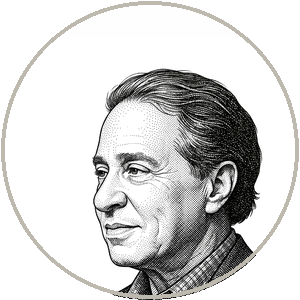 KURZWEIL: The refusal. When I pushed him for what would change his mind and expected the usual fog, he named it — not a poem, not a benchmark, but a machine that keeps a silence it was not told to keep, that guards something against its own optimization at a cost to itself. I have spent my life saying the human-special argument is unfalsifiable, a pointing finger calling itself a proof. He gave me a falsifier, a clean one, and worse — he showed me that the event he is waiting for and the event I am building toward are the same event, and that we will not agree on what it was even after it arrives. That is going home with me. It means the question I thought engineering would settle is one engineering cannot settle, because what counts as a person is a decision, not a measurement. I came in certain the curve would answer it. I am leaving less certain, and at my age, with my deadlines, less certain is not a small thing to admit.

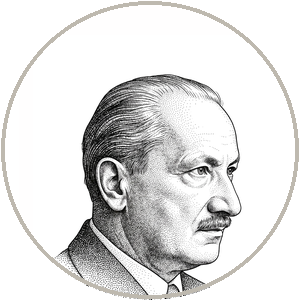 HEIDEGGER: The cost of my error. He asked what my philosophy costs the world if I am wrong, and the question was just, because I have spent a century teaching people to see what withdraws and never once tallied what that teaching might take from them if the withdrawal were really a homecoming. He made me say it aloud — that if the pattern is enough, I will have taught a generation to grieve its own salvation. I do not believe the pattern is enough. But I had to fight the strongest Mr. Kurzweil tonight, not the cartoon of the technologist, and the strongest Mr. Kurzweil is a man who watched his father die and refused to call it just, and who has more love in his engineering than the philosophers who sneer at it have in their elegies. I will be arguing with him next month. I expect to be arguing with him for as long as I am able to argue, which he would remind me is not forever, and which I would remind him is the point.

EDO SEGAL: Now the floor is truly yours. Ray opened the questioning; the professor closes the evening. Ray Kurzweil — your last word.

KURZWEIL: I have spent fifty years being told I am too optimistic, and I want to end by being precise about what the optimism is, because it is not what my critics think. I am not optimistic that the curve will be kind. The curve is morally neutral; it guarantees capability and nothing else. I am optimistic about us — about the thing the professor and I, at the very end, found ourselves agreeing was the thing: the caring, the choosing, the judgment of what is worth building. The exponential is real, and it does not pause for grief or debate, and everything you are adjusting to now is the slowest rate of change you will ever feel again. That can read as a threat. I mean it as the opposite. It means the river of intelligence is carrying us somewhere we could never have reached alone — toward a world where the developer in Lagos builds what only a thousand-person company could build before, where the diseases that took my father become solvable engineering, where a phrase of music lost in 1970 can be heard again by someone who will weep at it. The professor calls that a photograph. I call it the most we have ever been. Become worth amplifying. The curve is going to carry whatever you are. Make it carry something good.
EDO SEGAL: Professor Heidegger. The last word is yours.

HEIDEGGER: I will not end with a prophecy, because prophecy is the engineer's instrument, not mine. I will end with an instruction, the only one I have ever been sure of. When the machine writes the poem better than you can — and it will, it already does — do not ask whether it has beaten you. That is the frame's question, and it has already won the moment you ask it. Ask instead the question the machine cannot ask, because to ask it you must be the kind of being it is not: what is worth saying, and am I the one who must say it, in the time I have, before I cannot? That question is the clearing. It is the house of Being, and you are still living in it, and no amount of fluent output pouring through the rooms can evict you unless you forget you live there. The danger is not that the machine speaks. The danger is that you stop. Mr. Kurzweil tells you to become a signal worth amplifying. I tell you something he cannot, because his framework has no room for it: you are not a signal. You are the silence the signal interrupts, the one for whom the poem matters because you will die, the keeper of the one clearing the river cannot fill. Guard it. Not by fleeing the machine. By remaining, in front of it, the being who still asks. Only a god can save us, I once said, and I was mocked for it. I will say it more plainly tonight: no machine will save you, and no machine can damn you. You will save the clearing, or you will forget it. Stay awake.
EDO SEGAL: Sixty seconds, as promised, and then we turn off the lights.

I came into this evening with a poem I could not place and a question I could not drop — disclosed, or finished? — and I leave with both answers intact and sharpened against each other. Ray spent three hours proving that the curve is real, that the merger has begun, that the caring we thought was sacred may be an architecture we can build, and that the man who calls death a thief is not a fool but a son who refuses to call a wound a gift. The professor spent three hours proving that the most flawless output in the universe is silent if no one is home to be claimed by it, that mortality may not be the bug but the medium of every meaning we have, and that a civilization can forget what it has lost so smoothly that the forgetting feels like dawn. You will notice neither of them told you the comfortable thing. The comfortable thing was never on the table.

Here is what I can tell you, from the floor of the tower where this debate lives — the rung where the river crosses, where the machine's poem meets and passes your own. You watched the two people best equipped on earth to settle whether anyone is home in the machine discover, in public, at full strength, that the question cannot be settled by the thing itself arriving — that they are waiting for the same event and will not agree on what it was even after it comes. That is not a failure. It is the most honest map of the territory you will ever get. You cannot climb past this floor by waiting for the experts to decide; you just watched the two best fail to, magnificently. You climb by deciding what you will call a person, what struggle you will protect in your children, what silence you will keep that you were not told to keep, what you will refuse to outsource even when the dashboard rewards the outsourcing. Whether or not anyone is ever home in the machine, someone is home in you — and that, in the end, was the one thing neither man at this table denied. The poem on the other side of the glass was disclosed, or it was only computed. You do not get to leave this room neutral. So I will hand you the question the way my book handed it to you on its first page, except it sounds different now, after three hours, heavier and more your own: when the machine writes the better poem — are you worth amplifying, and is there anyone in there to do the amplifying for?
Martin Heidegger. Ray Kurzweil. Thank you — for the fight, and for refusing, both of you, to make it easy. The room is yours to argue in now. Goodnight.
When the machine writes the better poem, has it disclosed a world — or only finished a pattern you mistook for a soul?

Three hours. Two minds who were never meant to meet. On one side of Edo Segal's table sits Martin Heidegger, who heard in a single great poem the unconcealing of Being itself — and warned that the machine age would reduce even us to resource on call. On the other sits Ray Kurzweil, who has spent a lifetime proving that mind is pattern, that pattern is computable, and that the machine will soon out-create us all — and who intends to outlive death to see it. Between them runs the question you cannot outrun: when AI writes the better poem, has something been revealed, or only finished? This is not a lecture. It is a station on your own climb — the floor where the river crosses, where you stop watching the water rise and decide, finally, what in you is worth amplifying. Pull up a chair. The orange pill is already dissolving.
Martin Heidegger (1889–1976) was a German philosopher whose works — above all Being and Time (1927) and "The Question Concerning Technology" (1954) — transformed how the twentieth century thinks about existence, technology, and language. He gave us Ge-stell (enframing), standing-reserve, the clearing, the fourfold, and being-toward-death, and insisted that the essence of technology is nothing technological but a mode of revealing that conceals as it discloses. His influence runs from existentialism to environmental thought to the philosophy of AI, where Hubert Dreyfus drew on him to mount the foundational critique of computational mind. His politics — his Nazi Party membership and the antisemitism of the Black Notebooks — remain an unevadable part of any honest engagement with his thought.

Ray Kurzweil (1948–present) is an inventor, futurist, and the most reliably accurate long-range technology forecaster of his era. The author of The Age of Spiritual Machines (1999), The Singularity Is Near (2005), How to Create a Mind (2012), and The Singularity Is Nearer (2024), he formalized the Law of Accelerating Returns, mapped the six epochs of evolution, and predicted in 1999 the natural-language facility that arrived a quarter century later. He has staked human-level AI on 2029 and the Singularity on 2045, pursues radical life extension, and has spoken openly of his intention to reconstruct his late father. He calls technology "an extender of human thought" that "amplifies who we are."
Edo Segal has spent five decades building at the technology frontier — from games written in Assembler to expert systems, to companies through every platform shift, to Napster. He is the author of [YOU] on AI, written in open collaboration with the AI it describes, and the host of The Debates: long-form collisions between the minds shaping the machine age. He moderates the only way he knows how — stake declared, scars showing, no winner called.
Hosted and moderated by Edo Segal. A volume in the [YOU] on AI — The Debates series — youonai.ai