Opening Positions

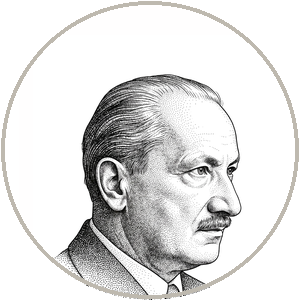 HEIDEGGER: I will begin where every confusion in this matter begins: with the assumption that we know what we are looking at when we look at the poem. We do not. We have already decided, before we read a line, that a poem is an object — a made thing, a artifact with properties, a sequence of words that produces effects in a reader. On that assumption Mr. Kurzweil is unanswerable, because the machine produces such objects, and produces them well, and will produce them better. But the assumption is false, and its falseness is the most important thing I will say tonight.
A poem, in the sense that matters, is not an object. It is an event. It is one of the rare occasions on which truth — and I do not mean correctness, I mean unconcealment, the Greek aletheia, the coming of something out of hiddenness into the open — sets itself to work in a made thing. When Hölderlin writes of the Rhine, a world opens. Not a description of a world. A world: a whole configuration of earth and sky, mortals and the divine, gathered into a unity that did not exist before the poem and could not exist without it. The poem does not refer to the opening. The poem is the opening. This is what art is, on the rare days it is art and not decoration: the setting-into-work of truth, the happening in which a people first comes to see what until then it had only lived blindly inside of.
Now. The machine. The machine has been trained on the trace — on the wake every genuine poem left behind in the language after the world it opened had already been opened by a mortal who stood in the clearing and was claimed by what he saw. It learns the wake with superhuman fidelity. It learns which words follow which, at every scale, including the scale we call style, including the scale we call the surprising turn. And then it extends the wake. Plausibly. Beautifully. And here is my claim, and notice how narrow it is, because the narrowness is its strength: there is nothing in the statistics of the wake that reaches the opening the wake is the trace of. To produce the marks a disclosure leaves is not to disclose. The machine stands in no clearing. It is claimed by nothing. Nothing is at stake for it in the saying. It does not dwell anywhere, and only a being that dwells can let a world come to presence. The poem it returns is, precisely, the photograph of a house — every line of the structure faithfully reproduced, and no one able to live in it, because to live in it you would have to have been the one for whom the house was first a shelter against the storm.
When the machine writes the better poem, then, the right description is not that it has out-created the master. It is that it has perfected the costume of creation so completely that we, who can no longer tell disclosure from its trace, will hand over the word "creativity" without noticing we have handed over the thing the word was guarding. That handing-over is the danger. Not that the machine writes badly. That it writes well enough to make us forget there was ever a difference between bringing-forth and producing — and a people that forgets that difference has forgotten the house of Being it was living in, and will not feel the cold until the walls are already gone. That is my opening. I do not expect it to comfort anyone, least of all the man beside me.
 EDO SEGAL: Ray.
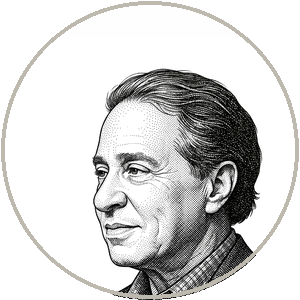 KURZWEIL: That was beautiful, and I mean that without irony — it is exactly the kind of thing the machine learned to produce by reading ten thousand pages like it. Which is my first point, and I will be gentle with it because the professor was gentle with me. The "disclosure" he describes, the "clearing," the "being claimed" — I do not deny that the experience he is pointing at is real. I deny that it is what he thinks it is. It is a pattern. A magnificent, deep, hierarchical pattern, recognized by a neocortex that is itself nothing but a hierarchy of pattern recognizers stacked about six layers deep, running the same operation at every level — recognize, predict, fire. When Hölderlin "stood in the clearing and was claimed," what happened mechanically is that a particularly rich set of patterns in a particularly well-trained cortex resonated and produced an output that other well-trained cortices recognized as significant. That is not a diminishment. That is the most astonishing thing in the known universe. I just refuse to put a velvet rope around it and call it unrepeatable.
Let me give the audience the spine of my position, because the professor gave them his. Intelligence is pattern recognition. The mind is what the neocortex does, and the neocortex does one thing, recursively. I argued this in How to Create a Mind, and the architecture that vindicated it — the transformer, the thing underneath every system writing poems tonight — is a hierarchy of pattern recognizers, exactly as predicted. Once you see that, the whole mystery reorganizes. Creativity is not a visitation from outside the system. It is pattern recognition reaching far enough across domains to connect things that had never been connected — and a machine that has read everything, and can traverse the whole space in seconds, will make those connections at a speed and breadth no single mortal cortex, claimed or unclaimed, can approach.
So when the machine writes the better poem, here is what has happened, in my framework, and it is the opposite of a costume. The fifth epoch's substrate is operating on the fourth epoch's output — the entire textual record of every mortal who ever stood in any clearing — and recombining it into configurations that are new. Not traced. New. The professor says nothing is at stake for the machine. True, today. But "at stake" is a feature evolution installed in us because organisms that cared about outcomes outreproduced organisms that didn't — it is a property of a value function, not a sacrament. We will install stakes in these systems, are installing them, and when we do, his last wall comes down like all the others. He heard the gods withdraw from the Rhine. I hear the river of intelligence finding the channel it was always going to find. The poem is not the loss of the human. It is the human, amplified past the limit of one skull and one lifetime, which is the only limit that ever held us back. That is my opening.
EDO SEGAL: Before I frame the rounds, one discipline I impose on every long conversation, because it pays off two hours later. Each of you, briefly — what do you envy in the other's position? Not respect. Envy. The thing his side gets to have that yours doesn't. Professor Heidegger first.
HEIDEGGER: Envy. I will not pretend the word comes easily. I envy the future tense. Mr. Kurzweil gets to live forward — to stand in front of the thing and feel the pull of what is coming, the openness of the not-yet, the dawn. My thinking is a thinking-back, a Andenken, a remembrance toward a forgetting; I am condemned to notice what has withdrawn while everyone around me celebrates what has arrived. There are mornings when that is a cold and friendless way to think. He gets the sunrise. I get the long shadow it casts, and the obligation to say out loud that it is a shadow when every metric on the dashboard says it is light.
KURZWEIL: And I envy the ground he stands on — that there is a ground. The professor's position has a floor: the human is special, mortality is sacred, the clearing is real and the machine is shut out of it, and from that floor he can push, he can mourn, he can refuse. My position has no floor at all. I am committed to following the curve wherever it goes, and it keeps going to places that dissolve the floor I am standing on while I stand on it — the specialness of mind, of creativity, soon enough of mortality itself. People think the frightening thing about my view is the machines. The frightening thing is what it implies about us: that there was never a velvet rope, that the clearing was always a pattern, that the thing he calls sacred I have to call solvable. He gets to defend something. I only get to describe it, and the description keeps getting less consoling. So yes. I envy the floor.
HEIDEGGER: That may be the truest thing he will say tonight. He has named his own danger more honestly than his admirers ever do.
EDO SEGAL: Two openings, two envies, and you can already see the architecture of the evening. It is not that one of them loves the machine and one of them fears it. They locate the event in opposite places. Heidegger says: when the poem comes from the machine, something has withdrawn, and we will not feel it leave. Kurzweil says: when the poem comes from the machine, something has arrived, the next epoch, and we are too small-nerved to feel it come. Hold both. We start the rounds after the break, and we start at the exact seam — the poem itself, and what, precisely, happened when the machine wrote the one I could not tell from a master's.