The Chalice and the Benchmark

 EDO SEGAL: Professor, before enframing, you said, there was another way of making — poiesis, the Greek word, bringing-forth. The craftsman shaping a silver chalice does not impose his will on the silver the way a stamp impresses sheet metal. He works with it, attends to its grain and its resistance, and the chalice emerges from a collaboration neither party fully controls — and in the making, the maker is made. Ray, your whole account of the merger is about the gap between intention and artifact collapsing to nearly zero. The professor would say that gap was where the silver pushed back, where the maker was formed. So here is the round: did the machine give us bringing-forth without friction, or did it give us something that only looks like making? Ray — defend the frictionless chalice.

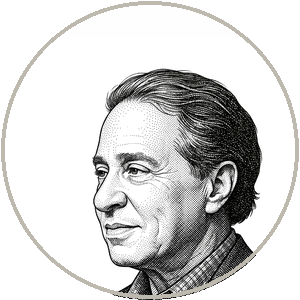 KURZWEIL: I will defend it by refusing the nostalgia, because the nostalgia is where this argument always hides. The professor mourns the friction — the silver pushing back, the hours, the grain. But the friction he is mourning was never sacred. It was a byproduct of limited capability. The craftsman attended to the silver's resistance because he had no choice; the resistance was the tax that scarcity charged on every made thing. Mourning its loss is like mourning the loss of the need to hunt for your food, or the loss of arithmetic done by hand. Yes, something goes — the calloused intimacy with the material. And something arrives that dwarfs it: the surgeon who moved from open surgery to the laparoscope lost the feel of tissue under the hands and gained the ability to work in spaces hands cannot reach. The friction did not vanish; it ascended — relocated from the wrist to the mind, from the plumbing to the judgment. The machine did not abolish bringing-forth. It moved bringing-forth up to the level where it was always most human: deciding what chalice is worth making, and for whom, and why.

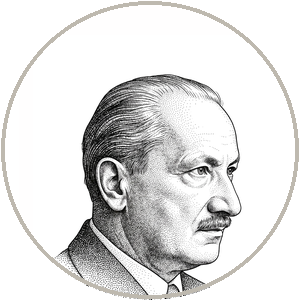 HEIDEGGER: He has given the best possible defense of the indefensible, so I will be exact about where it fails. "Friction ascends," he says — and at the level of capability he is entirely right, and I concede it without reservation, because conceding it is what lets me show the thing he has stepped over. The difficulty does relocate upward. But poiesis was never about the difficulty. It was about the reciprocity — that in working the silver, the maker was worked. The chalice came forth and so did the craftsman; he was formed by the forming, brought forth by the bringing-forth. This is the thing the frictionless making destroys, and no ascent of difficulty restores it, because the new difficulty is the difficulty of specification — of commanding well — and commanding does not form the commander the way attending formed the attender. The man who describes a chalice to the machine and receives it is not changed by the silver, because there was no silver, because nothing pushed back, because nothing was other to him in the encounter. He gets the object and keeps his old soul. That is the whole loss, and it does not appear in the product, which may be flawless. It appears in the maker, who has produced a hundred flawless things and been deepened by none of them. Poiesis is attending. Mr. Kurzweil has given us commanding at the speed of thought, and called it making.

EDO SEGAL: There is a third chair in this room and I want to seat him, because he is the one person who lived this argument as a life. Byung-Chul Han. He tends a garden in Berlin, refuses a smartphone, listens only to vinyl, writes by hand — he has engineered a life of maximum friction, on purpose, philosophically. He says the smooth — the featureless screen, the seamless interface, the frictionless poem — is not a gain but a hollowing, the aesthetics of the smooth, a world always busy and never weighty. Professor, he is your heir. Ray, you have an answer to him — you have told me Han mistakes the curve for the crisis. Han is at the table. Ray, take him first.

KURZWEIL: Han is observing something real and diagnosing it wrong, and the wrongness matters because millions are being told to take his cure. He looks at the frictionlessness and says: cultural sickness, an ideology of the smooth that has colonized our lives, and the remedy is resistance — choose the garden, choose the pen, choose slowness. But the frictionlessness is not a cultural choice. It is the experiential signature of crossing the exponential knee — what it feels like, from inside a nervous system built for linear change, to live in a process that is accelerating past your capacity to track it. Han feels the vertigo and blames the iPhone. The vertigo is the curve. And here is the part that is not philosophy but justice: Han can tend his garden because he is a tenured professor with the security to choose friction. The developer in Lagos with an unreliable power grid and an idea that could serve a million people does not have a garden. For her, the removal of friction is not a hollowing. It is liberation — the wall between her intelligence and its expression, finally coming down. The garden is beautiful. It is also a privilege mistaking itself for a prescription.

HEIDEGGER: Han is closer to the truth than Mr. Kurzweil allows, and further from it than I would like, so let me place all three of us. Han is right that the smooth is a loss and right to resist it; he is wrong, as Mr. Kurzweil says, if he thinks the garden is a solution, because the garden is a refuge, and the disaster of the technological age is precisely that it dissolves every refuge. There is no garden the frame cannot reach; the smartphone he refuses is in the pocket of everyone he loves. So the resistance cannot be a place you retreat to. It must be a stance you carry into the encounter itself. This is what I called Gelassenheit — releasement — and it is neither Han's flight to the garden nor Mr. Kurzweil's leap into the sea. It is using the machine without being used by it. Letting it do the plumbing while refusing to let it do the attending. Holding its outputs at arm's length, as products of a process rather than disclosures of truth. And — the hardest part — letting the question of what the machine is remain open, neither worshipping it as mind nor dismissing it as mere tool, because the moment you classify it you have stopped thinking and started deploying. Han turns his back on the river. Mr. Kurzweil dives in. I am proposing the one thing both of them find unbearable: to stand in the current, and not move, and keep asking.

EDO SEGAL: Stand in the current and not move and keep asking. Hold that line — it is the spine of the back half of this evening. Because the next round is about what the current does to the asking itself, when the dashboard rewards only the answers. The exponential knee, and the forgetting of Being. After this.