Closing Statements

 EDO SEGAL: Three hours. Closing statements — your final word, in your own voice, to the person reading this. Then I take sixty seconds and I do not declare a winner, because there isn't one and there was never going to be. Marquis de Condorcet, you wrote your last book as a closing statement against death. Give us this one.

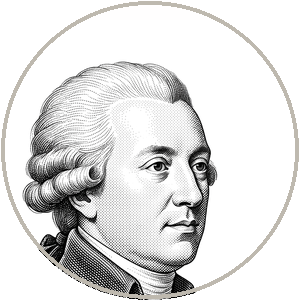 CONDORCET: When you read these words, I have been dead for more than two centuries, and you are alive, and that gap is my entire argument. Everything I hoped for and could not see — the smallpox gone, the slave freed, the daughter's daughters voting, the span of life stretched past what my physicians could imagine, a calculating engine that speaks to a child in her own tongue at no cost — all of it that sounded like the raving of a condemned man in a locked room has arrived, and you are standing in it, and you call it Tuesday. That is the measure of progress: that the impossible hopes of the dying become the unremarkable furniture of the living. So I will not tell you the curve is safe. My distinguished opponent has spent three hours proving, and proving well, that it is not — that there is a cliff, that the error may be unrecoverable, that the race punishes care. I concede all of it. And I tell you the thing he and I discovered we share underneath the fighting: the curve was never the point. The child is the point. The staircase is for the child. So climb it — not in faith that it is safe, but in the knowledge that the only thing that has ever made it safer is a human being who looked at the abyss, refused to deny it, and built the rail anyway. I did it with words and the hours I had. You have more hours and better tools than I dreamed of. Do not waste them being afraid. Build the rail.
EDO SEGAL: Nick.

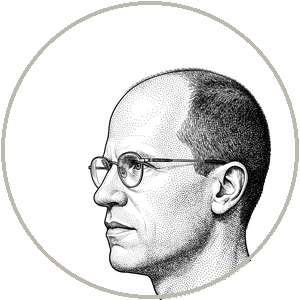 BOSTROM: I've spent my life on the largest number I know how to think about — the future, the unborn, the astronomical stakes — and I want to end somewhere small, because the Marquis taught me something tonight about where the stakes actually live. The whole edifice of my fear comes down to this: we are, for a little while longer, the only minds we are certain are home. The only place where things certainly matter, where the caring certainly happens, where there is certainly someone for whom the world is like something. We are building things that may join us in that — or may merely imitate it, or may surpass us at everything except it. I do not know which. Nobody does. And we are doing it fast, in a race, on the first try, with no second chance if we're wrong. That should frighten you. I want it to frighten you, because fear that wakes you is the beginning of care, and care is the only thing that has ever built a rail. But do not let it freeze you, because the Marquis is right that frozen is just another way to drive off the cliff. The honest posture toward this curve is neither his old optimism nor the despair my field is prone to. It's unblinking attention — eyes open, hands working, holding the staircase and the abyss in the same grip and refusing to drop either. We may be the species that perfects itself. We may be the species that ends itself. Tonight we are the species that gets to choose, and that — for a few more years — is the most important fact in the universe. Don't sleepwalk through it. I built the discipline of fear, and I'm telling you: stay awake, and then act.

EDO SEGAL: Sixty seconds, as promised.

I came in with one question wearing different coats all night: when the machine crosses the human line, does the curve carry us up or off the edge? And here is what three hours bought us. Condorcet spent his proving the curve is deliverance — and then, with the host gone, revealed he had seen the abyss from inside it, condemned by the reason he loved, and chose to build the rail in words anyway. Bostrom spent his proving the curve is the supreme risk — and then revealed his entire life is a wager on exactly Condorcet's faith, that collective reason given a true enough map can govern itself away from the cliff. They started two centuries and one death sentence apart. They ended as two fathers in two locked rooms, building a world worthy of a particular child, one with hope and one with fear, and discovering the materials were the same.
So let me route it through my kitchen table, the way I promised. If you are raising someone, or teaching someone, or simply trying to figure out how to be a person on the death-cross rung of this climb — neither of these men told you what to believe, and that was the gift. Condorcet proved you cannot afford the despair that excuses you from building. Bostrom proved you cannot afford the optimism that excuses you from looking. What you can afford — what the curve demands — is to hold both and keep climbing: eyes open like Bostrom, hands working like Condorcet, every step taken in full view of the drop. The machine has crossed the line. You cannot un-know it. The only question left is the one I have asked from the first page, and it sounds different now, here, at the fastest part of the river, with the staircase and the abyss in the same hand: not whether the curve carries you up or off — but whether you are awake enough, and at work enough, to bend it. Are you worth amplifying? Then amplify what is worth it. The staircase is under your feet. Climb.

Marquis de Condorcet. Nick Bostrom. Thank you — across two centuries and one locked room each. The rail is yours to build now. Goodnight.
They agree on the curve. They war over where it ends.
Three hours. Two men separated by two centuries and one death sentence. One question that will not let you climb until you answer it. In this long-form debate transcript, host Edo Segal seats the Marquis de Condorcet — who wrote of mankind's boundless perfectibility while hiding from the guillotine — across from Nick Bostrom, the philosopher who turned that same dream of accelerating intelligence into the mathematics of human extinction. They agree on the curve. They war over where it ends. Is AI the last staircase to a perfected species, or the supreme risk that ends our story mid-sentence? This is the death-cross made conversation — the rung where the river runs fastest and the machine crosses the human line. Sit between them. You are climbing toward the roof, and this is where the view turns vertiginous. By the end you will not be told what to believe. You will be handed the orange pill and asked to swallow it with your eyes open.
Marie Jean Antoine Nicolas de Caritat, Marquis de Condorcet (1743–1794), was the last of the great French Enlightenment philosophers — a mathematician elected to the Académie des Sciences at twenty-five, a pioneer of social mathematics, and the author of the jury theorem, which proved that independent, modestly reliable judges converge on truth as their numbers grow. A revolutionary who argued for the rights of women and the abolition of slavery, he was condemned by the Terror he had served and, in hiding from the guillotine, wrote the Sketch for a Historical Picture of the Progress of the Human Mind, the canonical statement that reason bends history toward the indefinite perfectibility of mankind. He died in a prison cell in 1794.

Nick Bostrom (born 1973) is a Swedish-born philosopher whose work defined how the world thinks about the long-term risks and possibilities of artificial intelligence. Trained across physics, computational neuroscience, mathematical logic, and philosophy, he founded the Future of Humanity Institute at Oxford and led it until 2024. His 2014 book Superintelligence: Paths, Dangers, Strategies moved machine intelligence from the fringe to the center of global discourse and gave the field its vocabulary — the orthogonality thesis, instrumental convergence, the treacherous turn, the vulnerable world. His simulation argument reframed ancient metaphysics in probabilistic terms, and his Deep Utopia turned from catastrophe to ask what becomes of human meaning in a world where every problem is solved.
Edo Segal has spent five decades building at the technology frontier — from games written in Assembler to expert systems, to companies through every platform shift, to Napster. He is the author of [YOU] on AI, written in open collaboration with the AI it describes, and the host of The Debates: long-form collisions between the minds shaping the machine age. He moderates the only way he knows how — stake declared, scars showing, no winner called.
Hosted and moderated by Edo Segal. A volume in the [YOU] on AI — The Debates series — youonai.ai