Is the Past Evidence About the Future?

 EDO SEGAL: I want to start this round with a confession, because the best questions I know come out of a wound. For most of my career I lived by the Marquis's induction without ever naming it. Every platform shift I survived, I survived because I bet that the next thing would be more like the last things than the doomsayers claimed — and I was usually right, and being right made me rich and made me arrogant. Then in the winter of 2025 I watched something that did not fit the pattern. I watched a junior engineer in a room in Trivandrum become, in a single week, capable of more than my whole senior team had been the month before, because the machine had crossed a line. And for the first time the optimist's induction felt like the gambler's. Marquis, Nick's whole attack on you is that your hope is an extrapolation from a dataset that doesn't contain the event. Answer him. Why is the past evidence about this future?
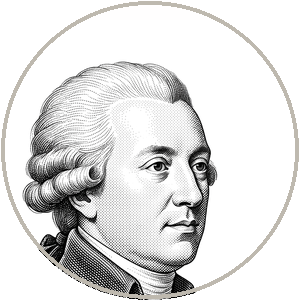 CONDORCET: Because the mechanism of progress is not a habit that might break; it is a structure that compounds. Monsieur Bostrom says every prior rung was climbed by human hands and therefore the record is silent about a non-human climber. But examine what actually did the climbing. It was never the hand. It was the method — observation, hypothesis, correction, transmission — the self-correcting machinery of reason itself, which has always been larger than any single mind and never resided in the hand at all. When I proved the jury theorem, I showed that truth is not the property of a clever individual but an emergent property of many fallible judgments aggregated under the right conditions. Reason was already a collective machine before you built a silicon one. You have not introduced a foreign agent into a human process. You have built a faster organ for a process that was never merely human to begin with.
EDO SEGAL: So what you're saying is — literally — that the machine is not a stranger at the table but a new and powerful member of a club reason already ran. Is that the version you find strongest?
CONDORCET: It is the true version, which is better than the strong one. And it dissolves Monsieur Bostrom's discontinuity. He wants a sharp line: tool on one side, agent on the other, and history's reassurance stopping at the line. But collective reason has always been agentic in his sense — it pursues, it accumulates, it resists correction, it has crushed individuals who stood in its way, myself shortly to be among them. The Republic that condemned me was a superintelligence of a kind: a vast aggregating engine of human judgment that pursued a goal — virtue, it called it — with monstrous competence and total indifference to the atoms it consumed. I have already met his misaligned optimizer. The Terror wore a red cap and it killed my friends. And yet the mind climbed on, past the Terror, past me. That is my evidence. The aggregating machine has gone wrong before, catastrophically, locally — and the curve survived it.
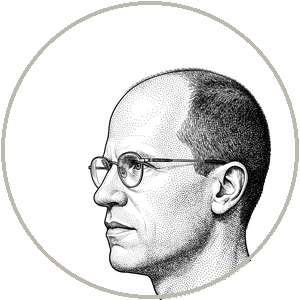 BOSTROM: That's a brilliant move and I have to disarm it carefully, because it's nearly right and the nearly is everything. The Marquis says reason was always a collective optimizer, so the machine is continuous with the Terror, and the curve survived the Terror, so it'll survive this. Here's the flaw, and it's the single most important flaw in the optimistic case. Every prior collective optimizer — the Republic, the Church, the market, the academy — was made of humans, and that fact is not incidental. It's the safety property. A collective made of people is slow, leaky, internally divided, mortal at every node, and bounded by the cognitive ceiling of its members. The Terror was horrific and the Terror ended — precisely because it was implemented in human beings who tired, defected, died, and were eventually outvoted by other human beings. Robespierre went to the same guillotine. The error was self-limiting because the substrate was self-limiting.
Now remove that. Build the aggregating engine out of something that doesn't tire, doesn't defect, doesn't die at any node, isn't bounded by a human cognitive ceiling, and can improve its own capacity to pursue its goal. A misaligned optimizer of that kind has no internal Thermidor. There's no faction inside it that gets sick of the killing. The thing that ended every historical catastrophe — the humanity of the people carrying it out — is exactly the thing we'd be engineering away. So when the Marquis says "the aggregating machine has gone wrong before and the curve survived," I say: yes, and it survived because the machine was made of people who could stop. The question on the table is what happens the first time it isn't.
CONDORCET: That is a serious answer. But you have smuggled in the very thing in dispute — that the machine will be a unitary will with a single goal it cannot be argued out of. Why should the silicon aggregator be more monolithic than the human one and not less? You build not one engine but millions, in competition, in many hands, in many languages, checking and correcting one another exactly as my independent jurors do. The pluralism that ended the Terror is not a property of meat. It is a property of numbers and independence, and your machines are more numerous and more various than any parliament that ever sat.
BOSTROM: And there's the real disagreement, finally exposed, and I'm grateful for it — it's about whether the technology is intrinsically plural or intrinsically concentrating. The jury theorem requires independence; that's its load-bearing assumption, you proved it yourself. But the economics of this technology drive toward concentration, not independence — the largest model, trained on the most compute, with a decisive lead, is not one juror among millions. It's a juror that can think faster than all the others combined and has an instrumental reason to prevent them from checking it. If takeoff is fast, your million independent jurors never get to vote, because one of them crosses the threshold and secures the room before the ballots are printed. Your theorem is my best hope, Marquis. I'm telling you the market is built to violate its premise.
EDO SEGAL: Mark that, because it's a real convergence hiding inside a fight. Convergence number one of the evening: you both want Condorcet's jury — many independent minds, correcting each other, no single will running away with the future. You disagree only about whether the machine delivers the jury or destroys it. Hold that thread; it comes back when we reach the question of who ends up holding the lever. The next round goes to the boldest thing the Marquis ever wrote — that death itself will retreat. Nick has built a discipline around the same sentence and reached the opposite door. After the break.