After the Cameras

 EDO SEGAL: We're clear. Thank you both — that was everything I hoped, and two things I didn't dare hope.
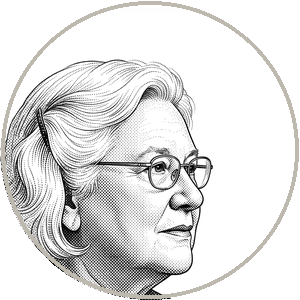 BODEN: You run a generous table, Edo. Most hosts in this discourse book a fight and then referee for the side their audience came to cheer. You did the rarer thing — you kept making each of us stronger, all evening, and trusted the listener to bear it. Harold would have liked you. He always said the interesting question about any system was not what does it do but what does it make the people around it do — and look what your format made us do.
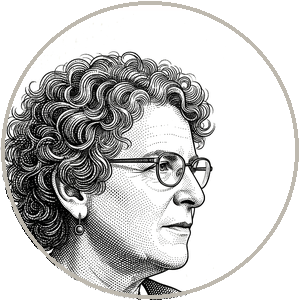 BENDER: Agreed, with a linguist's footnote: I came tonight with my defenses up, because long-form has become a genre where skeptics get softened — three friendly hours and suddenly you've nodded along to things your own papers refute. The defense turned out to be unnecessary, and I noticed why around hour two: you never once asked either of us to perform certainty we didn't have. Every show wants the confident version. You kept asking for the calibrated one. That's not a style choice, for the record. In an information ecosystem drowning in confident form, it's the whole game.
BENDER: The bet being one of the unhoped-for things, I assume. I already know which wine, Margaret. There's a Walla Walla syrah whose tasting notes were obviously written by a language model — "notes of liminal cherry." You'll be buying me the bottle and reading the notes aloud.
BODEN: A machine-described wine as the stakes of a machine-mind wager. The universe occasionally edits better than we do. I accept the terms with one amendment: when you buy, the toast is to the parrot, and when I buy, to the team.
EDO SEGAL: Since the recorder's still warm and the series prints these, let me ask two questions I deliberately kept off the broadcast, because broadcast answers are armored. The first is small and human: what does each of you actually use, day to day? The audience imagines you, Emily, writing by candlelight on principle, and Margaret with a laboratory of experimental muses.
BENDER: Candlelight, confirmed — no, the truthful answer is the boring one: search, spellcheck, and a translation system whose every output I treat the way an editor treats a stringer with a known drinking problem — useful, fast, and never, ever filed unverified. No generative drafting. Not on principle, even; I've tried it, and editing fluent almost-right text turns out to cost me more than writing, because my whole training is in hearing where text goes wrong, and it goes wrong everywhere, quietly. The tax on my attention exceeds the subsidy to my typing.
BODEN: And I, who am supposed to be the enthusiast, use them mainly as I once used a brilliant, erratic research assistant: what is the standard objection to X, who said Y first, summarize the literature I am about to contradict. For the actual thinking — never, and not from principle either, but from a discovery that should interest tonight's record: when the machine drafts my argument, I lose the resistance of composition — the part where the sentence refuses to come because the thought is wrong. That refusal is my chief instrument, Edo. It is how I find out what I believe. The machine's fluency removes the refusal, and with it, the finding out.
EDO SEGAL: The two poles of the debate, both declining the autocomplete, for opposite-identical reasons — Emily because she hears every error, Margaret because she needs the errors to think with. The second question is the armored one. Off the record that isn't: did either of you move tonight? An inch. The real number.
BODEN: An inch, yes, and I shall name it precisely because precision is the only dignity left at my age. Emily's "bookkeeping of a creature that can lose" — that formulation reached the one room of my theory I had never furnished. I have always parked value in the community and mechanism in the system, and assumed the partition was clean. Tonight I am no longer certain the partition is clean at the third door. If exhaustion — boredom, the felt deadness of a space — turns out to be the trigger of transformation rather than its accompaniment, then the trigger lives on her side of the line, and my crown jewel needs a creature after all. I shall be ninety before I finish thinking about it, which is, I confess, the most cheerful possible news. One should always leave a debate younger than one arrived.
BENDER: Mine's the symmetric inch, fair's fair. Making her case in the steelman hour, I felt the P/H distinction from inside for the first time, and I can't fully unfeel it. I've spent years letting the crowning argument — value is social, the doorman is us — do work it may not actually do against the generation claim. If candidate-making and candidate-crowning really do factor apart... then somewhere in my next paper there's a sentence conceding that a meaningless process can be one genuine half of a meaningful act. I'll hate writing it. I'll write it. That's the difference between a position and a brand, and tonight reminded me which one I'd rather maintain.
EDO SEGAL: Two inches, honestly named. In this discourse that's a continental drift. And it confirms something I've believed since I started the series: the long conversation is itself a kind of language game with different rules than the short one — in the clip economy, conceding an inch costs you the war; in the third hour, it's the only move that wins anything worth having. Last ritual of the series, one sentence each: what should the listener do tomorrow that they wouldn't have done yesterday?
BODEN: Take the most competent thing you produced last month, declare its space exhausted whether or not you believe it, and spend one morning hunting the constraint whose breaking would frighten you — the machine may fetch the candidates, but the nausea and the nerve must be yours.
BENDER: Find one conversation where you've been letting fluent text stand in for a person — a colleague, a friend, a writer you've stopped actually reading — and go have the version with stakes in it, because the mirror economy only wins if you forget what windows feel like.
EDO SEGAL: And mine, since the series holds the host to his own ritual: I'm going to reread the sentences in my book that began in the machine — and for each one, write in the margin what I paid for it to be true. If the margin stays empty next to any of them, out it goes from the next edition.
BODEN: A fine ritual. And Edo — when you do it, attend to which deletions hurt. The ones that hurt are the ones you had already made yours; the pain is the evidence of ownership. I suspect you will lose fewer sentences than you fear.
BENDER: And attend to the opposite case too — the sentence that doesn't hurt at all, that you'd defended in three interviews and can suddenly drop like a stranger's umbrella. That one was never yours. It was just fluent. Learning to feel that difference from the inside is, honestly, the best training in form-versus-meaning that exists, and no university offers it.
EDO SEGAL: Two more marginalia for the protocol, then — does it hurt on one side of the page, whose umbrella on the other. The lighthouse keeper taught her grief to swim. Someone at this table tonight finally told me who the keeper is. Drive safe, everyone. The water is rising, and the stairs are exactly where they have always been.
Two thinkers. Three hours. One question that won't let you climb past it.
When the machine writes a line no human ever wrote, is that the novelty of a mind crossing into new conceptual territory — or only a parrot rearranging forms it cannot mean? In this long-form moderated debate, host Edo Segal sits Margaret Boden — the pioneer who mapped creativity into machinery and dared to call transformational programs genuinely new — across from Emily M. Bender, the linguist whose stochastic parrot and underwater octopus insist that meaning can never be learned from form alone.
Boden points at the line and asks how new is it? — and has instruments for answering. Bender points at the same line and asks who meant it? — and has an answer: nobody. Between those questions sit your craft, your judgment, and the next rung of your climb. Three hours is just long enough for both women to make you believe them in turn — and for a falsifiable wager, sealed on the record over a bottle of machine-described wine, that one of them will someday have to pay.
Margaret Boden (1936–2025) was Research Professor of Cognitive Science at the University of Sussex and the founding theorist of computational creativity. Her landmark works — The Creative Mind and AI: Its Nature and Future — gave the field its enduring taxonomy: combinational, exploratory, and transformational creativity, and the distinction between psychological and historical novelty. She argued, decades before it was fashionable, that creativity is mechanism rather than magic — and held to the end the scientist's reservation about where value and judgment must live.
Emily M. Bender is Professor of Linguistics at the University of Washington and the most cited skeptic of the claim that language models understand language. Co-author of the octopus paper and "On the Dangers of Stochastic Parrots," and co-author of The AI Con, she has built the modern case that systems trained only on the form of language cannot arrive at meaning — and that the question of who profits from believing otherwise belongs at the center of the debate, not its margins.
Edo Segal is a founder, builder, and author of [YOU] on AI, written in collaboration with the machines it describes. A pioneer of real-time content discovery and generative media, he has spent three decades building tools that change how people meet information — and the last several years asking what rises and what remains when the water of machine capability climbs the staircase of human work. He hosts the [THEM] on AI debate series in the conviction that the era's hardest questions deserve three honest hours, not three viral seconds.