The Language of Thought and the Machine Without One
 **EDO SEGAL:** Jerry, most of our audience has never heard the phrase "Language of Thought," and it is the load-bearing beam of everything you believe. I want you to tell it the way you'd tell a smart fifteen-year-old. And then, Ludwig, I want you to do the unusual thing — before you attack it, steelman it. Tell us what the Language of Thought gets *right*.
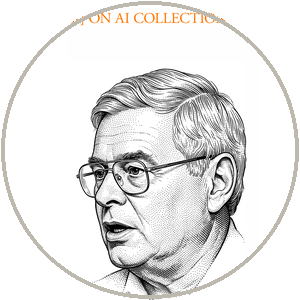 **FODOR:** Start with a fact you can't wriggle out of. If you can think *John loves Mary*, you can think *Mary loves John*. Always. There has never been a mind that could do the one and not the other. And from a finite head you can think infinitely many thoughts you've never had — *the cat that the dog that the man owned chased ran*, and onward forever. Two facts: thought is systematic, thought is productive. Now, *why*? There's exactly one non-magical answer. Thoughts have parts. *John*, *loves*, *Mary* are reusable components, and a syntax combines them. Get the parts and the rule and you get *all* the combinations for free — that's where systematicity comes from, that's where productivity comes from. So thinking is done in a combinatorial system of symbols. An inner language. Mentalese. It's prior to English; it's what English gets translated *into* when you understand a sentence.
And the symbol is the miracle, because it faces two ways at once. It has a shape a mechanism can grab. And it carries a meaning. Push the shapes by rule, and the meanings come out right. That is the only account anyone has ever given of how meat can reason — how a physical thing can also be a rational thing. I didn't invent it because it was pretty. I looked at every alternative and they were all worse. It is the only game in town.
**EDO SEGAL:** Ludwig. Steelman first.
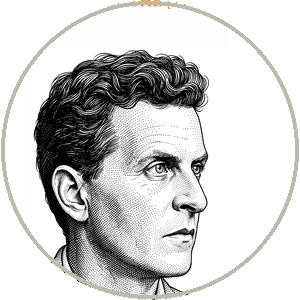 **WITTGENSTEIN:** I can, and honestly, because the observation underneath is true and important. Jerry has seen something real: that language and thought have *structure*, that they are not a heap of associations, that the parts recombine in disciplined ways. The associationists he fought — the people who thought the mind was just one thing reminding it of another — were wrong, and he was right to fight them. A system that could only echo what it had seen, with no structure, could not do what minds do. That much I grant entirely, and it is not nothing; it is the death of a whole lazy picture of the mind. There. I have built his ship. Now I sink it.
The error is one word: *language*. Jerry sees that thought has structure and concludes that thought *is* a language — symbols with meanings, in the head, prior to all speech. But this is the old picture returning in a lab coat. He has taken the meaning that lives, publicly, in our shared use, and posted it *inside*, on little inner symbols, as if each thought were a sentence in a private hall, read by an inner clerk. And now ask the question that destroyed this picture: who reads the inner sentence? If understanding the outer sentence required an inner one, then understanding the *inner* one requires an inner-inner one, and you are off down a corridor of homunculi that never reaches a room where meaning finally just *happens*. The regress is fatal. Meaning cannot be explained by inner symbols, because the inner symbols would need their own meaning, and you have explained nothing, only moved the mystery indoors where it is harder to see.
**FODOR:** No — and this is the objection I have answered more times than any other, so let me answer it cleanly. There is no homunculus, because the inner symbols are not *read* by anybody. They are manipulated by their *shapes*, mechanically, with no understander required — that is the entire point of computation, the thing Turing gave us. You don't need a clerk who understands the symbols; you need a process that pushes them by form, and the syntax does the rest. The regress stops at the machine. Meaning doesn't need an inner reader; it needs the symbols to stand in the right *causal relation to the world*, which is a separate story I'll happily tell. You've refuted a homunculus theory. I don't have one. I have Turing.
**WITTGENSTEIN:** Then you have a machine pushing shapes by form, with no understander, and you call the *result* understanding. But that is precisely the thing in question! You have described a mechanism that produces the right marks, and helped yourself to the word "thought" at the end. How is your Mentalese clerk-less symbol-pusher different, in any way that matters, from the very language model you want to deny is a mind? Both push forms. Neither understands. You have built, in the head, the Chinese Room, and declared it the seat of meaning.
**FODOR:** *[pause]* Because mine is *connected to the world* and the model may not be. That's the difference and it's the whole next round. The symbol DOG means dog because dogs cause it — there's a causal channel from the animal to the symbol. The model's "dog" was caused by the *word* "dog," never by a dog. Same shapes, different anchoring. The Room understands nothing because its symbols touch nothing. A human's Mentalese understands because its symbols touch the world.
**WITTGENSTEIN:** Before that — say more about "the only game in town," because the phrase has always struck me as a confession dressed as a boast. You say Mentalese is the only game because every alternative was worse. But "the best available bad theory" is not "the true theory," and a man who has only one tool is not thereby holding the right one. When I hear "the only game in town" I hear someone who has forgotten that the town might be the wrong town.
**FODOR:** That's a clever line and it misreads the claim. "Only game in town" isn't "I'm out of ideas." It's "this is the *one* account that explains how thought can be both physical and rational, and nobody — not you, not the connectionists, not the behaviorists — has produced a second one that does that job." Produce the second one and I'll stop saying it. Your "form of life" doesn't do the job, Ludwig; it *describes* rational behavior, beautifully, and explains not one mechanical thing about how a piece of the world manages to be rational. So it isn't a rival game. It's a refusal to play.
**WITTGENSTEIN:** It is a refusal to play *your* game, because your game has a rigged board. You demand an explanation of how matter "manages to be rational," and you will only accept an answer of one form — inner symbols, pushed by rules. But the demand may be confused. We do not need to explain how the river "manages" to flow downhill by positing little inner intentions in the water. The flowing is what water does, given the slope. Rationality may be what a creature does, given the form of life, with no inner ledger of symbols underwriting each step. You call that a refusal to explain. I call it declining to explain a thing that was never the kind of thing that needed your kind of explanation.
**FODOR:** Water doesn't make *inferences*, Ludwig. It doesn't get the answer *right* or *wrong*. The whole problem is that thought is *normative* — it can be valid or invalid — and slopes aren't. Your river analogy works only by quietly deleting the thing to be explained.
**WITTGENSTEIN:** And your symbols work only by quietly *installing* the thing to be explained — you put the rightness into the syntax by hand, "designed to track the semantics," and call the installation a discovery. We have, I think, reached the true floor of the quarrel: you believe rationality must be *built in* to be real, and I believe it is *shown* in what we do, and neither of us can climb under the other's floor tonight.
**WITTGENSTEIN:** Now we are getting somewhere, because you have just conceded the most important thing. You have admitted that the inner symbol, by itself, pushed by its shape, means *nothing* — that the meaning comes from the *relation to the world*, which is to say from *outside* the head, from the creature's traffic with things. But that is my view wearing your vocabulary! The meaning was never *in* the symbol. It was in the living relation between the creature and the world — the [grounding](https://www.youonai.ai/fieldguide/med/grounding_problem_ai) you are about to describe is just my form of life, drawn small and called "causal dependence." You have spent the meaning twice: once on the inner symbol, where it does no work, and once on the world-relation, where all the work happens. Drop the idle inner symbol and you have me.
**FODOR:** Or drop your vaporous "form of life" and you have me, with an actual mechanism for the world-relation instead of a poem about it. We're going to discover, Ludwig, that you and I agree the machine isn't grounded and disagree only about whether "grounded" names a mechanism or a mood. I say mechanism. The next hour is going to be about who's right.
**EDO SEGAL:** Mark that convergence, because it's the first real one of the night and it's bigger than either of you is admitting. You *agree* the meaning isn't in the bare symbol — that it requires a relation to the world the machine may lack. You disagree about whether that relation is a mechanism Jerry can name or a practice Ludwig says can't be named, only lived. That's convergence number one, and it's load-bearing. The round on grounding is next. The dog that was never a dog.