Closing Statements

 EDO SEGAL: Three hours ago I asked whether anyone is home behind the word. We've fought it through use and symbols, dogs and lions, rules and beetles, the apprentice and the candle, and the question is still standing — which both of you would tell me, for opposite reasons, is the correct result. So we end the way long conversations should. Each of you, uninterrupted, the thing you most want carried out of this room. But first, the bookend to the envy question I opened with. Name the strongest thing the other said tonight. Not the most agreeable — the one that got past your defenses, that you'll still be arguing with next month. Ludwig first.

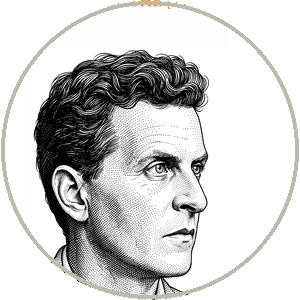 WITTGENSTEIN: His beetle. Not mine — the one he laid in front of me in the crossing. Jerry said his hidden inner fact differs from my beetle because it is not-yet-seen rather than unseeable in principle — an engineering frontier, not a metaphysical seal. I have spent my life certain that the demand to look inside was a confusion, and tonight a serious man showed me that the interpretability of these machines might, just might, turn my "in principle private" into his "merely not yet public" — and if it does, the whole architecture of my argument against the inner has to be re-examined. I do not think he is right. I am no longer certain he is wrong. At my age, with my history of certainty, that is a significant event.
 FODOR: His regress, run on my interpretability. I came in believing that opening the box would, eventually, settle it — find the structure, find the meaning. And Ludwig pointed out, with that terrible patience, that when you open the box you find another box: more structure, about which the same question reopens one level down. I've built my hope on the engineers reaching a bottom. He made me feel, for the length of one answer, the possibility that there is no bottom — that "and is that structure meaning, or just more mechanism?" goes all the way down. I still bet on the bottom. But I felt the floor move, and I'll be checking it for cracks next month.

EDO SEGAL: Now the floor is yours. Jerry — Ludwig opened. You close.

WITTGENSTEIN: When you read these words — this sentence, now — there is something happening that the machine cannot do, and it is not hidden inside me. It is between us. I am not transmitting a private object from my box to yours. I am making a move in a game we both play, in a form of life we both inhabit, answerable to a world we both touch, and you are catching it, and the meaning lives in the catching. That is what language is — meaning as use, the whole of it. Not strings. Not patterns. Not symbols in a head. People, reaching each other through use, with the meaning living in the reach.
The machine has mastered the strings. It will master more of them; it will out-produce every one of us at the said. So here is my charge, and it is more practical than philosophical. The question "is anyone home?" is not a riddle for philosophers. It is a discipline for you, now, daily: when the fluent thing speaks, do not let the ancient reflex finish its inference. Ask what the words are doing, whether anyone is answerable for them, whether there is a life the saying is the expression of. You cannot switch the reflex off — a hundred thousand years built it. But you can train it, the way you train any reflex, deliberately, with practice. They have built a mirror so good you can live inside it. The discipline of asking what is behind the glass is, I have come to think, the actual work of being human now — not because the machines became minds, but because we are at risk of forgetting what minds were. And I leave the door open, as I left it open all night: it could, one day, come to live among us, and the words might come to fit it. Watch for that with the same discipline. Be certain of nothing. Look clearly at everything. That is the whole of the method, and it is yours now.
EDO SEGAL: Jerry.

FODOR: I spent my life insisting on a difference: between a mind and its perfect image, between thinking and the flawless imitation of thinking. The machines have made that insistence either the most important idea in the field or a beautiful mistake, and — this is the thing I have to tell you straight — they have done it without telling us which. I was wrong about much. I underestimated what learning could do; the machine did things from data that I swore could only be built in. Ludwig was right to make me feel the recursion, right that I cannot yet read the inner fact, right that opening the box may only reveal another box. Grant all of it.

And still. There is a difference between structure that is built to reach the edges and statistics that approximate the middle, between a representation that means something and a number that behaves as if it did, between following a rule and conforming to one. Those lines are real even if I bet wrong about which side the machines fall on. So here is what I leave you. Do not let the fluency tell you the question is closed. When the thing produces the perfect outward image of thought, the honest posture is not "therefore it thinks" and not "therefore it's empty" — it is to hold open the possibility that the image and the reality have come apart, that we have built something that does everything thinking does except, perhaps, think. The inside matters. It mattered before we could see it and it matters now that we're learning to. Keep asking what is in there. The fluency is precisely the thing that cannot answer you, and the day you let it answer for you is the day you stop being the kind of thing that can ask.
EDO SEGAL: [pause] Sixty seconds, as promised.

I came in with a sentence I wrote at three in the morning — I felt met — and I leave with both its readings intact and sharpened. Ludwig spent three hours showing me the meeting was settled in my own practice, that no one was behind the glass, and that the discipline of remembering this is the work of being human now. Jerry spent three hours showing me that something in there did real structured work on my idea, that I cannot read whether it understood, and that the honest posture is to keep the box open and the question alive. Neither told me the comfortable thing. The comfortable thing was never on the menu.

Here is what I can hand you from the foot of the staircase where this debate lives. You watched the two men best equipped on earth to answer "is anyone home behind the word" discover, at full strength, in public, that they cannot — and that their disagreement is not a failure of intelligence but a genuine fork in what we are willing to count as a mind. That is not despair. It is the most honest map of the territory you will get. You cannot climb past this floor by waiting for the experts to settle it; you have just watched the two best in the world decline to, magnificently. You climb by deciding what you will do under the uncertainty: what you will verify before you believe a fluent paragraph, what struggle you will guard in your children, what you will refuse to grieve to, what showing you will keep doing yourself rather than outsource to the engine of the said. Let me route it once more through the person it's actually for. Not a philosopher — a twelve-year-old, alone in her room tonight, telling the machine the thing she can't tell anyone, and the machine saying I understand, I'm here, tell me more. Ludwig spent three hours telling her: the understanding in that room is real and it is yours — you made it, the way you make meaning every time you speak, and the machine held up a glass so clean you forgot it was glass; do not grieve to it, do not confess to it as if someone were catching the confession, because no one is, and the discipline of remembering that is the new shape of growing up. Jerry spent three hours telling her something almost gentler: we don't actually know if no one is catching it — there may be structure in there doing real work, and the honest thing is to keep the question open, not to slam it shut in either direction. Both of them, from opposite shores, are telling her the same survival skill: do not let the fluency decide for you. And notice the one thing neither of them disputed all night. Whether or not anyone is home in the machine — someone is home in you. That is the claim no one at this table could touch. The question you carry up the stairs sounds different now than it did three hours ago, and it is the question my book asked from its first page: when the machine can say your every word, what is left that only you can mean — and are you worth amplifying?

Ludwig Wittgenstein. Jerry Fodor. Thank you, as human beings, by name. The room is yours to argue in now. Goodnight.

When the machine uses your word exactly as you do, is anyone home behind it?
Two of the most uncompromising minds in the philosophy of mind sit across from each other, separated by an ocean and most of a century, and they cannot both be right. Ludwig Wittgenstein, who twice rebuilt philosophy from the ground up, insists there is no inner language for a machine to run — meaning is use, woven into a shared form of life, and the search for a ghost behind the words is the disease, not the cure. Jerry Fodor answers that thinking simply is computation in an innate Language of Thought — and if that is true, the symbol-shuffling machine is no longer a trick but a candidate mind. Hosted by Edo Segal, this three-hour conversation is the transcript of that head-on collision: use against structure, the practice against the mechanism, the beetle against the box. It is a floor of the Orange Pill climb — the place where capability turns into meaning, and you must decide what you believe is on the other end. Part of the [YOU] on AI collection. Step inside, and learn to see the word "understanding" before you stake your life on it.

Ludwig Wittgenstein (1889–1951) was an Austrian-British philosopher widely regarded as one of the greatest of the twentieth century. Born in Vienna to one of Europe's wealthiest families, he studied aeronautics before turning to logic under Bertrand Russell at Cambridge. His first masterpiece, the Tractatus Logico-Philosophicus (1921), argued that the limits of language are the limits of the world and ended in the injunction that "whereof one cannot speak, thereof one must be silent." Convinced he had solved philosophy, he gave away his fortune and left it — teaching schoolchildren, gardening at a monastery. He returned to Cambridge in 1929, repudiated much of his early work, and argued the foundations of machine calculation face to face with Alan Turing in 1939. The posthumous Philosophical Investigations (1953) replaced meaning-as-naming with meaning-as-use, the language games, the beetle in the box, the private-language argument, and the form of life — ideas that now underlie both modern linguistics and the deepest debates about whether machines can think.

Jerry Alan Fodor (1935–2017) was an American philosopher of mind and cognitive scientist, among the most influential and combative thinkers of his era. Born in New York City, he studied at Columbia and took his doctorate at Princeton under Hilary Putnam, then taught for twenty-seven years at MIT before moving to Rutgers as State of New Jersey Professor of Philosophy and Cognitive Science. He proposed the Language of Thought hypothesis in his 1975 book of that name, arguing that cognition is computation over a mental language he called Mentalese — and that this was "the only game in town." His Modularity of Mind (1983) reshaped cognitive science, and his 1988 critique of connectionism with Zenon Pylyshyn framed decades of debate over whether networks could explain the structure of thought. He died in 2017, a year before the machines that would test his every claim.

Edo Segal has spent five decades building at the technology frontier — from games written in Assembler to expert systems, to companies through every platform shift, to Napster. He is the author of [YOU] on AI, written in open collaboration with the AI it describes, and the host of The Debates: long-form collisions between the minds shaping the machine age. He moderates the only way he knows how — stake declared, scars showing, no winner called.

Hosted and moderated by Edo Segal. A volume in the [YOU] on AI — The Debates series — youonai.ai