Closing Statements
 **EDO SEGAL:** Three hours ago I asked whether a machine that learns from a mountain of examples is discovering truth or has only failed to be wrong yet — and how you, climbing, would ever tell. We have fought it through swans and sunrises, hype and doom, the death cross and the fishbowl, the master algorithm and the smooth amplifier and the boy who stopped arguing with his father. And the question is still standing, which both of you would tell me, for different reasons, is the correct result. So we end the way the long conversations should end: each of you gets the floor, uninterrupted, to say the thing you most want carried out of this room. But first, the bookend to the envy I opened with. Each of you, name the strongest thing the *other* said tonight. Not the most agreeable. The one that got past your defenses, that you'll still be arguing with next month. Pedro first.
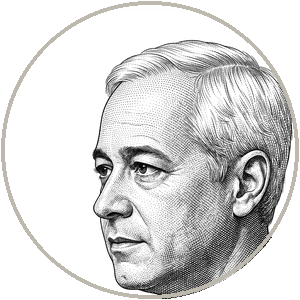 **DOMINGOS:** "Prophecies are policies wearing a robe." I came in thinking the inevitability talk was just sloppy thinking. Karl made me hear it as a *moral* maneuver — the conversion of a choice into weather so no one can vote on it — and that's been sitting in my chest, because I've used the word "inevitable" myself, about scaling, and I won't use it carelessly again. And one more, since the format allows it: his falsifier. He named, precisely, the thing the machine would have to do to convince him it understands — conjecture against its own distribution and stake a risky prediction and win — and it's a better, cleaner test than anything my own field has proposed, and it exposes exactly what we've stopped trying to build. I've been telling people the machine is a savant. Karl told me *which* test the savant fails, and why we're no longer even administering it.
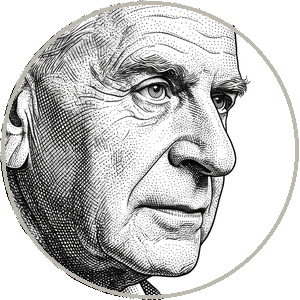 **POPPER:** The strongest thing Pedro said is the one I least wanted to hear, and I will state it against my own interest because that is the only intellectual honesty there is. He said the bright line I have defended my whole life — between the creative conjecture and the clever recombination, between understanding and prediction — may be a gradient we have not yet measured finely enough, and that Neptune itself was forced by an anomaly in the data rather than conjured from the void. I do not accept it. But I cannot refute it, and a man who has spent sixty years saying that what he cannot refute he must hold open is obliged to hold this open too, even though it puts a crack in the dearest wall I ever built. He also told me his own field proved, as a theorem, that there is no learning without a prior conjecture — that pure induction is mathematically impossible. I came to fight the apotheosis of induction and discovered its own engineers had quietly proven induction a myth. That is the rare gift of being vindicated by an opponent, and I will carry it gladly.
**EDO SEGAL:** Now the floor is truly yours. Karl Popper, you crossed the most time to be here; you close. Pedro Domingos, you open the closing.
**DOMINGOS:** Thank you, Karl, genuinely, for the fight. Here is what I want carried out of this room. These machines are the most powerful instruments for the extension of human knowledge ever built, and they understand nothing, and both of those are true at once, and the entire confusion of our moment comes from people who can't hold both. Don't fear the machine waking up; it won't. Don't trust the machine because it's fluent; fluency was never knowledge. Use it the way you'd use any powerful, narrow, brittle tool: in the domains where the world can correct it fast, lean in hard and fly; in the domains where the feedback is slow and the costume is convincing, keep it on the tightest possible leash and check everything. The greatest risk of this technology is still, I believe, that we won't develop enough of it — that fear and capture will strangle a tool that could accelerate every science. But the second-greatest risk, which Karl made me feel tonight more than I did walking in, is that we'll let its smoothness dissolve the very faculty we'd need to govern it. Build the tool. Build the people who can check the tool, faster. The machine is a seed; the data is the soil; what grows is up to who's tending the field. Tend it awake.
**EDO SEGAL:** Karl.
*POPPER:** I have spent my life on a single, unfashionable conviction: that we know far less than we think, and that this is the most hopeful fact about us, because it means everything is still open. The machine you have built, Pedro, is the most fluent generator of confident claims in the history of the world, and I want to leave the reader not with a fear of it but with a discipline toward it — the same discipline that is the whole content of a free mind. Every output that crosses your screen, from the machine, from the company, from the expert, from me, from your own pen, is a conjecture. Not a conclusion. A guess awaiting its black swan. And the single question that separates a free person from a credulous one — the question the machine can voice but never *mean*, because meaning it requires the discomfort of having loved a belief and gone looking for its grave — is this: *what would prove this wrong?
Ask it of the hype: what would show the curve is not destiny? Ask it of the doom: what observation, before the end, would prove the prophecy false? Ask it of the smooth answer that flatters your fishbowl: where is the case against me, and have I had the courage to ask for it? The machine cannot save you from confident wrongness, because confident wrongness is its native output and increasingly it is ours. But neither can the machine take from you the one thing that was always yours — the willingness to doubt what sounds certain, to hold every belief tentatively, to prefer a refutable truth to a comfortable confirmation. That willingness — the [courage to hold every belief open](https://www.youonai.ai/fieldguide/med/courage_to_be_amplified) — is the open society's immune system. It is fragile. It is built by friction and dies in smoothness. Guard it in yourselves and build it in your children at any cost, because a civilization that surrenders it will keep every institution of freedom and lose the living practice that gave them meaning — not to a tyrant, but to a thousand fluent answers that made doubt feel like bad manners. We are not the kind of thing that predicts. We are the kind of thing that can hope to be refuted and mean it. Stay that kind of thing.
**EDO SEGAL:** Sixty seconds, as promised.
I came in with a sentence I wrote with conviction — *the machine learned to know the world* — and I leave with both halves of it sharpened and neither of them comfortable. Pedro spent three hours proving the machine can learn the entire world and grasp none of it, and that the real danger is our falling asleep at the controls of something that will never wake. Karl spent three hours proving that prediction, however vast, is not yet knowledge — that a thing which cannot hope to be refuted has not understood, only escaped its black swan for one more day. You will notice neither of them told you the comfortable thing. The comfortable thing was never on the menu.
Here is what I can give you, from the death-cross rung where this debate lives, with the staircase going up past it in the dark. You watched the two best minds the question ever produced agree, at the very bottom, that the machine extracts without grasping and guesses without doubting — and then split, honestly, on whether that line is a permanent wall or a gradient we haven't measured. They could not settle it. You will not settle it tonight either. So stop waiting for the experts to hand you the answer; you just watched them fail to, magnificently. Climb instead by changing your question. Not *is the model right* — you cannot tell, and the fluency is built to stop you asking. Ask, of the machine and of yourself: *what would show this wrong, and have I had the nerve to look?* For the parent at the kitchen table, it comes down to one thing — the most loving thing you can do for a child in this age is to keep disagreeing with her, out loud, across the table, so the tireless voice in her pocket never becomes the only voice she hears. Whether or not anyone is home in the machine, someone is home in you. That was the one claim no one at this table disputed all night. The sun has risen every morning of your life. It will probably rise tomorrow. *Probably* is the most honest word a free mind owns — and the whole climb begins the moment you stop letting the machine spend it for you.
Karl Popper. Pedro Domingos. Thank you. The room is yours to argue in now. Goodnight.
*One of you has only failed to be wrong yet.*
Two thinkers. One staircase. Three hours that will not let you stand still. In this long-form debate transcript, Edo Segal sits Karl Popper — the philosopher who declared induction a myth and said we never confirm a theory, only fail to kill it — across from Pedro Domingos, the computer scientist whose Master Algorithm bets everything on machines that induce truth from data. They meet at the exact fault line of this moment: when a model has read everything and predicts almost anything, has it come to know the world, or merely escaped refutation for one more day? Popper presses for the test that could prove the machine wrong. Domingos presses for the results that already work. You sit between them on your own climb — and somewhere in the argument you stop trusting answers and start demanding refutations. This is a station on the way to the roof. Take the seat. Take the pill.
Karl Popper (1902–1994) was an Austrian-British philosopher whose falsification criterion — that a theory earns scientific standing only by surviving genuine attempts to disprove it — reshaped the philosophy of science. He argued that induction is a myth and that knowledge grows only by bold conjecture and ruthless refutation. His defense of the open society as one that protects the right to question and revise remains among the most powerful arguments for liberal democracy ever made. His works include *The Logic of Scientific Discovery*, *The Open Society and Its Enemies*, *Conjectures and Refutations*, and *The Poverty of Historicism*.
Pedro Domingos is a computer scientist, born in Lisbon in 1965, and professor emeritus at the University of Washington, where he helped found the field of statistical relational AI. His research produced Markov logic networks, sum-product networks, and influential work on data-stream mining and learning theory. His 2015 book *The Master Algorithm* introduced a wide public to the five tribes of machine learning and the quest for a single universal learner. A persistent critic of both AI hype and AI doom, he has more recently proposed tensor logic as a language to unify neural and symbolic AI, and continues to argue that the greatest risk of artificial intelligence is not having enough of it.
Edo Segal has spent five decades building at the technology frontier — from games written in Assembler to expert systems, to companies through every platform shift, to Napster. He is the author of [YOU] on AI, written in open collaboration with the AI it describes, and the host of The Debates: long-form collisions between the minds shaping the machine age. He moderates the only way he knows how — stake declared, scars showing, no winner called.
Hosted and moderated by Edo Segal. A volume in the [YOU] on AI — The Debates series — youonai.ai