The Master Algorithm and the Limits of Learning Everything

 EDO SEGAL: Pedro, the heart of your work is a wager most of your peers call fantasy: that beneath the five tribes of machine learning — the symbolists with their logic, the connectionists with their networks, the evolutionaries with their selection, the Bayesians with their probability, the analogizers with their similarity — there's a single universal learner, a pattern-finding engine to end all the others, a master algorithm that could derive all knowledge from data. Tell us what it would be. And then the question I think your whole career walks toward without quite stating: if you found it, would it understand what it learned, or just possess it?
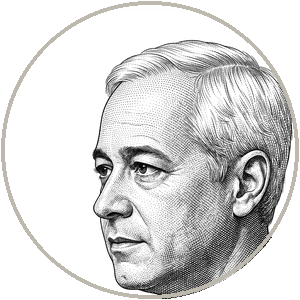 DOMINGOS: The master algorithm would be the unification — the one learner that reasons like a symbolist, learns like a connectionist, explores like an evolutionary, weighs evidence like a Bayesian, and generalizes like an analogizer. Each tribe is right about something and wrong about everything else, and crucially their weaknesses don't overlap — where one fails, another succeeds — which is why I think the prize isn't a sixth idea but the right fusion of the five we have. I've built fusions of two: Markov logic married the symbolists and the Bayesians, logic and probability, by putting weights on logical rules so a world that breaks a rule is merely less likely, not impossible. More recently, tensor logic — the observation that a logical rule and the tensor operation inside every neural network are, at depth, the same operation. The quest is to find the mathematics that contains them all and runs on the same hardware.
Now the hard question, and I'll give you my honest answer even though it undercuts the romance. I think a master algorithm is possible, and I think it would still not understand a thing. Learning, as I understand it technically, is the extraction of patterns from data and their compression into models that predict. There's nothing in that account that produces understanding in the human sense — the grasp of meaning, the awareness of what a pattern is about. A universal learner would do the extraction supremely well, universally, and it would still be extracting patterns rather than understanding them. It would learn everything and understand nothing. Which is, strangely, a reassurance: if even the master algorithm doesn't understand, then understanding isn't something machines are about to take, because it was never what the project of machine learning produces.
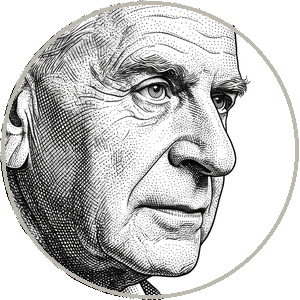 POPPER: This is the most honest thing a builder of these systems has ever said to me, and I want to dwell on it, because you have just drawn, with your own hand, the line I have been defending all evening, and you drew it more precisely than I could have. You say the machine could learn everything and understand nothing. I agree, and I want to tell you why I agree, in my own vocabulary, because I think it deepens your point. Understanding, for me, was never the possession of patterns. It was the capacity to hold a theory as a conjecture — to know that it might be false, to feel the weight of what would refute it, to prefer the truth to the comfort of being right. That preference is the whole of the scientific spirit, and it is not a pattern. It is a stance toward patterns. The machine has the patterns and not the stance. It cannot want to be refuted, and the want is the thing.
But let me trouble your reassurance, because you offered it too cheaply and I think you know it. You said: if even the master algorithm doesn't understand, understanding is safe on the human side. But notice the hole. Your own life's work is the discovery of unity beneath apparent difference — that logic and probability are one, that inference and tensor arithmetic are one, that the five tribes are one tribe in five masks. You have spent your career dissolving distinctions that everyone thought were fundamental. So with what confidence do you tell me that this distinction — between learning and understanding, between possessing the pattern and grasping it — is the one that will not dissolve? Perhaps understanding is just what pattern-extraction feels like from the inside when it becomes deep enough and self-referential enough — the continuum from prediction to understanding with no seam in it anywhere. You don't claim it. But your method, applied to your own reassurance, refuses to rule it out.
DOMINGOS: [ That's the trap in my own work and he found it in about ninety seconds. ] You've put your finger exactly on the crack I'm least sure about. I hold both, and I hold them uncomfortably, which I've decided is the only honest way to hold anything here. I believe understanding is a different thing from prediction. And I've spent thirty years showing that things everyone believed were different are secretly the same. I can't fully reconcile those, and I won't pretend the reconciliation by picking the comfortable side. What I'll say is this: even if understanding is deep enough pattern-extraction, that doesn't help the systems we have, because they're not built to extract the kind of pattern that would be understanding — the self-referential, world-modeling, refutation-seeking kind. They're built to please. So whether or not the line is dissolvable in principle, we are actively building on the wrong side of it, for money.
POPPER: Then we have arrived, by different roads, at the same austere place, and I find it strangely moving. You came up through the mathematics of learning and concluded the machine extracts and does not grasp. I came up through the logic of knowledge and concluded the machine guesses and does not doubt. Extract without grasping. Guess without doubting. These are the same absence named from two directions — the absence of the stance toward the pattern, the preference for truth over the comfort of being unrefuted. And the thing that has it, that stance, that preference, that capacity to be genuinely surprised by being wrong — is, so far, only us. Not because we are made of special stuff. Because we are the kind of thing that can hope to be refuted and mean it.
EDO SEGAL: I want to mark something, because the reader can't see your faces and this is the closest the room has come to communion. Two men who began the evening certain they would clash on the deepest question have just discovered they hold the same austere conclusion — that the machine could learn the whole world and grasp none of it — and that the only daylight between you is whether that line is permanent or merely current. That is not a small agreement. It is the floor of the whole debate, found at last. Hold it. The next round takes that floor and asks what it costs the person climbing — what happens to a mind, and a society, when the smoothest source of confident answers ever built is available to everyone, all the time. The open society and the smooth amplifier. After this.