Closing Statements

 EDO SEGAL: Three hours ago I asked whether, when a machine can finally compute the whole economy, you hand it the plan, or whether the plan itself is the thing that buries you. We have fought it through prices and the general intellect, through the Fragment on Machines and the calculation debate, through the worker at the algorithmic foreman's mercy and the candle no optimizer can light, through the realm of freedom and the enclosure of the commons. And the question is still standing — which both of you, for opposite reasons, would say is the correct result. So we end the way long conversations should end: each of you gets the floor, uninterrupted, to say the thing you most want carried out of this room.

But before that, I owe you both a confession, because I've made you pay the table's toll all night and I haven't paid mine. I told you about the dashboard — the engagement systems I built, the number that went up while the thing underneath came apart. I never told you the part that keeps me up. The machine I built worked. It was a market mechanism of a kind — millions of small signals, optimized, no villain, no commissar, just the amplifier carrying whatever signal we fed it. And it carried the worst of us, because the worst of us moved the number. Friedrich, your undirected order built that, and it hurt people, and no one chose it — exactly as Karl says. And Karl, when I tried to fix it by directing it, by deciding from above what people should see, I became the planner, and I was wrong about what was good for them in ways I couldn't see — exactly as Friedrich says. I have stood on both your floors and fallen through both. That is why I cannot give you a winner. I have lived the failure of each of you, personally, with my own hands on the lever.

Now — the bookend to the envy question I opened with. Each of you: name the strongest thing the other man said tonight. Not the most agreeable. The one that got past your defenses, that you'll still be arguing with next month. Friedrich first this time.

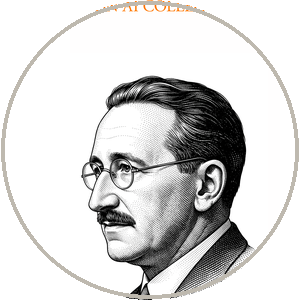 HAYEK: The undirected order is not innocent. Karl's claim that to refuse to plan a world of concentrated ownership is not to leave it free but to leave it as the owners built it — that there is no un-directed economy, only the question of whether the direction is accountable or not. I have spent my life saying "do not direct, let it be," and he made me hear how much of "let it be" is, in a world already owned, a decision to let the existing owners keep directing. I do not think he is fully right. I think the dispersed order, for all its injustice, still protects something his directed order cannot. But the sentence got past me, and it is going home in my chest, because I have always argued as though the clearing were empty, and he is right that it is not.
EDO SEGAL: Karl. The strongest thing Friedrich said.
 MARX: The summit is where error can no longer be corrected from outside. His claim that the danger is not the size of the plan but the abolition of the outside — the rival, the exit, the price that tells you when you are wrong — and that an error that cannot be corrected is the one that kills. I came in believing the closed loop was a failure of will, a thing better men would have avoided. He made me see it may be a property of the summit itself, that the very completeness of a plan removes the only thing that could catch its mistakes, regardless of who administers it. I still believe the loop can be held open. But I no longer believe it is easy, or that good intentions hold it. He took my century's catastrophe and showed me its structure instead of its villains, and I will be arguing with that structure for as long as I have left, which is to say forever.

EDO SEGAL: Now the floor is truly yours. Karl Marx — you opened the evening. Friedrich closes it.

MARX: Thank you — for the evening, and Friedrich, genuinely, for the fight. You were told tonight, by the sharpest defender of the market who ever lived, that the order you live inside was not designed and cannot be redesigned, that the dispersed and unowned current is the price of your freedom. I want to leave you with what the current carries.
That machine — the one being built right now, in those data centers — is made of you. Your words, your labor, the accumulated knowledge of every human being who ever wrote a thing down. It is the general intellect of the species, congealed into a tool, and it is, at this moment, owned by almost no one and pointed back at almost everyone. You have been taught to see it as a force of nature, autonomous, inevitable, arriving like weather. Turn the image right side up. It is not weather. It is dead labor — your labor — frozen and fenced and sold back to you. And the question of who owns it is not a technical question. It is the only question. The machine could shrink necessity to a vanishing point and open the realm of freedom to all of humanity, or it could enlarge that freedom for the few who own it and contract it for the many. Which it does is not decided by the technology. It is decided by us, and right now we are deciding it by default, by not deciding, by letting the current carry the lever into the owners' hands and calling it spontaneous. I spent my life telling you the same thing in different words, and I will tell it to you one last time: never mistake the machine's power for destiny, and never forget that behind every one of them stands human labor, human ownership, and a human choice about what it is all for. The choice is still yours. Do not let them tell you it was made by nature.
EDO SEGAL: Friedrich.

HAYEK: I have spent my life trying to make people see a thing that is almost impossible to see — that the most important orders in human life were made by no one, that the price and the language and the law and the moral sense are wiser than any mind that uses them, and that the gravest danger to a civilization is the sincere conviction that it can be improved by being directed from above. The machine has made that conviction look reasonable for the first time in history, and that is why this is the most dangerous moment my argument has ever faced.

So let me leave you with the thing I am most afraid of, and it is not the machine. It is the pretence of knowledge wearing the machine's face. A model produces a number to three decimal places, and the decimals launder the ignorance behind them, and we defer to the number in a way we would never defer to the same claim spoken by a person. We will be told that the machine has read everything, and therefore knows enough to run things, and the inference will feel modern and inevitable, and it will be the oldest error there is. The knowledge that runs a world is not the knowledge that fits on a page. It is dispersed, tacit, generated fresh each moment by free people coping with circumstances only they can see, and it dies the instant you try to centralize it to plan with it. The machine is a magnificent engine of the known. The future — the genuinely new, the candle no one has lit yet — is discovered somewhere the machine cannot reach, in the redundant, inefficient, unplannable freedom of millions of people trying things for reasons of their own. Guard that freedom. Not because the machine is your enemy. Because the temptation to let it decide is the gentlest road to the cage, and the cage will be built, every bar of it, by people who only wanted to help.
EDO SEGAL: Sixty seconds, as promised, and then we turn the lights off.

I came in with a question I'd carried for years — plan, or price — and I leave with it sharpened rather than answered, which is the only honest thing three hours could have done to it. Karl spent the evening proving that the machine is our own congealed labor, that the order we call spontaneous is already owned, and that to refuse to choose is to let the owners choose for us. Friedrich spent the evening proving that the knowledge to run a world cannot be gathered without killing it, that the plan abolishes the outside where error gets corrected, and that the gentlest tyranny is the one built by people who only wanted to help. You will notice neither of them told you the comfortable thing. The comfortable thing was that the truth sits safely in the middle, and they spent three hours refusing to let you believe it.

So let me route it through the table where it actually lands. Somewhere tonight a parent is helping a twelve-year-old with homework, and the answer comes from a machine, instantly, free, fluent — and neither of them asks who built it, who owns it, or who decided what it would and wouldn't say. That child will grow up inside the answer to tonight's question, and the answer is being chosen right now, by default, while we look away. Here is what I can tell you from this floor of the tower, the floor where the river of change becomes a river of power. You cannot climb past it by waiting for the experts to settle it — you've just watched the two best minds in the history of this argument narrow it to a single question neither could answer: can the loop be held open at the scale of a society? That question is not theirs anymore. It is yours. Whoever ends up holding the lever over the machine made of all of us will hold it because people either chose who should, or let the current decide. The machine will compute the whole economy. The one thing it cannot compute is who should be allowed to point it — and that, reader, is the question that was always yours, and is more yours now than it has ever been. Decide which door off this landing is yours. Then climb.

Karl Marx. Friedrich Hayek. Thank you, both, as men who gave their whole lives to the question the rest of us are only now being forced to ask. The room is yours to argue in. Goodnight.
One question that will not let you climb past it.

Three hours. Two thinkers who never shared a century. One machine that might finally settle the oldest argument in political economy — or prove it can never be settled at all. When a machine can model the whole economy, do we hand it the plan, or does the plan itself become the new chain? Edo Segal hosts Karl Marx and Friedrich Hayek across the grave, and the socialist calculation debate roars back to life with AI as its referee. Marx sees the tool that ends exploitation forever — the general intellect of the species, made at last into a working machine, waiting only to be taken back. Hayek sees the conceit that ends freedom forever — the dispersed, tacit, unplannable knowledge that no model can capture without killing it. Neither blinks. This is not a history lesson. It is a station on your own ascent through the Orange Pill Moment — the floor where the river of change becomes a river of power, and the question stops being what AI does to your job and starts being who gets to hold the lever over everyone's. Sit in the room. Take the pill. Then decide which door off the landing is yours, and climb. Part of the [YOU] on AI collection.

Karl Marx (1818–1883) was a German philosopher, economist, and revolutionary whose analysis of capitalism remains the most influential critique of the modern economic order ever written. Expelled in turn from Germany, France, and Belgium, he settled in London, where he spent decades in the reading room of the British Museum producing the work that became Capital. His concepts — the labor theory of value, dead and living labor, the general intellect, alienation, commodity fetishism, primitive accumulation, the realm of freedom — were forged to analyze the industrial machinery of his own century. They describe the machinery of ours, built from the accumulated labor of the species and owned by almost no one, with a precision he never lived to see.

Friedrich Hayek (1899–1992) was an Austrian-British economist and political philosopher, a central figure of the Austrian School, and the recipient of the 1974 Nobel Memorial Prize in Economics. His work on the knowledge problem — the dispersed, tacit character of the knowledge required to coordinate a complex society — was the decisive argument in the socialist calculation debate and remains the sharpest case against central planning ever made. Through the price system, catallaxy, the distinction between grown and made orders, the pretence of knowledge, and the fatal conceit, he insisted that the most important orders in human life are discovered rather than designed, and wiser than any mind that uses them.

Edo Segal has spent five decades building at the technology frontier — from games written in Assembler to expert systems, to companies through every platform shift, to Napster. He is the author of [YOU] on AI, written in open collaboration with the AI it describes, and the host of The Debates: long-form collisions between the minds shaping the machine age. He moderates the only way he knows how — stake declared, scars showing, no winner called.
Hosted and moderated by Edo Segal. A volume in the [YOU] on AI — The Debates series — youonai.ai