The Worker, the Foreman, and the Algorithm

 EDO SEGAL: Karl, before you were the cold economist of Capital, you were a furious young man of twenty-six writing in notebooks about what wage labor does to a human soul. You called it alienation — estrangement. The worker makes a thing, and the thing doesn't belong to him; it stands over against him as an alien power. Now there's a worker in a warehouse today whose every motion is set, timed, watched, and scored by a system. The boss is not a person. It's a model. Take me to that worker, and tell me whether your 1844 self would recognize him.

 MARX: He would recognize him instantly, and he would weep, because the figure he sketched in fury has been built in steel. I named four estrangements. The worker is estranged from the product of his labor — and the warehouse worker's labor is fed into a system that learns his patterns and uses them to set a faster pace for the next worker, so his own effort returns as the whip on his successor's back. He is estranged from the act of working — and this worker does not act, he executes; every motion is dictated by an optimizer that treats him as a variable to be maximized. He is estranged from his species-being, from the free conscious creativity that makes us human, because there is no room in the dictated motion for a single creative choice. And he is estranged from other human beings, because the machine sets each worker alone against the metric, against the clock, against one another. But there is a fifth thing my young self could only imagine, and the algorithm has made real. He cannot even argue. A human foreman, however cruel, was a person; you could appeal to him, reason with him, organize against him. The algorithmic foreman is not a person. It is the relation of domination reified — turned into an apparently neutral technical fact, the system simply optimizes, the metric simply measures — and you cannot organize against a fact. The power that commands him has been laundered into the machinery and made unanswerable.

EDO SEGAL: Friedrich, that's a brutal portrait, and it's about as far from your usual terrain as we'll get tonight. So I want to ask you the uncomfortable version. You spent your life defending the market against the planner in the name of human freedom. Karl just described a private market actor — a firm, optimizing — that has built a tighter, more total system of control over a human life than any socialist planner ever achieved. The algorithmic foreman is not a commissar. It's a corporation. Does your defense of the market have anything to say to that worker — or does freedom from the state leave him perfectly unfree under the firm?
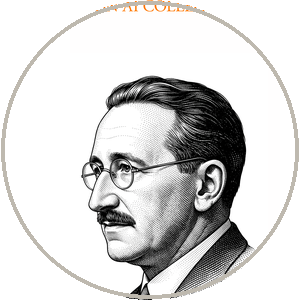 HAYEK: It is the fair question, and I will not dodge it, because dodging it would prove his point. I have never said that freedom from the state is the whole of freedom, and I have never said that every outcome a market produces is just. The worker Karl describes is suffering a real domination, and I will not call it liberty because a private party imposes it rather than a public one. Here is where I differ, and it is not where Karl expects. I say the worker's protection is not to seize the machine but to be able to leave — that the deepest cruelty in his portrait is not the optimizer, it is the absence of an exit, a labor market thin enough that he cannot walk to a rival who treats him better. The algorithmic foreman is tyranny when there is one employer and salvation impossible. It is merely a hard job when there are twenty employers competing for his hands and he can quit on Friday. Karl looks at the worker and sees a machine to be socialized. I look at the same worker and see a man who needs more doors, not one big door held open by the state. The answer to a single dominating system is not a single liberating system. It is many systems, none of them able to hold him because he can always walk to the next.

MARX: And when the machine has displaced enough workers that there is no next, Friedrich? When the death cross you have all been told about arrives — the moment machine capability crosses human capability across whole categories of work at once — and the twenty competing employers all discover they can do it cheaper without him? Your exit requires somewhere to exit to. The whole force of this machine is that it closes the exits in parallel, everywhere, at once. You offer the worker many doors in a building that is being demolished.

HAYEK: Then we have arrived at your strongest ground, and I will meet it there rather than retreat. If the machine genuinely displaces human labor faster than new uses for human beings can arise — if the doors close in parallel — then yes, my exit fails, and the problem becomes not one of markets but of what a society owes people when the market no longer needs their labor. I have my own answer to that, and it surprises people: a floor, a minimum, an assured income below which no one falls, provided not by planning the whole economy but precisely so that we need not plan it — so the displaced worker is held without the state having to own the machine that displaced him. I would rather feed the man directly than seize the factory to do it. Karl wants to socialize production. I would socialize a floor and leave production free. We both refuse to let him starve. We disagree, again, about whether saving him requires taking the lever.

MARX: A floor is humane, Friedrich, and I will not sneer at it as my followers might — a man fed is better than a man starved, and you have offered more than most of your school ever would. But notice what your floor leaves untouched. You feed the displaced worker and you leave the machine that displaced him in the owner's hand, which means you have purchased his survival at the price of his permanent dependence. He eats, but he does not produce; he is kept, but he is not free; his species-being — the creative activity that was supposed to be the realization of his humanity — is not restored to him, it is pensioned off. You have solved the body and abandoned the soul. A man on your floor is alive and idle and owns nothing, watching the machine made of his own kind's labor work without him, fed by the very owners who took the work away. That is not the realm of freedom. That is a comfortable alienation, which may be the most insidious kind, because it removes the hunger that might otherwise have made him ask who owns the machine.

HAYEK: And there you have named the real cost of my answer, and I will not pretend it has none. Yes — the floor keeps a man without restoring his work, and a life of assured idleness is its own kind of poverty, one I do not minimize. But weigh it against your cure. To give the man back his "species-being" by socializing production, you must put the machine under a single direction, and the single direction is the cage I have spent my life describing. I would rather have a free man who is idle than a busy man who is owned by the plan. You say my floor pensions off his soul. I say your factory conscripts it. Neither of us has a clean answer here, Karl, and I think the reader should see that plainly: the machine that can feed everyone without needing their labor breaks both our systems at once. Mine leaves him free and purposeless. Yours gives him purpose and takes his freedom. That is a genuine fork, and I do not think either road is paved.

EDO SEGAL: I want to mark that, because it's genuinely surprising and the reader should feel its weight. Friedrich Hayek, defender of the market, just said: a guaranteed floor, an assured minimum, so that no one falls below it. Karl Marx, prophet of revolution, has spent the round describing exactly the suffering that floor would catch. You are not as far apart on whether the displaced worker must be held as the cartoon of you both would suggest. You are far apart on the method — Karl takes the machine, Friedrich feeds the man and leaves the machine alone. Hold that, because it returns at the very end. Now — the algorithm that manages the worker is an optimizer, and Friedrich has a deep argument about what happens when you optimize a number too hard. It is the same argument as the calculation debate, wearing the clothes of computer science. The next round is the one where my own confession lives.