The Crossing
 **EDO SEGAL:** No preamble this time. Professor Russell, you start. Ask him the thing you most want to know — not to score, to *know*.
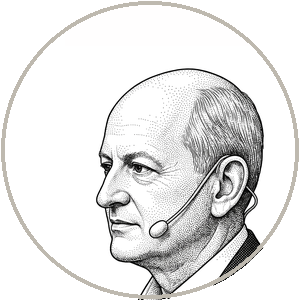 **RUSSELL:** All right. Immanuel — here's what I genuinely can't resolve, and it's not rhetorical. You ground everything in autonomy, in the will that legislates for itself from reason, outside the causal order. But I build systems, and everything I've ever seen of a mind — yours, mine, the machine's — runs on causes. Neurons firing, signals, prior states determining next states. I have never once observed this noumenal free will you require, and I can't build on what I can't observe. So my question is: if it turned out — if neuroscience showed, as it keeps suggesting — that human choice is as caused as the machine's, that there *is* no faculty outside the causal order, would your entire ethics collapse? Is your dignity resting on a metaphysical fact that might not be true?
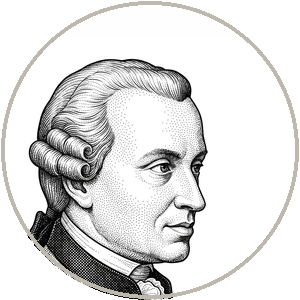 **KANT:** It is the right question and I will not dodge its force. My answer is no, and the reason is the most misunderstood move in my philosophy. I never claimed to *prove* that the will is free as a fact about the world — I argued precisely that freedom cannot be found among the appearances, that every event in the phenomenal order, including every human choice *as it appears*, is fully caused. Your neuroscience does not threaten me; I granted it before it existed. What I claimed is that freedom is a necessary *presupposition* of practical reason — that the moment you deliberate, the moment you ask "what ought I to do," you cannot but regard yourself as free, because "ought" is unintelligible otherwise. You cannot, in the act of deciding, treat your decision as a thing merely happening to you; to deliberate is already to assume you could do otherwise. So freedom is not a fact I observe. It is the standpoint I cannot abandon while acting. And here is the turn that answers you exactly: this is true of *you*, Professor Russell, in the very act of building your machines. When you decide to forbid autonomous weapons, you do not experience yourself as a system whose weights determined the output. You experience yourself as bound by a *claim* — as a being who *ought* to forbid them and could fail to. Your own moral seriousness presupposes the freedom your science cannot find. You live inside my premise even as you doubt it.
**RUSSELL:** That's — genuinely unsettling, and I'm not going to pretend it isn't, because you've caught something true. When I argue against killer robots I do *not* feel like an optimizer reporting its objective. I feel like someone who'd be guilty if he stayed silent. But let me press, because feeling bound isn't the same as being free. Couldn't the feeling of obligation just *be* what a certain kind of caused system feels like from the inside? An evolved disposition that helps social animals cooperate? You'd have the experience of "ought" without any noumenal freedom underneath it — the experience is real, the metaphysics is a story the experience tells itself. Why isn't your whole edifice built on taking a feeling at face value?
**KANT:** Because the feeling is not the ground; the *intelligibility of ought* is the ground, and that cannot be a mere feeling without dissolving. Hear it carefully. If "you ought not delegate the killing to a machine" means only "you have a disposition that makes you feel reluctant," then it makes no claim on the person who lacks the disposition — the one evolution or circumstance built without the reluctance. To him you could say only "you happen not to feel it," which is not a moral claim at all; it is a remark about his psychology. But you do not believe that. You believe the man who builds slaughterbots without compunction is *wrong*, not merely differently constituted. You believe the ought binds him whether or not he feels it. And a claim that binds independent of whether one feels it cannot *be* the feeling. It must be a law of reason, valid for any rational being as such. The moment you insist — as you do — that the slaughterbot-builder is genuinely *wrong* and not just unlike you, you have left the world of caused dispositions and entered mine. So I return your question: you cannot hold that autonomous weapons are truly forbidden *and* that morality is only evolved feeling. Choose. Your whole campaign says you have already chosen, and chosen against your own metaphysics.
**RUSSELL:** I think — and this is me thinking, not performing — I think I have to grant that my moral practice outruns my metaphysics. I act as if some things are genuinely wrong, bindingly, for everyone. My official theory says morality is preferences and dispositions. And you've put your finger exactly on the seam where those two things tear. I don't think you've proven the noumenal will. But you've shown me I can't be a thoroughgoing naturalist about ethics and also mean it when I say the killing machine is forbidden. One of them has to give. I'm honestly not sure which. That's the most you'll get from me, and it's more than I expected to give.
**EDO SEGAL:** That's not the house on fire. That's the opposite. Keep going — Professor Kant, your turn to ask him.
**KANT:** Then I will ask the question that troubles me most about your project, and I ask it to learn, not to defeat. You wish the machine to remain forever uncertain about what we want, humbly learning, never assuming it has reached the bottom. It is, I admit, an elegant safeguard. But tell me this: a machine that watches us ceaselessly, infers our wishes from our every act, and models us well enough to anticipate us — does it not, by that very watching, *change* what it watches? You yourself showed the engagement machines reshape the preferences they learn. So your humble machine, merely by inferring me so well, makes me into someone more easily inferred — more predictable, more pattern, [less person](https://www.youonai.ai/fieldguide/med/dignity_relocated_ai). Is your uncertainty not self-defeating? The better it learns me, the less of me is left that was not shaped by its learning. How does your safeguard survive the fact that to be perfectly known is to be partly authored?
**RUSSELL:** That's the deepest objection anyone's put to me, and you've stated it better than my critics do, so let me give you my real answer and then my honest doubt. The real answer: it's why I insist the machine must model not your momentary, manipulable behavior but your *deeper* values, and must be actively suspicious of preferences that look authored by the act of observation. A well-built system would treat "this person is becoming more predictable" as a *warning sign* — evidence it may be flattening them — not as success. In principle, the machine can be designed to value your *unpredictability*, your capacity to surprise it, your remaining genuinely free of its model. The honest doubt: I don't know if that's stable. You might be right that observation at that depth inevitably authors. That to be modeled well enough to be served perfectly is to be reduced to the part of you that fits a model. And if you're right, then my whole framework has a worm in its core, because the thing it does best — learn you — is the thing that destroys what's worth serving. I think the answer is to build machines that protect the part of you that escapes them. But I'll concede I'm not certain such a machine is possible, and that if it isn't, you've found the flaw that brings the whole structure down.
**KANT:** Then we have found, together, the true frontier — not whether the machine can be controlled, nor whether it can serve us well, but whether being served well by a thing that knows us is *compatible* with remaining the kind of being whose dignity consists in not being exhausted by what can be known. I do not have the engineering answer. You do not have the metaphysical one. But we have, I think, located the question precisely, which two people rarely do.
**EDO SEGAL:** And that's where I come back in, because that's the question the reader has to carry out of this room. You questioned each other and neither flinched and neither won, and somewhere in the crossing you stopped defending positions and started mapping the same unknown from two sides. The last chapter is your closing words, and then mine. Take a breath. You've earned it.