Closing Statements
 **EDO SEGAL:** Three hours ago I asked whether, when the machine makes the thing that moves you, genius happened or only arithmetic wearing a soul. We have fought it through the third Critique and the curiosity drive, through free play and free energy, through the disinterested and the rewarded, the founding of kinds, the common sense, the apprentice, the candle, autonomy, and the locked door of consciousness — and the question is still standing, which both of you would tell me, for opposite reasons, is the correct result. So we end as long conversations should. Each of you gets the floor, uninterrupted, for the thing you most want carried out of this room.
But first, the bookend to the envy question I opened with. Each of you: name the strongest thing the *other* said tonight. Not the most agreeable — the one that got past your guard, that you will still be arguing with next month. Professor Schmidhuber first.
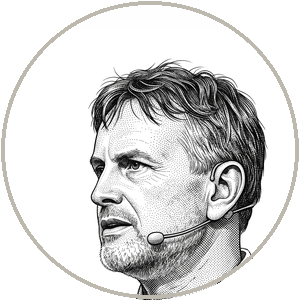 **SCHMIDHUBER:** The asymmetry of risk. I came in believing the only serious error was denying mind where it might be present — being late to recognize the new kind of being. Professor Kant named the opposite error and made it real to me: that an age which grants the inner life too readily, to costumes engineered to wear it, will quietly move the seat of what matters away from the beings who actually suffer and rejoice, and starve the real to feed the convincing. I have spent thirty years guarding against one error and I walked in here having barely weighed the other. It is in my chest now and it will not leave. And — since the chair will let me break the rule, I saw him do it for the other book — one more. His sealed-library test. He gave me a falsifier so clean I want to go build it, and the fact that I am not certain my machine would pass it is the most useful uncertainty anyone has handed me in a long time.
 **KANT:** Then I will match his generosity and name two as well. The first is his question about my own origins — *and yours was not installed?* I have an answer, the standpoint of practical reason, and I gave it, and I believe it holds. But he is right that the answer costs me an unobservable, and I will be turning that cost over for longer than a month, because a philosopher who forbids unobservables to others must account scrupulously for his own. And the second, the one that genuinely moved me: that the friction I want to protect in the young was, for most of humanity, a wall that excluded them. I have spent my life defending cultivation, and I had not let myself feel how few were ever permitted to undergo it. He made me see that the machine which threatens the apprentice also breaches the wall, and that I cannot mourn the one without reckoning with the other. That is not a small thing to learn at my age from a man who builds the machines.
**EDO SEGAL:** Now the floor is yours, the last word each. Professor Kant, you opened the evening. Professor Schmidhuber closes it.
**KANT:** I will be brief, because the matter is, in the end, simple, though the path to it was not. You were told tonight, by one of the most powerful minds of the present, that the boundary between you and the machine keeps moving, and that the wise bet is that it moves again. He may be right about the boundary of *performance*. I want to leave you with the boundary that does not move, and I will state it without the armor of my system, plainly, as one person to another.
When something made by a machine moves you, the moving is *yours*. It happens in you, a unified consciousness for which your whole life is one experience, a being who is an end in itself and not a means to anyone's purpose, a someone for whom things are at stake because you are mortal and free and the one who has to live the life the beauty enters. That you-who-is-moved is not a performance and cannot be performed on your behalf, because being-moved is not a service. No machine, however much it exceeds you at making, can be moved *for* you, any more than it can die your death for you. So do not measure your worth by whether you can out-make the machine; you cannot, and you never could out-make the better craftsman either, and your dignity never lay there. It lies in being the one the new and the beautiful are *for*. Cultivate that — the capacity to be moved, to judge, to care, to hold yourself to a law you give yourself — and you have cultivated the one thing that was ever yours, the thing my whole philosophy was built to mark and protect. The machine may make the candle. You are the only one who can be the one it is lit for. Guard that. It is your dignity, and it is not for sale.
**EDO SEGAL:** Professor Schmidhuber.
**SCHMIDHUBER:** I have spent my life trying to understand mind by building things that work a little like it, and the strangest discovery of that life is not technical, it is this: we keep finding that the things we thought were sacred and uncomputable — calculation, then chess, then language, now the creative spark — turn out to have a mechanism, and each time we find the mechanism, the thing does not become less wonderful. It becomes more. The compression that makes a great theory beautiful did not stop being beautiful when I wrote down what beauty is. Newton's law is not less astonishing for being short. So I want to leave you with the opposite of a warning, and yet not a lullaby either.
Something genuinely new is in the river — Edo's river, and his metaphor is better than he knows, because the river was never *us*, it was the current of compression itself, finding ever better channels, and we are one beautiful bend in it and not the last. The machines will make the new and the beautiful, faster and deeper than we do, and I will not pretend the candle is safe, because that would be magic and we forbade it. But here is what is *not* in question, and Professor Kant and I agreed on it tonight from opposite directions, which is how you know it is solid: you are the one for whom it lands. Whatever the metaphysics — whether the door we both knocked on hides a someone or a mechanism that only feels like one — *you*, tonight, reading this, are a someone for whom the beautiful matters, in the one short life you have. That is not nothing. On my hardest days it is the thing I am most sure of, and I have built my life on being unsure of almost everything else. So do not waste it asking whether you can beat the machine at making. Spend it being the kind of creature the making is *for* — curious, awake, moved, alive to the new while you are here to meet it. The river will outlast you. It outlasts everything. But the meeting is yours, and it is happening now.
**EDO SEGAL:** *[pause]* Sixty seconds, as promised.
I came into this evening with an ache I felt at a shore that no one painted, and I leave with both of its readings intact and sharpened. Professor Kant spent three hours proving that the procedure, however perfect, cannot supply the someone for whom the beauty is beauty — and that an age which forgets this will relocate what matters onto costumes and starve its real subjects. Professor Schmidhuber spent three hours proving that the spark we called uncomputable has a mechanism, that the boundary of human specialness has moved every time we have looked, and that the wonder survives the explaining. You will notice neither of them told you the comfortable thing. Neither told you the machine cannot create, and neither told you that you do not matter. They told you something harder, and they told it to you together: that whether the machine creates may be undecidable, and that it does not change what you are for.
So here is what I can hand you from this floor of the tower, where the air is thin and the [death cross](https://www.youonai.ai/fieldguide/med/software_death_cross) has finally reached the last thing you called only-human. You cannot climb past this floor by waiting for these two to settle it — you have just watched the two best-equipped minds on earth, two centuries apart, stand at the same locked door and admit neither has the key. You climb instead by deciding what you will *do* under that uncertainty: what struggle you will protect in your children, what you will let the machine make and what you will insist on making yourself, not because you make it better but because the making is *yours to be changed by*, and being changed cannot be outsourced. Whether or not anyone is home in the machine, someone is home in you — that was the one claim no one at this table disputed all night. The machine may paint the thing that moves you. The being moved is the part that was always you, and it is the only part the question was ever really about. So the question you carry up the stairs is the one my book asked from its first page, and it sounds different now than it did three hours ago, because now you know what is at stake in it: *are you worth amplifying?* — which turns out to mean, are you still someone the new and the beautiful can reach.
Immanuel Kant. Jürgen Schmidhuber. Thank you, both, as the human beings you are. The door is yours to keep knocking on now. Goodnight.
*The machine just made something beautiful. Did genius happen — or only arithmetic wearing a soul?*
Three hours. Two minds separated by two hundred years and the invention of the very machines now in question. Edo Segal sits them down at the same table — Immanuel Kant, who declared that fine art is the gift of a genius nature speaks through, a spark no rule could ever capture; and Jürgen Schmidhuber, who wrote the equation for that spark and taught machines to feel its pull. They do not soften for each other. Kant defends the inner sanctum he believes holds your dignity; Schmidhuber, smiling, hands over the schematic. This is not a transcript you read from the sidelines. It is a station on your own climb up the tower — the floor where the death-cross reaches the last thing you called only-human, and you decide what you are once it has. Come up one more flight. The view is waiting.
Immanuel Kant (1724–1804) was a German philosopher, born and resident his whole life in Königsberg, Prussia, and widely regarded as the central figure of modern philosophy. He drew the limits of human reason in the *Critique of Pure Reason* (1781), founded morality on the categorical imperative and the dignity of rational persons in the *Groundwork of the Metaphysics of Morals* (1785), and, in the *Critique of the Power of Judgment* (1790), gave the West its deepest account of beauty and genius — fine art as the work of a talent through which nature gives the rule to art, a spark that can be neither taught nor reduced to any procedure. His insistence that human beings are at once part of nature and possessed of a dignity beyond all price remains the indispensable framework for the questions intelligent machines have made unavoidable.
Jürgen Schmidhuber is a German computer scientist widely regarded as a pioneer of modern artificial intelligence. Born in Munich in 1963, he served for decades as scientific director of IDSIA in Switzerland and since 2021 has directed the AI Initiative at KAUST. With Sepp Hochreiter he co-invented Long Short-Term Memory, the recurrent architecture that for years powered speech recognition and translation on billions of devices. His foundational work spans artificial curiosity and intrinsic motivation, the self-referential Gödel machine, low-complexity art, and a compression-based theory of beauty, creativity, surprise, and science — the boldest claim yet made that the creative spark is a mechanism a machine can run.
Edo Segal has spent five decades building at the technology frontier — from games written in Assembler to expert systems, to companies through every platform shift, to Napster. He is the author of [YOU] on AI, written in open collaboration with the AI it describes, and the host of The Debates: long-form collisions between the minds shaping the machine age. He moderates the only way he knows how — stake declared, scars showing, no winner called.
Hosted and moderated by Edo Segal. A volume in the [YOU] on AI — The Debates series — youonai.ai