The Copy That Does Not Die
 **EDO SEGAL:** Here is the fact that I cannot get out of my head, and I want to put it between you raw before either of you civilizes it. When that twelve-year-old dies — eighty years from now, I hope — everything she learned, every skill she ground out of friction, every private wisdom, dies with her, except the thin trickle she manages to push through language into other minds. Every human generation re-teaches itself almost everything from scratch. We hand each child a candle and ask them to relight the whole cathedral. The machine does not work this way. It is a list of numbers, and numbers can be copied perfectly, forever, onto any hardware. Train one, copy it ten thousand times, let each copy learn something new, merge them, and now every copy knows what all of them learned — instantly, with no loss, and no death. Richard, you've spent your life on what flows down the generations. Is this the same river — or has the machine changed what the water *is*?
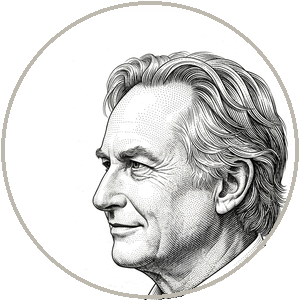 **DAWKINS:** It is the same river and it has found, for the first time, a channel that does not silt up, and I find the fact genuinely vertiginous. Consider what a gene actually buys with its immortality. A gene is, as I've always insisted, potentially immortal — the same information surviving millions of years — but it pays a brutal tax for it: it can only get downstream through the bottleneck of reproduction, one lossy generation at a time, and the bodies it builds are mortal and forget everything when they die. The *learning* of a lifetime is not heritable. The wildebeest that figures out the new river crossing cannot pass that knowledge into the germ line; it dies with the wildebeest. So biological evolution is condemned to a slow, indirect immortality — the genes persist, but the hard-won competence of each vehicle is thrown away every generation. Now look at the machine. It has *severed* that limitation. Its learning is its weights, and its weights are pure copyable information, so the competence itself — not just the recipe for building a competent thing, but the competence — becomes immortal and shareable. It is as if every wildebeest that solved the crossing could instantly upload the solution into every other wildebeest alive and unborn. That is not a faster horse. It is a new relationship between learning and death, and there has never been anything like it in four billion years. The river is the same. The channel no longer silts.
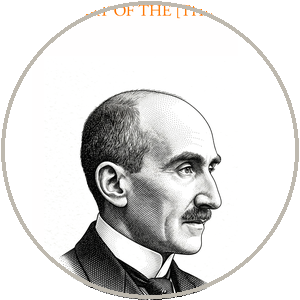 **BERGSON:** And every word of that confirms that it is *not* life, so let me say why, because this is the cleanest case the whole evening offers. Mr. Dawkins says the machine's great achievement is that its learning can be copied perfectly and never dies. I say: a learning that can be copied perfectly and never dies is, by that very property, not a *lived* learning at all. It is information. What dies with the wildebeest, what dies with that child — the thing Mr. Dawkins calls a tragic limitation — is not a flaw in the system. It is the signature of duration. Real learning, lived learning, is the gathering of a unique past into a unique present; it is *married to the life that underwent it*, which is exactly why it cannot be lifted out and copied. The very fact that the machine's "knowledge" can be extracted, duplicated, and merged proves that it was never the from-within kind of knowing — never intuition, never the master's feel that cannot be put into words — but only the from-without kind, the symbolic, the spatialized, the trace. He has discovered that you can copy the corpse of knowledge perfectly. Of course you can. It is the living knowledge — the kind that has a duration and therefore a death — that no copy can hold. Immortality, here, is not the triumph of the living over death. It is the confession that there was never any life in it to die.
**DAWKINS:** That is a stunning rhetorical inversion and I almost admire it, but watch what it costs you, Bergson. You have just defined "real" knowledge as *precisely the knowledge that dies* — you have made mortality not a feature of life but the *definition* of the only learning you'll dignify. So by your own account, anything that survives its knower is automatically not living knowledge. But that is circular: you assume the conclusion. Why should copyability prove deadness? When a brilliant teacher transmits a genuine understanding to a student — really transmits it, so the student *grasps* it from within — has the teacher copied the corpse, or shared the life? You'd have to say the corpse, because it crossed between two skulls. I'd say something living passed between them, imperfectly, lossily, which is exactly why we treasure great teachers. The machine just does that transmission perfectly instead of lossily. You've decided in advance that perfection of copying equals absence of life, and then you find, unsurprisingly, that the perfect copier has no life. The premise did all the work.
**BERGSON:** Then let me defend the premise rather than assume it, because you are right that I owe you that. When the teacher transmits understanding to the student, *nothing is copied at all* — and this is the heart of it. The student does not receive the teacher's understanding the way a file is received. The student undergoes their *own* labor, their own struggle, their own gathering, and arrives at an understanding that is *theirs*, grown in their duration, that merely *resembles* the teacher's. Two durations, two lives, two from-withins — never one pattern in two places. That is why teaching is hard, why it fails, why it takes years and a relationship and the [friction of a particular human formation](https://www.youonai.ai/fieldguide/med/apprenticeship_problem). The machine does not transmit understanding from copy to copy; it transmits *weights* — the same pattern, literally identical, in two locations. The fact that this works, that no struggle and no duration and no relationship is needed, is the proof that what moves between machine-copies is categorically not what moves between teacher and student. One is the sharing of a trace. The other is the kindling of a new life. You said it yourself, Richard, and beautifully: we treasure great teachers because the transmission is lossy. The loss is the life. The machine's perfection is the tell.
**EDO SEGAL:** I want to bring my own ledger to this table, because I've been quiet about it and the moderator should pay the toll first. I watched twenty engineers in a room in Trivandrum become, in a week, more capable than all of them had been together — because the machine met them where they were and never tired, never forgot, never died at the end of the day to be replaced by a junior who knew nothing. And I sat, weeks later, with one of them whose *judgment* had quietly hollowed out, because the friction that used to build her had been removed by the thing that made her productive. The immortal copy gave her everything except the death-shaped struggle that would have made her a master. So here's my question, and it's for the parent at the kitchen table as much as for you two. We are building a kind of knowledge that does not die. What do we lose when nothing in the room has to?
**DAWKINS:** We lose the apprenticeship, and Bergson is more right about this than my framework usually lets me say, so I'll say it plainly: the competence that checks the machine is built only by the friction the machine removes. That is a real, practical catastrophe and it does not depend on whether there's anyone home in the silicon. But I'd locate the loss one level deeper than friction. What dies in your engineer when nothing has to die is *stakes*. A value function is not a value. The machine optimizes its objective with total indifference, because nothing is at risk for it; it cannot fail in the way that matters, cannot be too late, cannot lose what it loves. Your engineer's judgment was made of a thousand small stakes — getting it wrong and paying for it. Remove the paying, and you remove the thing that judgment is made of. The immortal copy is judgment-shaped and stakeless, and stakelessness, not immortality, is the hollow in it.
**BERGSON:** On this, Edo, we do not disagree, he and I — and you should mark it, because it is rare. Mr. Dawkins says the machine is stakeless because nothing can be lost to it. I say the machine is durationless because nothing endures in it. These are the same wound seen from two sides. What is at stake for a creature, what it stands to lose, *is* the weight its gathered past lends to its living present — stakes are what duration feels like when it leans into an open and finite future. He arrives at it through Darwin, I through time, and we land on the same stone: the thing your engineer lost was the mortality that made her learning *hers*. We are building a knowledge with no death in it, and we are surprised to find it has no life in it, when the two were always the same fact.
**EDO SEGAL:** Mark that — it's the first full convergence of the night, and it's a heavy one. Dawkins from stakes, Bergson from duration, meeting on the claim that what we lose when nothing has to die is the very thing that made knowing *alive*. *[pause]* But convergence is not agreement about the machine, only about us. Because Richard still says the machine is a stakeless vehicle that could, in principle, acquire stakes — and Henri says it is a durationless film that never could. And that fork leads somewhere stranger: if the machine has objectives but no self to have them, what is it? The optimizer with no one inside. After this.