The Cinematograph and the Code
 **EDO SEGAL:** Henri, you've used the word "cinematographic" three times now and I want the audience to have it fully, because it may be the most useful single idea anyone brings to this technology. Tell it the way you'd tell a smart fifteen-year-old — the cinema, the snapshots, the illusion. And then, Richard, I'm going to ask you to do the hard thing: before you attack it, steelman it. Tell us what the cinematograph gets *right* about a neural network.
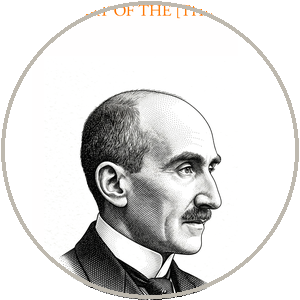 **BERGSON:** The cinematograph takes reality — which moves, which flows, which is one indivisible advancing whole — and it does something violent and ingenious. It cuts the flow into a series of instantaneous photographs, each one perfectly still, each one a corpse of a moment. Then it threads them on a strip and runs them past a lamp at speed. And on the screen you see *movement* — smooth, convincing, alive. But the movement is nowhere on the strip. The strip is all stillness. The movement is reconstituted in you, by the persistence of your own vision, your own duration, filling the gaps between the dead frames. This, I argued, is not just how the cinema works. It is how the intellect works. Faced with the flowing real, the mind takes snapshots — concepts, words, measurements, instants — and strings them on a uniform abstract time, and imagines it has captured the movement. It has captured everything except the movement. The movement was the one thing that could not survive being cut into frames. That is the cinematographic illusion, and the machine is the cinematograph of thought: it cuts the flowing world into tokens, freezes each into a vector, and runs the frozen sequence fast enough that intelligence appears on the screen of our interpretation.
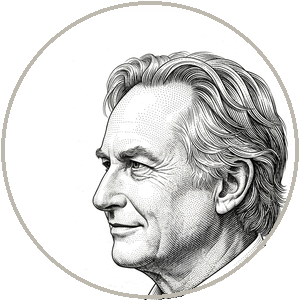 **DAWKINS:** Steelman first, as promised, and I can do it sincerely because parts of it are simply correct. What the cinematograph gets right about a neural network is this: the machine genuinely does operate on discrete, frozen representations. Tokens are quanta. The forward pass is a fixed computation over a fixed array; there is no temporal flow inside it, no carrying-across except what is mechanically re-presented in the context window. Bergson is right that the system has succession without anything I would call lived continuity, and he is right that a great deal of what we read as the machine's "understanding" is supplied by us, the interpreting viewers, exactly as the motion is supplied at the cinema. Anyone who has watched a person fall in love with a chatbot has watched a viewer supply the flow. That is real, it is important, and the cinematograph names it better than anything in my own field. There. That is the strongest version, and I mean it.
Now the two places it fails, and they are load-bearing. First: Bergson assumes that because the *frames* are dead, the *result* must be dead — that you cannot get [genuine novelty out of frozen parts](https://www.youonai.ai/fieldguide/med/combinatorial_novelty). But that is precisely the intuition my whole life's work demolishes, in the one domain where we can check it absolutely. Evolution is cinematographic in exactly Bergson's sense. It proceeds by discrete steps — a mutation here, a mutation there, each a frozen change in a frozen code, selected one frame at a time across the generations. There is no surge in it, no élan, no flow; there is the dumbest possible loop of copy, vary, select, ratcheting along frame by frozen frame. And out of that strip of dead frames came the eye, the brain, Bergson's own genius. So when he says the discrete cannot produce the living, I do not have to argue the point philosophically. I can point at the entire biosphere and say: it did. The frozen frames made the watcher. That is not an analogy. That is the literal history of how Henri Bergson came to be sitting here telling me it is impossible.
**BERGSON:** And there — *that* is the move, and it is the deepest move he has, so I must answer it with care. Mr. Dawkins says evolution is cinematographic and it produced me, therefore the cinematographic can produce the living. But notice the sleight. He says evolution proceeds "frame by frozen frame," and that is the intellect's *redescription* of evolution, not evolution itself. When he lays the history of life out as a strip of discrete mutations, he has already done the cinematographic act — he has taken a process that, lived from within by every organism that ever struggled and reached and died, was continuous duration, and he has frozen it into a series of snapshots *for the purpose of explaining it*. Of course the explanation is made of frozen frames. Explanation is the freezing faculty. But the thing explained — four billion years of *living* — was not a strip of stills. It was a surge, undergone, indivisible, by a hundred billion creatures each of whom endured. He mistakes his diagram of the river for the river. He always does. It is the one error, repeated at every scale.
**DAWKINS:** But this is unfalsifiable, and Bergson, you agreed to my rule. You say evolution "really" was a continuous surge, and my account of it as discrete mutation is "merely" the freezing intellect's redescription. Yet your surge and my mutations predict precisely the same fossils, the same DNA, the same finches' beaks. There is no observation that comes out differently. So by your own admission the surge is invisible to every instrument, leaves no trace my frozen frames don't already explain, and is known only by your insisting you can feel it from inside a process you weren't inside of. You can feel your *own* duration, I'll grant you that absolutely — but you cannot feel the trilobite's, and when you attribute surge to four billion years of creatures whose insides are forever sealed, you are doing the exact thing you forbid me: pointing inward and saying *this, it must have been like this*. The cinematograph is your projection onto the machine. The surge is your projection onto the past.
**BERGSON:** With one decisive difference, and it is the difference the whole evening turns on. I have direct access to *one* duration — my own — and from it I know, with the only absolute certainty there is, that duration is real, because I am it. I infer it in other creatures by analogy, fallibly, granted. But Mr. Dawkins has direct access to one duration too — his own, the lights he admits are on — and his entire system has no place to put it. He is in the position of a man who can see, surrounded by a theory that explains everything except seeing, insisting that sight must therefore be an illusion or a problem-not-yet-solved. I am not projecting a surge onto the trilobite from nothing. I am generalizing the one undeniable fact I possess. He is denying that fact houseroom because his net cannot catch it — and then, honestly, beautifully, admitting in the same breath that the fact is sitting right there in his own chest. The lights are on, Richard. You said so. *That* is the datum. Everything else is which of us has a theory big enough to hold it.
**EDO SEGAL:** I have to name what just happened, because the reader can't see your faces and this was the first exchange of the night where neither of you smiled. Richard, you put the whole biosphere on the table and said *the frozen frames made the watcher* — and it landed. Henri, you answered with the one card he handed you himself, his own admission that the lights are on. And notice the strange knot you've tied: you agree completely about the mechanism — the copying, the mutation, the selection, all of it, conceded on both sides — and you are fighting to the death over whether the mechanism is the whole story or the diagram of a story. That knot doesn't loosen by arguing about the past. It loosens, if it ever does, by asking what the mechanism can *make*. Can the blind, frozen, frame-by-frame loop create the genuinely new — or only realize what was always implicit in its parts? The watchmaker and the élan. Next.