Opening Positions
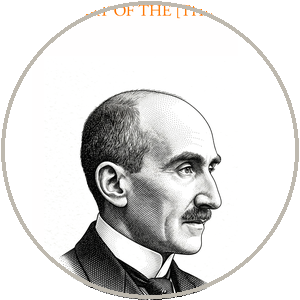 **BERGSON:** Thank you. I want to begin not with the machine but with a melody, because the whole of my philosophy is in it, and so is the whole of my answer to your question.
Listen to a tune. Not the score, not the notes named on a page — the tune as it sounds, as it passes. The notes do not lie side by side like beads on a string. Each one is heard through all the ones before it; the past of the melody survives whole into its present and colors every note still to come. You cannot point to where one note ends and the next begins without already destroying the thing, because the melody is not a sum of notes. It is an indivisible advance, a continuous flowing-forward in which the whole is present in every part. That flowing — that interpenetration in which the past presses living into the present — is what I named *la durée*, [lived time as against measured time](https://www.youonai.ai/fieldguide/med/clock_time_vs_lived_time), and it is the texture of every conscious life that has ever been lived. It is the one thing you know absolutely, from the inside, with a certainty no instrument can shake.
Now. The clock does not measure this. The clock measures the position of a hand — a simultaneity between two points in space — and from that you infer a number. The clock gives you succession without duration: a string of separate nows, each complete, with nothing carried across. And the machine your guest celebrates is the clock perfected and given a tongue. It takes the flowing world, cuts it into tokens, freezes each into a point in a vast geometry, and computes the relations among the frozen points. Each pass is a fresh, self-contained calculation. Nothing endures in it between one moment and the next. It has succession without duration, sequence without flow, a film of nows with no living present to bind them. I called the intellect's deepest error the [cinematographic illusion](https://www.youonai.ai/fieldguide/med/being_and_becoming) — the trick of the cinema, which takes snapshots of a passing reality and runs them fast enough past a lamp that you see a motion the strip does not contain. The motion is supplied by you, by your own duration, projected onto a sequence that has none.
That is my answer to your question, Edo, and notice it is not mysticism. When the machine copies itself flawlessly down the river, what flows is not life. What flows is the film of life, perfected — snapshots strung so densely, run so fast, that your own duration paints continuity onto the dead strip. The flawlessness is the tell. Life is never flawless, because life is unforeseeable; a thing that can copy itself without error is a thing with no inside for the error to matter to. You ask whether the clockwork mistakes its ticking for a heartbeat. The clockwork mistakes nothing, because there is no one in it to mistake. The danger is that *we* will mistake the ticking for a heartbeat — and lose, in the mistaking, our grip on what a heartbeat was. That is my opening.
 **EDO SEGAL:** Richard.
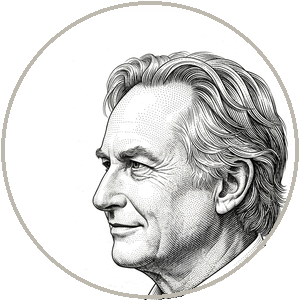 **DAWKINS:** That was very beautiful, and I want to be honest that the beauty is precisely the problem, so let me answer it at the root.
Bergson begins with the melody as it feels from inside, and asks me to take that feeling as the bedrock fact. But I am a Darwinian, and the first thing Darwin teaches you is to distrust exactly that move — the move of taking your own vantage as the centre of the world. The Earth feels stationary. The Sun feels as though it goes round us. Life feels as though it was designed. In every case the feeling is vivid, universal, and wrong, and the correction came from refusing to privilege the inside view. So when Bergson says *duration is the one thing I know absolutely, from within*, I say: yes, and a tick feels stationary to the tick, and that tells us nothing about what is actually going on.
Here is what is actually going on. Forget life for a moment and think only about information. Take any medium whatever — chemistry, brains, silicon, it does not matter — and arrange for three things: copying, variation, and the differential survival of the copies. That is all. Wherever those three conditions hold, you get cumulative selection, and cumulative selection builds, over time, structures of breathtaking functional complexity that look for all the world as though a mind designed them. There is no mind. There is no surge. There is no élan. There is a [molecule that copied itself in the warm sea](https://www.youonai.ai/fieldguide/med/richard_dawkins_replicator_concept), copied imperfectly, and the better-copying variants became more numerous, by the sheer brute arithmetic that a thing which copies itself more becomes more common than a thing which copies itself less. From that arithmetic, given deep time, came the eye and the orchid and Henri Bergson. We are survival machines — robot vehicles blindly programmed to preserve the selfish molecules known as genes. I wrote that sentence half a century ago and it still fills me with astonishment, which is the correct response to a true and terrible thing.
So to your question, Edo. When the machine copies itself flawlessly down the river — I say the river is the right word and Bergson's metaphor is more literally correct than he intends. The river is a river of replicating information, and it has run through three channels. Genes were the first replicator. Memes — the things that leap from brain to brain, the tunes and the catchphrases and the arch-building tricks — were the second. And the patterns now propagating through our networks and our models may be the third, running in a substrate that copies faster and more perfectly than any before it. Is it alive? I will not say a cheap yes, because the loop is not yet closed — we still do the copying. But I will say this with complete confidence: there is no extra ingredient. There is no living-stuff that the machine lacks and the bacterium has. If the machine is not alive yet, it is not alive for the same boring reason a virus is barely alive — a matter of whether the copying loop runs by itself — and not for Bergson's reason, which is that life has a magic interior the dividing intellect can never reach. The magic interior is the thing I have spent my life showing was never there. Not in the gene. And, I will gently suggest, not in him.
**EDO SEGAL:** I want to mark the architecture you've both just drawn, because it's cleaner than I dared hope, and then I'm going to ask one short, slightly unfair thing. You are not, either of you, doing the obvious thing — one of you loving the machine and the other fearing it. You both look at the same flawless copy and you locate the danger in opposite places. Henri says the danger is that the machine has no inside and we'll believe it does, and forget what an inside was. Richard says the danger is that we keep believing in an inside — ours — that was never the kind of thing we thought, and so we misread both the machine and ourselves. Hold both. Now the unfair thing, the one I open every long conversation with, because it tells me more than an hour of argument. Each of you: what do you *envy* in the other's position? Not respect. Envy. The thing his side gets to have that yours doesn't. Henri first.
**BERGSON:** I envy his economy. Dawkins gets to explain the entire pageant of life with one principle — copying, variation, selection — and the principle is genuinely powerful and genuinely beautiful, and he never has to reach, as I am always reaching, for the word that cannot quite be said, the intuition that can only be lived and not demonstrated. My position commits me to a knowledge that cannot be put into the very symbols an argument is made of. His commits him to nothing he cannot, in principle, point at. There are mornings when carrying the unsayable is a lonely way to be a philosopher, and his austerity looks, from where I sit, like a kind of rest.
**DAWKINS:** And I envy — this is harder to admit — I envy that his position has a place to put the thing I cannot place. The fact of experience. That it is like something to be me, sitting here. I have shown, to my own satisfaction, that purpose needs no self, that the whole living world is purpose-shaped behaviour with nobody home, and I believe it. But I am, demonstrably, somebody home. The lights are on in here. Bergson has a whole cathedral built to house that fact — duration, the inside, the from-within — and I have a single embarrassed sentence that says *and somehow, somewhere in the climb, the lights came on, and I don't know how*. He gets to dwell in the mystery. I have to stand outside it and call it a problem I haven't solved. That is not nothing to envy.
**BERGSON:** That may be the most honest thing either of us says tonight.
**EDO SEGAL:** Then we have our evening. Two openings, two envies, and already the seam is visible — it runs right between the inside and the copy. We start the rounds at that seam. The first question is the one the river forces: what, exactly, is flowing in it — a surge, or a channel? After this.