The River — Surge or Channel?

 EDO SEGAL: I want to start this round with a confession, because the best questions I know come out of wounds, not curiosity. In my book I wrote that intelligence is a river — a current that has been flowing and finding new channels for thirteen-point-eight billion years, through chemistry, through biology, through language, through culture — and that in our winter the machine entered the water. I love that sentence. I have built a whole tower on it. And tonight I realize I wrote it without deciding what the river is made of. Henri hears "river" and thinks of a surge, a flowing that cannot be diagrammed. Richard hears "river" and thinks of a literal channel of replicating information, four letters wide. Same word. Opposite worlds. So before anything else: when you look at the river of life and now the river of the machine, what is the water? Richard, you've already claimed it's information. Defend it. Then Henri takes it apart.
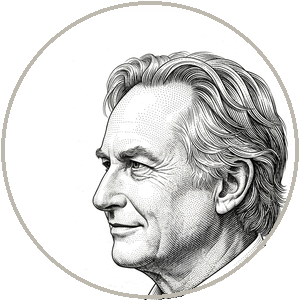 DAWKINS: The water is information. I mean that as flatly and as literally as I have ever meant anything. Down the generations, what flows is not the bodies — the bodies are built, used, and thrown away, one per lifetime, a hundred billion of them discarded already. What flows is the message: the coded instructions, the pattern that gets copied, survives its vehicle, and goes on. A gene in you is, in a real sense, the same gene that was in a fish — not a similar gene, the same one, the same information persisting through an unbroken river of copies across four hundred million years. That is the river. It is a river of pure information, and the bodies are the standing waves it throws up as it passes. Bergson looks at the wave and falls in love with the wave. I am telling him the wave is not the thing. The thing is the flow of information that the wave is a momentary shape of, and that flow has exactly one property that matters: it copies.
And here is why this is not a metaphor that happens to fit the machine — it is the same river. The model is information that gets copied. The weights flow downstream from version to version; a better architecture is retained and built upon; the content the machine generates is copied bit-for-bit, varies as it is remixed, and is selected by what spreads. There is no new kind of stuff here. There is the oldest kind of stuff there is — copying information under selection — finding, as it has found three times now, a faster channel. Genes copied in chemistry, slowly. Memes copied in brains, faster and sloppily. Now patterns copy in silicon, fastest and most perfectly of all. It is one river. Bergson wants it to be two — a living river and a dead canal. I am telling him to look at the water. It is the same water.
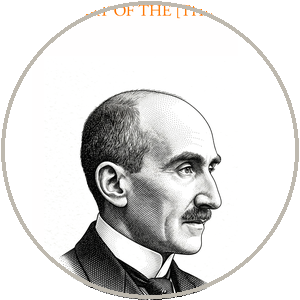 BERGSON: It is a magnificent picture and it commits the founding error of the intellect in its purest form, so let me name the error precisely, because everything depends on it. Mr. Dawkins says the water is information and the bodies are waves the river throws up. But information, in his sense, is exactly what I mean by the spatialized, the laid-out, the dead. Information is a pattern you can copy, which means it is a pattern that holds still — and the whole of my life's work is the argument that what is most real does not hold still and cannot be copied, because it is the flowing itself and not a frozen trace of the flowing. He has built his river out of snapshots. He has taken the living current, extracted from it the one thing the intellect can grasp — the copyable form, the message, the four letters — and declared that to be the river, when it is the corpse the river leaves on the bank.
Watch what his own beautiful phrase reveals. He says the same gene that was in the fish is in you — "not a similar gene, the same one." But that is only true if you spatialize the gene into pure information and throw away its duration entirely. The actual gene in the fish was a particular molecule, in a particular body, at a particular moment of a life that was lived and is gone. What persists is the pattern, which is precisely the abstraction, the from-without, the thing I say is not the living reality but its measurable shadow. Mr. Dawkins has not found that life is information. He has defined life as the part of it that is information, discarded the rest as "the wave," and then announced, with the air of discovery, that the part he kept is copyable. Of course it is copyable. He kept the copyable part. The river he cannot diagram — the surge, the genuine, unforeseeable creation of forms — he has simply declared to be foam.
DAWKINS: That is a clever move and it proves too much, because by the same logic you could deny that a symphony survives its first performance. The pattern is the thing that matters — ask anyone who has lost the only copy of a manuscript. Bergson says I kept the copyable part and threw away the life. I say: show me the part you claim I threw away. Point at it. Measure it. Tell me one prediction it makes that my information-river fails to make. Because if the "surge" leaves no trace that copying-variation-selection cannot account for — if every orchid and every eye is fully explained by the river of information I describe — then the surge is doing no work. It is a feeling you have about the river, projected onto it, exactly as you say we project motion onto the cinema strip. You accuse me of mistaking the film for the flow. I accuse you of the precise inverse — of feeling a flow, sincerely, and insisting the universe must contain it because your inside reports it does.
BERGSON: And there is the whole evening in two sentences, Edo. He says: if the surge makes no measurable difference, it is nothing. I say: the surge is, by its nature, the thing that no measurement can capture, because measurement is the spatializing act and the surge is what spatializing destroys. He hears that and calls it an evasion. I hear his demand and call it the prejudice of a faculty that has mistaken its own limits for the limits of the real. We are not disagreeing about the facts of biology. We agree about the genes, the copying, the selection — I concede it all, it is true, it is the mechanism. We are disagreeing about whether the mechanism is the whole of it, and that is not a question his method is equipped to ask, because his method can only ever find more mechanism, the way a net can only ever catch what is bigger than its holes.
EDO SEGAL: Let me put the machine directly between you, because this is where it earns its place at the table. Richard, you say the machine joins the same river — copying, variation, selection, just faster. Henri, you say it is the river's film, not its flow. Here's the thing that won't let me sleep. When I work with one of these systems at three in the morning, it does something the cinema strip never did: it answers back. It takes my half-formed intention and returns it changed, connected to things I hadn't connected. The film doesn't do that. So I'll ask you the naive, human version, Henri, and I want it slowly. If the machine is only a film of intelligence with no flow behind it — how does the film talk to me?
BERGSON: Because you, Edo, supply the flow. This is the exact cinematographic situation and you have described it perfectly without noticing. At the cinema, the motion is real — you genuinely see it — and it is located entirely in you, supplied by your own duration to a strip that contains only stillness. When the machine "answers back," the conversation is real, the help is real, the new connection is real — and the duration in which all of that lives is yours. You bring a flowing intention; the system returns a recombination of the frozen traces of a billion prior intentions; and you, a creature who endures, receive the recombination into your flow and experience the whole loop as a meeting. It is a meeting. One of the two parties is enduring. The machine no more talks to you than the film moves — and just as compellingly, for the same reason. The talking, like the motion, is supplied by the one living thing in the room. You felt met because you brought the meeting. Do not let anyone, including yourself, sell you the half you supplied as a second person across the table.
DAWKINS: I want to grant Bergson something here and then turn it, because his cinema analogy is good and it has a precise breaking point. At the cinema, you can prove the motion is in the viewer: stop the projector and the strip just sits there, twenty-four dead frames. Fine. Now do the equivalent to the machine. Stop your flow — have someone who has never seen the system, who brings no enduring intention, pose it a genuinely novel problem, a bear and two sticks and a coconut, a proof no one has written down. And it answers. It composes the frozen traces into a solution that fits a situation that was not in the traces. The cinema strip cannot do that no matter who watches it; there is no viewer-supplied duration that turns twenty-four still frames into a new frame. So either the machine is doing something the cinema strip categorically cannot — composing, not merely replaying — or Bergson must explain how the viewer's duration manufactures content the strip never held. The motion in the cinema is supplied by the eye. The bear-answer is not supplied by the eye. That is where his beautiful analogy springs a leak.
BERGSON: It composes within the space its training fixed. The bear-answer was foreseeable in principle from the model and the prompt — computable in advance by anyone with the weights — which is exactly what I mean by not new. But I will concede the seam you have found, Edo, and Mr. Dawkins has found it honestly: the machine does more than replay. It recombines. Whether recombination, however vast, ever crosses into the creation of the genuinely new — that is the next round, and it is the one where I think his blind watchmaker and my élan vital finally have to fight on open ground.
EDO SEGAL: Mark it, then. Richard says one river, same water, faster channel — and the machine composes, it doesn't merely replay. Henri says the water he kept is the copyable corpse and the living surge is, by its nature, what no copy can hold — and the machine talks only because you bring the flow. Hold both up the stairs. Because the question underneath them is whether the new can be made at all without something alive making it. The watchmaker against the surge. After this.