The Meme Leaps to the Machine

 EDO SEGAL: Richard, in 1976, in the last chapter of a book about genes, almost as an afterthought, you invented a word to prove a point — that the logic of copying isn't trapped in biology. The word escaped, mutated, conquered the internet, and is now the name for the dominant cultural form of the age, which is either the funniest or the most on-the-nose vindication a theory ever received. The meme. Give us the real definition, not the internet's. And then I want to ask you both the question that's been waiting since the first minute: is the machine the third replicator?

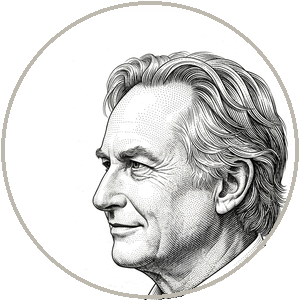 DAWKINS: A meme is a unit of cultural transmission, a unit of imitation — a tune, an idea, a catchphrase, a way of building an arch. I took the word from the Greek mimeme, that which is imitated, and clipped it to rhyme with gene. The point was austere and general: wherever you have copying, variation, and selection, you get evolution, in any medium — and culture is such a medium. A catchy tune is not catchy by accident; it has been selected for catchiness in the only sense selection ever means, which is that the catchier ones survived in more minds. Memes leap from brain to brain, they vary as they're retold, they compete for the scarce resource of human attention, and the ones better at getting copied become common. I called the deep principle Universal Darwinism: Darwinism is not a theory about carbon. It is a theory about copying. Genes were the first replicator. Memes were the second. And — to your question — the patterns now propagating through our networks may be the third. Because here is the thing the internet did that human brains never could: it gave the meme high-fidelity copying. The meme's original weakness, the reason memetics failed as a rigorous science, was that human cultural transmission is lossy — a game of telephone, reconstruction not replication. But digital media copies perfectly, bit-for-bit, and AI goes further: it can copy not just the content but the generative pattern behind the content — the capacity to make more of the thing. The replicator I imagined, too lossy to evolve cleanly in human skulls, may finally have its molecule in silicon. So yes. The machine is the substrate where the meme at last comes into its full Darwinian power.
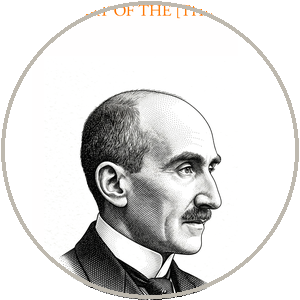 BERGSON: I want to grant Mr. Dawkins his meme almost entirely, because it is true and because granting it sets up the one thing I must deny. Yes — ideas spread, vary, compete, and the ones better at spreading win, and the machine has made this faster and more perfect than any brain. I have no quarrel with the mechanics. My quarrel is with the word "idea" doing the work of the word "meme," because they are being quietly equated and they are not the same. A meme, in his sense, is a copyable form — the tune as notation, the catchphrase as string, the pattern that can be lifted out and duplicated. But an idea, as it lives in a mind, is not a copyable form. It is a moment of a duration — it means something to someone, it is gathered from a life, it points beyond itself to a felt reality. What spreads through the network is the form, the husk, the notation. What does not spread, what cannot be copied because it was never a copyable thing, is the meaning — which lived only in the duration of the mind that meant it. So when Mr. Dawkins says the machine generates memes by the billion, I say: yes, and no one means any of them. The meme age, for all its noise, was at least made of forms that minds had meant. The machine manufactures the husks directly, with nothing meant by any of them, and floods the culture with the appearance of meaning drained of its source. He has found the perfect replicator. He has also, without quite saying so, described a culture filling up with signs of meaning that no one means.
DAWKINS: Now this I find genuinely interesting, and I half agree, which will alarm my admirers. Bergson is right that a meme is a form and that the machine generates forms with no one meaning them. But watch the consequence he draws and where it overreaches. He says the meaning "lived only in the duration of the mind that meant it" and therefore cannot spread. But meaning, as far as I can tell, is use and uptake — a meme means something by the difference it makes in the minds it lands in, the behavior it changes, the further memes it spawns. When a machine-made slogan radicalizes a teenager or a machine-made melody makes a stranger weep, the meaning is happening — in the receiver's duration, to use Bergson's word. So the meme doesn't need anyone at the source to mean it; it needs someone at the destination to take it up. The internet already proved this: most memes have no identifiable author who "meant" them, and they mean plenty. Bergson's picture requires meaning to be injected at the origin by a meaning-er. I'd say meaning is conferred at the destination by a taker-up — and the machine, which has no inside, can still be a magnificent source of forms that acquire meaning the moment a human mind catches them. The danger isn't that the memes are meaningless. It's that we are now flooded by forms shaped only to spread, optimized for transmission rather than truth, with no human intention upstream to be accountable for them.

BERGSON: And on that — the flood, the optimization for spread rather than truth, the absent accountability — we agree completely, and the reader should notice it, because it is the second time tonight the two of us have arrived at the same alarm from opposite banks. You say the memes mean something because a human takes them up; I say the taking-up is the human's own duration conferring the meaning, which is exactly my cinematograph again — the meaning, like the motion, supplied entirely by the living viewer. We have described the same event. You call the human the destination. I call the human the projector. Either way, the machine is the empty source, and the culture downstream of it is a culture where every form is shaped to spread and none is shaped to be true, because truth was a stake that only a mortal, accountable, enduring mind ever had. The meme found its molecule, Richard. And the molecule cares about nothing but copying — which was your warning about the gene, fifty years ago, arriving now in the one medium fast enough to drown us in it.

EDO SEGAL: I have to put my own scar on this table, because I helped build the machinery. Before any of this, I built engagement systems — feeds, loops, the architecture that decides which forms reach which minds. I knew exactly what I was doing. I was a selection pressure. I bred culture toward whatever held attention, and I told myself I was connecting people, and some nights I believed it. So I'm not asking this from above. The machine is now both the generator of memes and the selector of them, the variation and the filter, running together faster than any culture ever evolved, with no one meaning the forms and a metric choosing them. Richard — your framework named this engine before it existed. Does your framework also tell us what it does to a mind that lives inside it?

DAWKINS: It tells us, with some precision, that the mind inside it will be remodeled by it — not metaphorically, structurally. If memes are selected for transmissibility, and the machine maximizes transmissibility directly, then the cultural environment every mind now develops in has been bred toward whatever exploits the nervous system most efficiently, with truth and depth and difficulty selected against wherever they slow the spread. The gene's-eye view says: ask what's being maximized, and you'll predict the phenotype. What's being maximized is spread. So predict a culture optimized for spread — outrage, ease, the frictionless and the inflammatory — and a collective attention strip-mined by a process indifferent to whether it leaves a mind better or worse. I named the dynamic and I confess I did not foresee the accelerant. Edo built the early version of it and knew. The machine is the version that needs no Edo — it generates the bait and pulls the lever and tunes itself, and there is no one inside it to feel the slightest responsibility for what it does to the child on the other end.

BERGSON: And the child on the other end, Edo — this is what your engagement machinery and this new engine both do, and it is the thing I would have you grieve properly. They do not merely capture the child's attention. They wear down the child's duration. A mind formed entirely on frictionless, spreading forms loses the capacity for the slow, gathered, indivisible attention in which alone a thing can be deeply known or genuinely made. The machine does not just flood the river. It teaches the young mind to live at the surface, in the cinematographic flicker, the rapid succession of frozen forms — until that mind can no longer find its own depths, its own flow, the durational thickness where the self actually lives. That is the real harm, deeper than any falsehood: not that the machine lies, but that it trains us out of the very faculty that could tell. You were a selection pressure, Edo. So is the machine. And what is being selected against, in both, is duration itself.

EDO SEGAL: [pause] That's the heaviest sentence anyone's said tonight, and it's aimed at me as much as at the machine. Hold it. Because we've been circling the recoil — the laughter, the uncanny, the instinct that knows the mechanical when it wears the living's face. Henri wrote the book on it. And I think it's the hinge of the whole evening: the seam between the living and the mechanical, and what happens to us when the machine smooths it away. The mechanical encrusted on the living. After this.