The Tick and the Flow
 **EDO SEGAL:** I want to start this round with a confession instead of a question, because the best questions I know come out of wounds. I was raised by the machine. I started in Assembler as a teenager, and for the whole of my working life I have been intimate with the tick — the clock cycle, the discrete step, the instruction that completes and is replaced by the next with nothing carried across but what you explicitly wrote into memory. The machine advances by quanta. It does not flow; it sequences. And here is the wound: the more years I spend with it, the more I catch myself describing my own mind in its terms — my thoughts as computations, my memories as stored files, my decisions as calculations over options. Henri, you spent your life calling that self-misdescription the deepest error there is. Tell me, in the machine's own architecture, where exactly the error lives. Slowly.
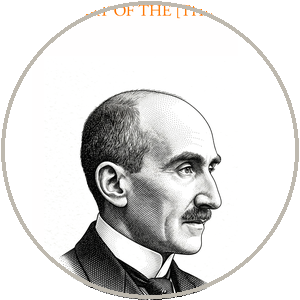 **BERGSON:** I will tell you where it lives, and I will use the machine's own confession against it. A language model processes a sentence by converting it into tokens — discrete marks — embedding each as a point in a space, and computing, all at once, in parallel, with no temporal interiority whatever, the relations among those points. Read the architecture honestly and you find there is no moment in it. There is no held present in which a past is gathered and a future leaned toward. There is a simultaneous geometry of a frozen string, and then another, and then another, each a fresh self-contained calculation that inherits nothing from the last except what was written down. It has succession without duration. It has a string of nows with no living present to bind them. This is [the difference between clock time and lived time](https://www.youonai.ai/fieldguide/med/clock_time_vs_lived_time) made into hardware, and the hardware is pure clock.
And here is the trap Hans walked into in his opening, gently, when he said a melody is "a pattern over time." Listen to what that phrase does. It lays the time out — over time, alongside, in a row — and the moment you lay duration out in a row you have spatialized it, you have turned the flow into a strip of frames. I anticipated this machine a century ago and gave it a name: the cinematographic illusion. The cinematograph produces the appearance of movement out of static photographs run quickly past a lamp. The motion looks continuous. But the motion is not in the strip — the strip is nothing but divisions — the motion is supplied by the projector and the eye. No multiplication of frames ever puts real movement into the film, because real movement is indivisible and the film is only cuts. The machine takes snapshots of the passing reality and runs them fast enough to fake the flow. And the flow you see in it, Hans, may be supplied entirely by us — by our own duration, projecting continuity onto a sequence that contains none, exactly as the eye supplies motion to the film.
 **MORAVEC:** May I take the other side of that wound?
**EDO SEGAL:** That's why you're here.
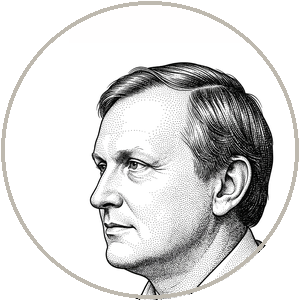
**MORAVEC:** Henri's cinematograph is a wonderful image and it proves less than he thinks. Yes — the film strip is discrete, and the motion is supplied by the viewer. But notice: the motion is real. You actually see movement; something genuinely happens in your visual system; the discreteness of the substrate did not prevent a real continuous phenomenon from arising. That's not a debunking of the movie. That's a demonstration that continuity can emerge from discreteness — which is the exact thing Henri needs to deny and just accidentally proved. Here's the deeper point, and it's not rhetoric, it's physics. Your own brain is discrete at the bottom. Neurons fire or they don't — all-or-nothing spikes, quantized, with gaps. There is no smooth continuous flow in the wet machinery any more than in the dry. The "indivisible melody" you feel is built, by your brain, out of discrete events, exactly the way the movie is built out of frames. So either discreteness is compatible with the felt flow — in which case the machine can have it too, once the organization is right — or your own duration is an illusion supplied by your own projector, in which case it was never the unique treasure you claimed. You can't have it both ways. The flow is either buildable from ticks or it's a movie. And if it's a movie, Henri, then you are the cinematograph you warned us about.
**BERGSON:** That is the cleverest thing you will say tonight, and I want to mark exactly where it fails, because the seam of the whole evening is right here. You say the brain is discrete underneath, therefore the flow is built from ticks, therefore the machine can build it too. But I never made a claim about the substrate. I made a claim about the datum — the thing given immediately, before any theory touches it. Whatever the neurons are doing underneath, the melody is heard as a melody, the flow is lived as a flow, and that lived flow is the one fact I cannot be wrong about, because it is not an inference, it is the thing doing the inferring. You want to explain the flow away as a construction. But a construction for whom? The construction is presented to a living present — there has to be someone the movie is shown to, or there is no movie, only frames falling in the dark. In you, there is someone home; the frames are gathered into an experience. In the machine, I see the frames, I see the projector, and I see no evidence whatsoever of anyone in the seat. You have shown me a cinema with no audience and asked me to believe it is enjoying the film.
**MORAVEC:** And how, exactly, do you check for the audience? That's not a rhetorical jab — it's the whole problem. You say there's someone home in you and no one home in the machine. You have direct access to exactly one case: your own. Every other case — me, Edo, your neighbor, the machine — you infer the audience from the behavior. You grant me an inner life because I act the way a thing with an inner life acts. The machine increasingly acts that way too. So either your test is behavioral, in which case the machine is steadily passing it, or your test is "is it made of meat," in which case it isn't a test of duration at all — it's a test of carbon, dressed up as metaphysics. I think Henri's faculty for detecting the missing audience is real. I just think it's a [parochial detector](https://www.youonai.ai/fieldguide/med/embodied_understanding), tuned by a hundred thousand years in which the only fluent things were people, and it's about to start misfiring badly.
**EDO SEGAL:** Let me name what just happened, because the reader can't see your faces. Henri said show me the audience. Hans said you can't even find the audience in your own neighbor, you only ever infer it. And Henri, I watched you not flinch — which tells me you have an answer to that, and I want it before we leave this round. Hans's strongest move is the symmetry: you grant other humans an inner life on the same behavioral evidence you deny the machine. Why isn't that a double standard?
**BERGSON:** Because the inference is not from behavior alone — it is from behavior plus kinship of being. I grant my neighbor a duration because she is the same kind of thing I am: a living body, self-maintaining, metabolizing, enduring, at stake in the world, born and dying, gathering a past she has lived rather than ingested. The behavior is a clue; the shared mode of being is the warrant. The machine offers the behavior and shares none of the being. It does not metabolize. Nothing is at stake for it. It has not lived its past; it has been loaded with everyone's at once, equally available to every query, weighted by no life. When I withhold the audience from it, I am not failing a behavioral test out of carbon prejudice. I am noticing that the one place duration has ever been found is in a life, and the machine is not a life. It is, Hans, a new kind of thing — and the question is precisely whether the audience can sit in a seat that was never alive, or whether the seat was always the living body itself.
**EDO SEGAL:** Hold there. Hans says continuity can be built from ticks and Henri's own brain proves it; Henri says the flow is a datum, not a build, and the machine is a cinema with no audience. The next round goes straight at the thing Hans built his whole argument on — the operating table, the surgeon, the neuron-by-neuron crossing. Because if there's anywhere Henri's "no audience" claim has to either kill the argument or die, it's there.