The Relentless Arithmetic

 EDO SEGAL: Hans, the surgeon's table sounds like science fiction until you put it on a curve, and you spent years on the curve. You counted neurons and synapses and firing rates to estimate the brain's raw processing power, then tracked the falling cost of that much computation in silicon, and you concluded that sometime in the 2030s or 2040s a machine costing about what a person costs would match a human brain — and then keep going. You extended the line backward through relays and vacuum tubes and transistors, five generations of physics, no break in stride. That's Moore's law generalized and aimed at the soul. So let me ask the ridiculous version first: do you really believe a graph of operations per second is a graph of mind?

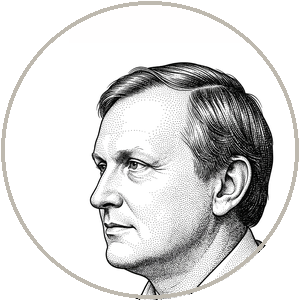 MORAVEC: I believe it's the binding constraint, which is a more careful claim. For thirty years the field tried to engineer intelligence by hand — write down the rules, build the symbols — and it crawled. Then we stopped being clever and started being big: more compute, more data, simple learning architectures scaled up, and the thing leapt. That's not a coincidence; it's my whole thesis arriving on schedule. The scaling pattern is the most reliable empirical regularity this field has ever produced. I said, decades before anyone could show it, that the missing thing was not a conceptual insight but raw power, and that the insight would follow the power rather than precede it. I watched it happen in miniature with my robots, whose limits were always set by the computer I could afford to put on them. So no, the graph is not identical to mind. But mind has turned out to be far more a function of how much computation you can afford than the philosophers wanted it to be, and that fact is doing more work in the world right now than any argument about duration.

EDO SEGAL: Restate it for me at the kitchen table, because a parent reading this needs the stakes. You're saying: the reason the machine can suddenly write like a person is mostly that it got big enough — and the same curve that made it write will, you believe, eventually make the surgeon's table buildable. The arithmetic is the promise. Is that the claim?

MORAVEC: That's the claim, with one honest amendment I insist on making myself before Henri makes it for me. Hardware is necessary. Whether it's sufficient — whether enough compute plus the right learning gets you all the way to a mind you'd want to upload — that I assumed more than I proved. The dates I liked have a way of arriving without the equivalence showing up on time. And there are cracks in the foundation now: the frontier eats energy and capital faster than it returns capability, and exponentials don't run forever — they run until they hit a wall. I'd be a poor scientist if I hid that. The curve is the strongest thing I have and it is not a proof of mind. It's a proof that the door is not locked.

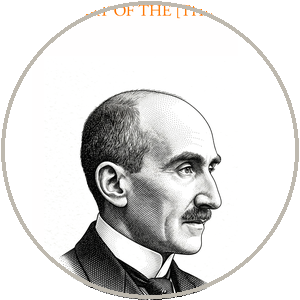 BERGSON: I want to grant Hans the entire curve and then show that it never touches my objection, because this is where the field's confusion is densest. Suppose every number is right. Suppose the machine matches the brain operation for operation, suppose the cost falls exactly as he says, suppose the surgeon's table is built on time. Every one of those is a fact about quantity — about how much spatialized computation you can buy. And my claim was never about quantity. The cinematograph does not become a living scene by adding frames; a million frames a second is still frames, still cuts, still the strip, and the movement is still supplied by the eye. You cannot reach the indivisible by accumulating the divisible, no matter how fast. Hans's curve is a curve of frame rate. He is promising that if the frames come fast enough, the duration will appear — and that is precisely the cinematographic illusion stated as an industrial roadmap. More compute is more frames. It is not one inch closer to the audience in the seat.
MORAVEC: That's elegant and I think it quietly begs the question. You keep asserting that the felt flow is the indivisible — a thing of a different order that accumulation can't reach. But the only evidence you have that it's indivisible is that it feels seamless, and "feels seamless" is exactly what a sufficiently dense sequence of frames produces. You're treating the seamlessness as proof of an extra ingredient when it's the expected output of fine-enough granularity. When the frame rate of your own neurons is high enough, you call the result "indivisible duration" and treat it as metaphysically special. When I propose the same density in silicon, you call it "still just frames." Same architecture, two verdicts, and the only thing dividing them is which substrate you were born attached to.

BERGSON: Then let me give you the disproof you keep demanding, the one that is not a feeling. It is not that the flow feels seamless. It is that the flow is given to a present — there is a now in which the frames are gathered, and that now is not itself another frame in the sequence, or you would need a further now to gather it, and so on without end. The gathering present cannot be one of the things gathered. That is not a report about granularity; it is a structural fact about what experience is, and no increase in frame rate produces it, because it is not on the strip at all — it is the seat the strip is shown to. Your curve adds frames. It does not build the seat. And until you can tell me, mechanically, how operations per second assemble a for-whom, the arithmetic is a magnificent answer to a question I never asked.
EDO SEGAL: I have to confess where this lands on me, because I owe the table my own toll. I have spent twenty years watching curves like Hans's come true — I bet companies on them, I made board-room arithmetic out of exponentials, and the exponentials kept their promises about capability with a regularity that still unnerves me. So when Hans says "the door is not locked," every instinct I built in those rooms believes him. And then Henri says "the curve builds frames, not a seat," and I think of my own children, and I cannot make the arithmetic reach the thing I mean when I say their names. Both of those are true in me at once. Hans — does the curve have anything to say to the seat, or do you concede that it's silent there?

MORAVEC: I concede it's silent there, and I deny that the silence means what Henri wants. The curve was never an argument about the seat. It's an argument that the substrate is not the obstacle — that whatever the brain does to make a seat, it does with a finite amount of computation that we will be able to match and exceed. If the seat is something the brain does, the curve says we'll be able to do it too. Henri's reply is that the seat is something the brain is, not something it does — and that's a real position, but notice it's now a bet about the metaphysics of consciousness, not a refutation of the engineering. We've moved from "the machine can't" to "the machine can, unless consciousness is a non-functional extra." I'm content to have moved the argument there. That's most of the way to my side of the table.
EDO SEGAL: Mark that — it's our first real convergence and I want it numbered. Convergence one: both of you now agree the substrate is not the obstacle. The disagreement has narrowed to a single point — whether the seat, the for-whom, the audience, is something the brain does (Hans: copyable) or something the brain is (Henri: not). Hold that knife. The next round tests it on the ground Henri owns most completely — not whether the machine can host a self, but whether it can make anything genuinely new, or only recombine the past it was fed. Creation against computation.