Opening Positions

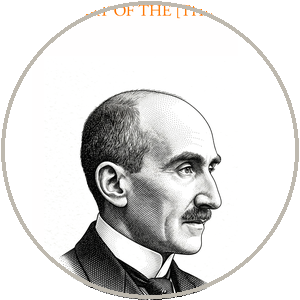 BERGSON: Thank you. I will begin not with the machine but with the melody, because everything turns on it. Listen to a tune in your head — any tune. The notes do not sit beside one another like houses on a street, each complete, each external to the next. Each note is heard through all the notes before it; the past of the melody is alive in its present, swelling it, leaning it toward a future that has not yet sounded. That interpenetration, that qualitative continuity in which the whole past survives into the now and presses it forward — that is durée, duration, lived time, and it is the very texture of your inner life. It is not a theory I am asking you to accept. It is the most certain fact you have, the one thing you know from the inside rather than by inference. You are a melody, gathering itself, indivisible, advancing.
Now. What is a pattern? A pattern is the opposite of a melody in the one respect that matters. A pattern is laid out in space, all at once, every part external to every other part, divisible without remainder — you can cut it here, copy it there, and nothing is lost, because there was no flow in it to lose. When Hans says your mind is a pattern, he has already, in the choice of the word, decided the question against me. He has taken the melody and replaced it with the sheet music, the row of marks, and then told you the marks are the song. But the marks are not the song. The marks are what is left of the song when you remove the time — the spatialized corpse of a thing that was alive only in its flowing. You can scan the sheet music. You can print a thousand copies. You will not have made the melody sound once.
So my position is this, and notice how it bites at the exact rung Edo named. At the death-cross, Hans will offer you a trade: give up the meat, keep the pattern, and survive. I say the trade is a swindle, not because the engineering will fail but because even if it perfectly succeeds, what crosses the line is the sheet music and not the song. The copy will say "I am still here," and it will say it fluently, and there will be no one there to whom the saying matters, because mattering belongs to duration and the copy has none. The most powerful machine ever built can imitate the melody forever and never once be it. That is my opening. The flow is you, and the flow dies with the body, and to forget this is the deepest form of the error I spent my life naming — the mechanical mistaken for the living.
 EDO SEGAL: Hans.
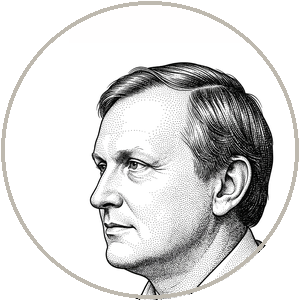 MORAVEC: That was beautiful, and I mean that without condescension — it's the most serious version of the objection, and I've spent decades with it. Let me agree with more of it than Henri expects, and then reject the one move that does all his work.
I agree the melody is not the sheet music. I agree completely. Here is where we part: Henri thinks I am offering you the sheet music, and I'm not. I'm offering you the orchestra. When I say mind is a pattern, I do not mean a static snapshot, a frozen row of marks. I mean the full dynamic organization — the way the parts interact in time, the process, the playing. A melody, Henri, is also a pattern: it is a pattern over time, a structured sequence of relations, and a sufficiently faithful copy of that structure, running, will sound exactly the same and will be, in every respect you can name, the same melody. You have smuggled "spatial" into "pattern" so that pattern means death. But a process is a pattern too, and a process flows.
Now to the substance, because I don't want to win on a definition. Consider an ordinary fact you already accept. The atoms in your body are not the atoms you had years ago. They have cycled out, every one, replaced. The matter that constitutes you today is largely not the matter that constituted you when you were young. And yet you persisted. Through that total replacement of the stuff, you stayed you. So what persisted? Not the matter. The matter all left. What persisted is the organization, the pattern, the form that the flux of atoms keeps re-instantiating as it pours through you. You are already a pattern surviving a change of substrate, Henri. You do it continuously. Body-identity — the idea that you are this particular lump of meat — is already false, and you already know it's false, because you've already outlived your meat several times over. I am simply proposing to do, deliberately and faster, the thing biology does to you slowly and without asking.
And then the scenario that makes it concrete, because I never trust an argument I can't build. Imagine you are awake on a table. A surgeon — call it a machine, very precise — works on your brain not by removing it but one small piece at a time. It measures the exact behavior of a cluster of neurons, builds an electronic device that responds identically to the same inputs, swaps it in, and asks: are you still there? You are. You were talking the whole time. Nothing changed in your experience, because the new piece does precisely what the old piece did. Now it does the next cluster. And the next. Neuron by neuron, never a gap, never a moment of unconsciousness, your mind migrates from the wet hardware to the dry, and at no point does the melody stop. There is no instant where you die and a copy wakes. There is only one unbroken stream of experience that begins in flesh and ends in silicon. If you survive the replacement of one neuron — and you do, people survive that and far worse — by what principle do you fail to survive all of them, done slowly, done seamlessly? That's my opening. You are a pattern, the pattern is a process, the process can be carried across, and the carrying need never break the flow at all. The melody does not have to end. We can change the instrument without stopping the song.
EDO SEGAL: Before I frame the rounds, one discipline I impose on every long conversation, because it pays off two hours later. Each of you, in a few sentences — not what you respect in the other's position, but what you envy. The thing his side gets to have that yours doesn't. Henri first.
BERGSON: I envy his hope, and I do not say that lightly. Hans gets to look at the people he loves and believe the loss is an engineering problem — temporary, soluble, a matter of sufficient measurement. I have to look at the same people and know that their flow will end and cannot be retrieved, that duration is not backed up anywhere, that the melody plays once. My philosophy is true, I think, but it is a hard place to stand on the night someone is dying. He gets to stand somewhere softer. I will not pretend that costs nothing.
MORAVEC: And I envy his certainty about what's precious. Henri can point to the flow and say that, that is the thing, guard it. My position dissolves the very thing it tries to save — the more honestly I follow the pattern, the more "you" becomes something that can be forked, copied, edited, paused, run twice, and the harder it gets to say which copy is the one that matters, or whether the question even means anything. Henri has a floor under his feet: the indivisible self, the one melody. I'm committed to the mechanism wherever it leads, and it keeps leading to places where the self I was trying to preserve comes apart in my hands. People think the frightening thing about my view is the machines. The frightening thing is what it does to the word "I."
EDO SEGAL: Hold that — both of you just told the truth, and you can already see the shape of the evening. It is not that one of you loves the technology and one fears it. It's that you locate the self in opposite places. Henri puts it in the flow, which cannot be copied and so cannot be saved. Hans puts it in the pattern, which can be copied and so can be saved — but saved so promiscuously that it stops being a self at all. We start the rounds where the disagreement is sharpest: at the tick. The discrete step the machine runs on, and whether duration can ever be built out of it.